
Ask for an itemized, scope-matched estimate that names materials, quantities, decking allowances, and payment terms. Skip that, and you’re comparing guesses, not bids. Before you sign anything, a credible estimate should name six things clearly:
- Roof size in squares (not “the whole roof”)
- Tear-off scope, including how many layers come off
- A decking repair allowance with a per-sheet rate
- Underlayment brand and where it’s installed
- The exact shingle product line, not just “architectural shingles”
- Cleanup, warranty terms, and a written payment schedule
Get three written bids using that same scope. If a contractor can’t fill in every line, that’s your first answer before you even see a price.
Key Takeaways
A trustworthy roof estimate names quantities, materials, and payment terms in writing, and comparing three of them only works once every bid uses the same scope.
| Point | Details |
|---|---|
| Demand itemized scope | Insist on named materials, squares, decking rates, and payment terms before comparing price. |
| Build a comparison worksheet | List line items down one side, contractors across the top, and circle blank cells. |
| Watch five key line items | Shingle product, nailing pattern, underlayment, ice-and-water shield, and decking allowance drive most price differences. |
| Get three written bids | Three to four proposals normalized to the same scope reveal fair market value. |
| Verify before you sign | Confirm license, insurance, warranty registration, and payment schedule in writing. |
Where This Checklist Comes From
This checklist draws on Roof Cost Data’s estimate framework, which outlines the standard components of a scope-matched bid, and The Roofing Brief’s guide to comparing three bids, which identifies the five line items that drive most price variance. For a wider look at vetting contractors before signing anything, including avoiding under-scoped DIY shortcuts, One Day Doors & Closets offers a useful parallel on the same vetting instinct.
Table of Contents
- Roof Estimate Checklist: The Line Items You Need To See
- How Do You Compare Three Roofing Estimates Fairly?
- Red Flags on a Roofing Estimate (And What to Ask Instead)
- An Editorial Take on Turning a Checklist Into a Worksheet
- Sources
Roof Estimate Checklist: The Line Items You Need To See
A legitimate roofing estimate reads like a spec sheet, not a sticky note. It runs multiple pages and breaks the job into distinct sections: contractor information, exact scope, material specs, ventilation, warranty terms, decking allowance, payment schedule, and cleanup. If your estimate is a single paragraph with one number at the bottom, you don’t have an estimate. You have a guess with a signature line.
Here’s what a scope-matched, itemized roofing cost estimate actually includes:
- Roof measurement. Reported in squares (one square equals 100 square feet), plus linear feet for valleys, ridges, and flashing runs. Ask how they measured it, satellite, drone, or a physical walk.
- Tear-off. How many layers of existing roofing come off, how debris gets hauled away, and who’s responsible if the dumpster runs overweight.
- Decking allowance. A per-sheet or per-square rate for plywood or OSB replacement, not a vague “decking as needed” line. This single item causes more surprise change orders than almost anything else.
- Underlayment. Brand, type (felt vs. synthetic), and where it goes, full roof deck or just eaves and valleys.
- Ice and water shield. Specific linear footage or square coverage at eaves, valleys, and roof penetrations, especially in climates with freeze-thaw cycles.
- Starter strip, drip edge, and flashing. Named by location (chimney, sidewall, valley) and material, with a note on whether existing flashing gets reused or replaced.
- Shingle product. Manufacturer, exact product line, color, and waste percentage, not “30-year architectural shingles” with no brand attached.
- Ridge cap and ventilation. Product name plus the intake and exhaust balance. If net free area numbers are available, ask for them.
- Accessories. Pipe boots, skylight flashing kits, and step flashing around chimneys and dormers, itemized individually.
- Permits, inspections, and cleanup. Including a magnetic sweep for nails and a final walkthrough before the crew leaves.
- Warranties. Manufacturer warranty versus workmanship warranty, and who’s responsible for registering the material warranty.
- Payment terms. Deposit percentage, payment milestones, how long the quoted price stays valid, and whether lien waivers get signed at final payment.
Pro Tip: If the estimate says “architectural shingles” with no manufacturer name attached, that’s not a spec, it’s a placeholder. Ask the contractor to write in the actual product line before you compare price at all.
How Do You Compare Three Roofing Estimates Fairly?
Price differences between bids almost never come from labor rates. They come from scope gaps, one contractor quoting a decking allowance and full ice-and-water coverage while another quietly leaves both out. That’s why getting three to four proposals matters more than getting the cheapest one.
Build a simple worksheet: line items down the left column, one contractor per column across the top. Fill in what each bid actually specifies, and leave a cell blank when the information isn’t there.
- List every line item from the checklist above in the left column
- Fill in each contractor’s specific answer in their column
- Leave a cell blank instead of guessing at what they meant
- Circle blank cells, since missing information is often the clearest sign of a scope gap
Five items tend to explain most of the real price difference between bids: the shingle product line, the nailing pattern (which affects wind warranty eligibility), the underlayment brand, ice-and-water shield coverage, and the decking allowance. Score each bid on completeness, documentation, and whether claims can be verified, like a license number or insurance certificate you can actually call and confirm.
| Point | Details |
|---|---|
| Blank cells matter most | A missing line item on the worksheet usually signals a scope gap, not a good deal. |
| Five items drive price | Shingle line, nailing pattern, underlayment, ice-and-water shield, and decking allowance explain most variance. |
| Middle bid often wins | After normalizing scope, the middle-priced bid frequently reflects fair market value. |
Once you’ve built the worksheet, send it back to each contractor and ask them to revise their estimate to match it. Confirm start and end dates in writing, and get explicit confirmation of who pulls the permit.
Red Flags on a Roofing Estimate (And What to Ask Instead)
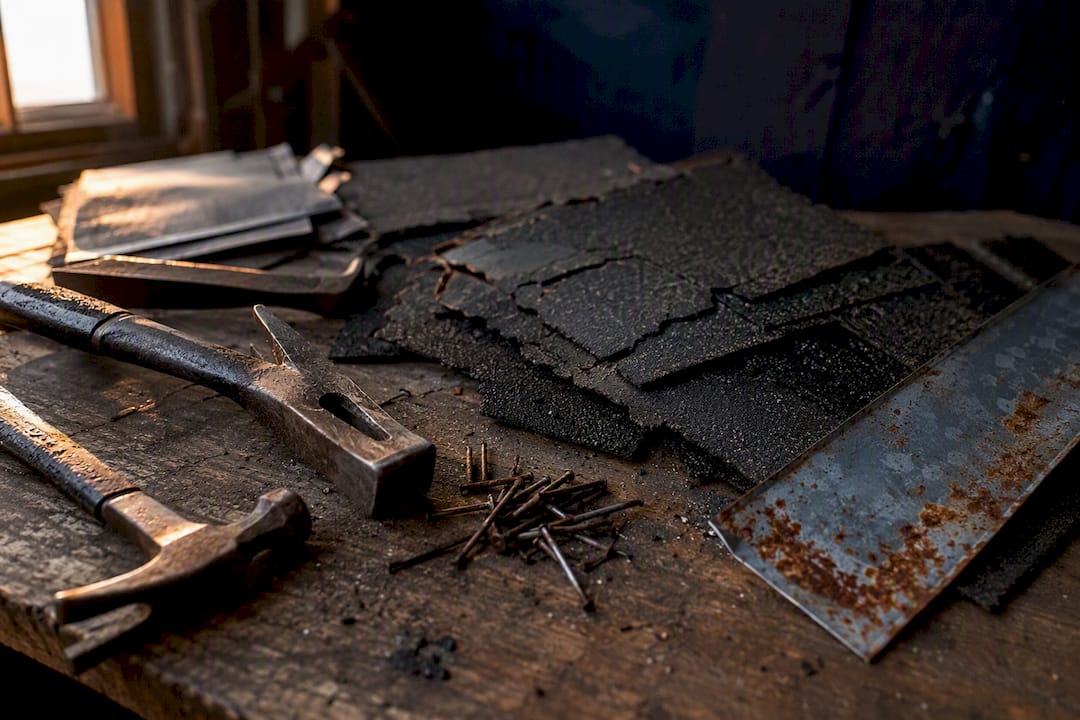
Some warning signs show up before you even read the price. A one-line total with no itemization, vague material specs, no proof of license or insurance, a deposit over 30%, no decking allowance at all, “sign today” pressure, and an estimate written without anyone walking your roof, all of these should stop you before you sign.
Close the gaps with direct questions:
- Name the shingle manufacturer and exact product line.
- How many layers of existing roofing will you remove?
- What’s the decking repair rate per sheet?
- Who pulls the permit, and is that fee included?
- What brand and type of underlayment are you using?
- Where exactly does ice and water shield get installed?
- What’s your nailing pattern, and does it meet the manufacturer’s wind warranty requirements?
- Is the deposit refundable, and what percentage is due upfront?
- Can you provide a current certificate of insurance?
- What’s your contractor license number?
- Who registers the manufacturer’s material warranty?
- How long is this price valid?
- What’s included in cleanup, and do you run a magnetic sweep?
Acceptable answers come with documentation, a COI, a license number you can verify, and confirmation the warranty gets registered in your name.
Decking, Tear-Off, Permits, and Warranties: The Fine Print
Decking repair should be priced per sheet or per square, with a stated allowance percentage, not a blank line. Watch for overlay jobs (shingling over old shingles instead of a full tear-off): it’s cheaper up front but shortens roof life and complicates future repairs.
- Permits should list who pulls them and what the fee covers
- Manufacturer warranties cover materials; workmanship warranties cover installation, and they’re not the same thing
- Payment schedules should include a deposit, a milestone payment, and a final payment tied to a completed walkthrough
- Ask about lien waivers at final payment, they protect you if a contractor doesn’t pay a subcontractor
Roughly 70-80% of real price variance between bids traces back to just five line items: shingle product, nailing pattern, underlayment, ice-and-water shield, and decking allowance, according to normalized bid comparisons.
Why This Checklist Reflects How Crowleyexteriors Estimates Jobs
Crowleyexteriors has applied this level of detail to roofs across St. Charles County for over 25 years. Every estimate is free, itemized, and comes with no obligation to sign.
- Free roof inspections before any number gets written down
- A 25-year workmanship guarantee backing the installation itself
- Local crews who know Missouri’s hail and freeze-thaw patterns firsthand
- Full service listings covering roofing, siding, gutters, and windows
If you’re weighing a full roof replacement, request a no-obligation itemized estimate that matches every line on this checklist.
An Editorial Take on Turning a Checklist Into a Worksheet
Most advice on this topic stops at “here’s what to include.” That’s useful, but it treats the estimate as a document to read once, when it should be a tool you actively use to compare bids side by side. The real value isn’t the list itself, it’s converting three different-looking proposals into one shared format so price differences finally mean something.
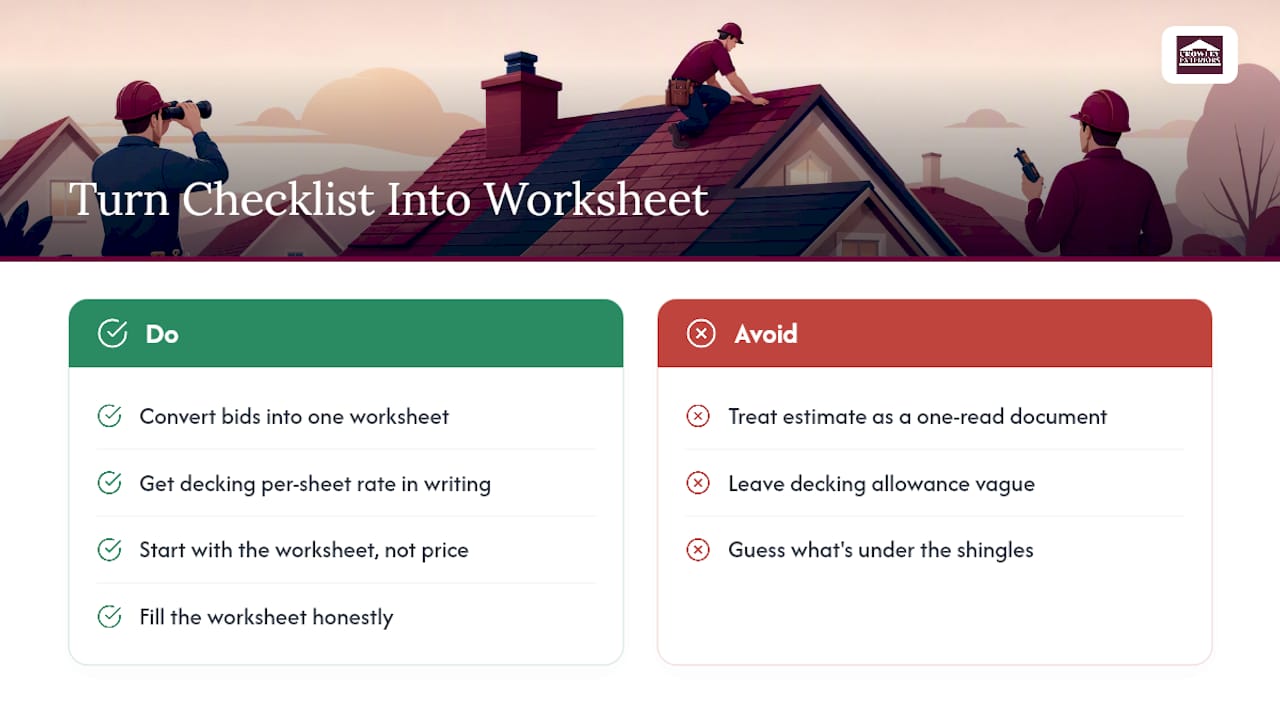
Conventional guidance also undersells the decking allowance. It gets one line in most checklists, but it’s the single item most likely to turn into a change order mid-project, because nobody wants to guess what’s under the shingles until the tear-off starts. If you prioritize one thing on this whole list, make it that: get a per-sheet rate in writing before the crew shows up, not after they’ve found rot.
Start with the worksheet, not the price. Everything else on this checklist exists to fill in that worksheet honestly.
— Mario
Sources
- Roofing Estimate & Quote Checklist (2026) – Roof Cost Data
- Roof Replacement Quote: Read, Compare, Negotiate 3 Bids | TRB
- Understanding Roofing Estimates (10-Section Framework + 8 Red Flags) | JDH