


Moisture in an attic comes from one of two places: water getting in through the roof, or warm, humid air from your living space condensing on cold surfaces. The two look alike, and the fixes are different. Pattern is the best clue. A leak shows up in one spot, during or after rain. Condensation tends to spread across the attic in cold weather. If you can’t tell which one you have, have the roof inspected. We offer free roof inspections and leak detection across St. Charles County, so you don’t have to guess.
TL;DR
- A leak is usually local and follows rain. Condensation is usually widespread and follows cold snaps.
- The U.S. Department of Energy calls moisture the number one enemy of an attic, and it can arrive from above, below or the side.
- Common culprits: failed flashing, missing shingles, clogged gutters, ice dams, and bathroom or kitchen exhaust vented into the attic.
- Act early. Prolonged wetness leads to mold, ruined insulation and rotted wood.
- Most homeowners policies cover sudden damage from a covered peril, not long-running leaks.
Table of Contents
- Roof leak or condensation: how to tell
- What causes moisture in an attic
- Signs that moisture is already in your attic
- What to do when you find it
- Does insurance cover an attic leak?
- What a leak repair costs
- How often to check
- Get the cause confirmed
- Our perspective
- FAQ
- Sources
Roof leak or condensation: how to tell
This is the question behind most searches on attic moisture, and it matters because a patch will not cure condensation and a vent will not stop a leak.
GAF’s guidance on roof condensation says condensation usually appears during a cold spell, while moisture from a leak often turns up during or after a downpour. It also says moisture spread throughout the attic, rather than in one area, is more likely to be condensation.
Use this as a first pass:
| Clue | Points to a roof leak | Points to condensation |
|---|---|---|
| Timing | During or right after rain or snowmelt | During cold weather, often with no rain |
| Location | One spot, often under a vent, chimney, valley or damaged shingles | Spread across the underside of the roof deck, or frost on nails |
| Look | Stain with a defined edge, drip trail down a rafter | Damp insulation, beaded water, widespread dark spotting |
| Indoors | Ceiling stain below the entry point (or offset from it) | Foggy windows, high humidity, musty smell |
| Repeats | Every significant storm | Every cold stretch |
Neither column is a verdict. This Old House points out that condensation can also cause damp walls, buckled ceiling materials and musty odors, and that broken pipes and HVAC leaks can put water in an attic too. Water also travels. The National Roof Certification and Inspection Association notes that water in a bedroom ceiling may have entered at a vent ten feet uphill. A stain tells you where water ended up, not where it came in.
That is why a trained set of eyes on the roof and in the attic saves money. Guessing wrong means paying twice.
What causes moisture in an attic
The Department of Energy’s Guide to Durable Attics groups the sources into three families.
Water from outside
Leaks through the roof or around improperly installed flashing at chimneys and other penetrations. The University of Wisconsin Extension’s guide to repairing leaky roofs lists the usual suspects: defective flashing, clogged downspouts or eaves, cracks and deterioration (especially on southern exposures), and holes where shingles are missing.
Flashing deserves special attention because it fails quietly. Our guide to roof flashing types shows where each type sits and why it fails. Two spots we get asked about most are the roof valley, where water concentrates, and the chimney, where two materials meet and move at different rates.
Water vapor from inside
Humid air from the living space rises through gaps around light fixtures, the attic hatch, plumbing and wiring, then meets cold roof sheathing. The Pacific Northwest National Laboratory’s guidance on condensation control lists the ingredients: cold surfaces below the dewpoint, a hole in the air barrier that lets air leak, high humidity in warm indoor air, and too little ventilation or drying potential.
One mistake is common enough to call out. The Department of Energy’s Consumer Guide to Durable Attics says venting kitchen ranges, bathroom exhaust fans or dryers into the attic is a major moisture source. It can lead to mold and may violate local building codes. Exhaust belongs outdoors.
Ice and snow
Ice dams in the gutters and along the eaves push meltwater under shingles, and it leaks into the house. Missouri winters swing between freezing and thawing often enough that this matters locally. Our pages on ice dam roof damage and roof ventilation types explain how heat escaping into the attic and poor airflow set the stage.
Signs that moisture is already in your attic
You often see the symptoms before the source. The Department of Energy’s durable attics guide lists these signs of possible water intrusion:
- Warped or rotted wood soffit panels or fascia board
- Bubbled paint at fascia boards or soffits
- Worn or warped shingles at the roof edges
- Wet insulation, especially near the eaves
- Mold or mildew on attic surfaces
- Warped or rotting wood in the attic
The NRCIA adds stains, bubbling paint or soft spots on ceilings and upper walls, a musty smell, daylight visible in the attic, shingle granules collecting in gutters, missing, cracked, curled or lifted shingles, loose or rusted flashing, and new damage after hail or wind. This Old House says the first interior sign of a leak is typically a water stain on the ceiling. It also lists peeling paint, blistering drywall, small puddles in the attic and dripping sounds.
If the first sign is on the ceiling, read our guide to what a ceiling water stain means. If the rot is at the roof edge, see fascia board replacement.
What to do when you find it
Start with what is safe and quick.
- Look from the attic floor, in daylight and in rain if possible. Follow any drip trail along rafters and sheathing to its highest wet point. The University of Wisconsin Extension guide suggests pushing a nail or wire through the spot from inside so you can find the hole from the outside later.
- Contain the water. Put a bucket under drips and move stored items. If the ceiling below is bulging with water, a small hole to let it drain into a bucket can prevent a larger collapse. That is one of the emergency steps in our roof leak emergency guide.
- Photograph everything. Date-stamped photos of stains, wet insulation and any storm-damaged shingles help if you file a claim.
- Stay off the roof. The Extension guide warns that unsteadiness on a ladder or roof can cause severe injuries. Only a physically able person should go up for emergency measures, and unless you are experienced, it advises hiring a professional roofer for repair work. A wet roof is the worst time to try.
- Book an inspection. Once the roof is dry and safe to access, a roofer can trace the entry point from outside and confirm what the attic is telling you.
Do this within days, not months. The Department of Energy warns that poor ventilation lets moisture build up and can cause mold, ruin insulation and damage wood. The National Roofing Contractors Association says proper ventilation helps reduce corrosion, damage to building components, and mold and mildew growth. Prolonged wetness is what rots roof sheathing, and rotted sheathing turns a repair into a replacement.
If it turns out to be condensation
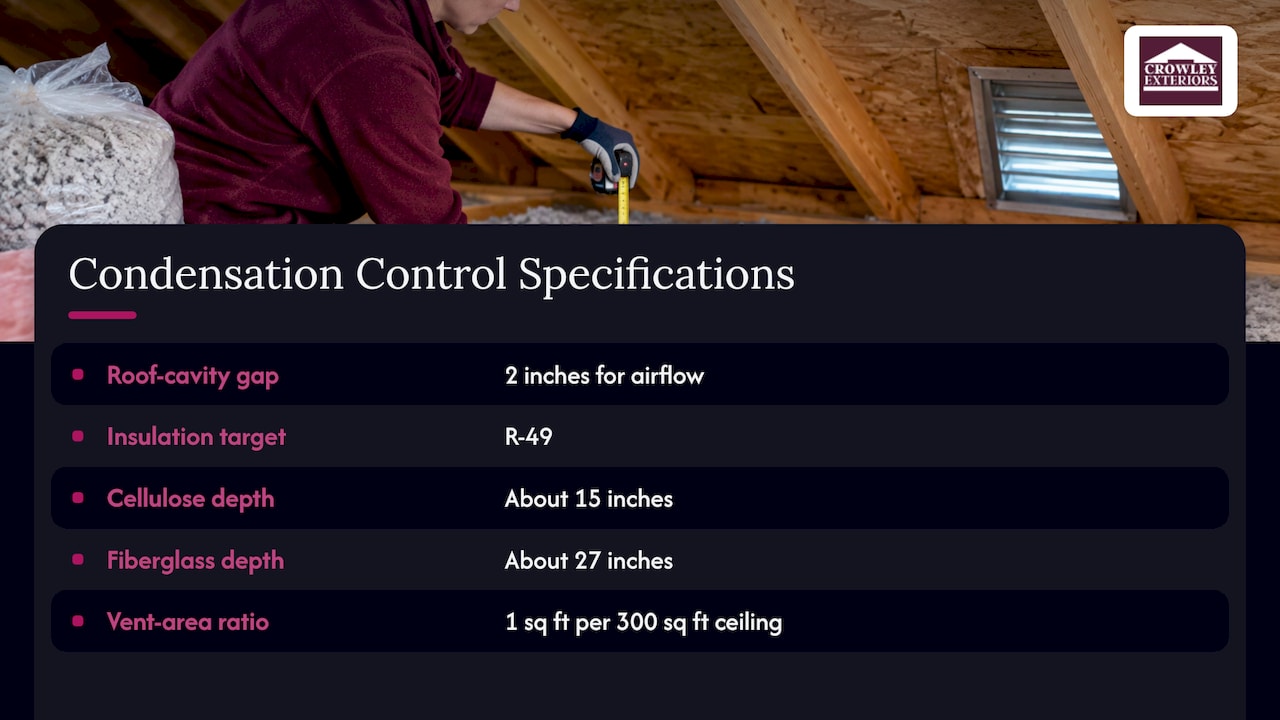
The cure is about air and heat, not shingles. The PNNL guidance says roofing materials are generally vapor-impermeable, so venting below the roof decking is the only viable way to dry the assembly, and it recommends keeping 2 inches of spacing for airflow within roof cavities. A Cornell Cooperative Extension resource cites the Department of Energy’s recommendation of R-49 attic insulation, which means about 15 inches of cellulose or 27 inches of fiberglass. It also cites 1 square foot of vent area for every 300 square feet of ceiling area. The Department of Energy’s consumer guide recommends pairing soffit vents with a ridge vent for better results.
The usual fix is a package: seal the air leaks from the house into the attic, bring insulation up to current levels, move exhaust fans to vent outdoors, and make sure soffit and ridge vents are open and balanced. Our guide to roof ventilation problems walks through the signs and the causes.
If it turns out to be a leak
The repair depends on the source: reseating or replacing flashing, replacing damaged shingles, clearing and correcting gutters, or addressing an ice dam. Clogged or leaking gutters can send water back under the roof edge, so check gutter corners and the causes of gutter overflow too. If the roof is near the end of its life and leaks keep appearing in different places, our repair versus replace guide explains how to decide.
Does insurance cover an attic leak?
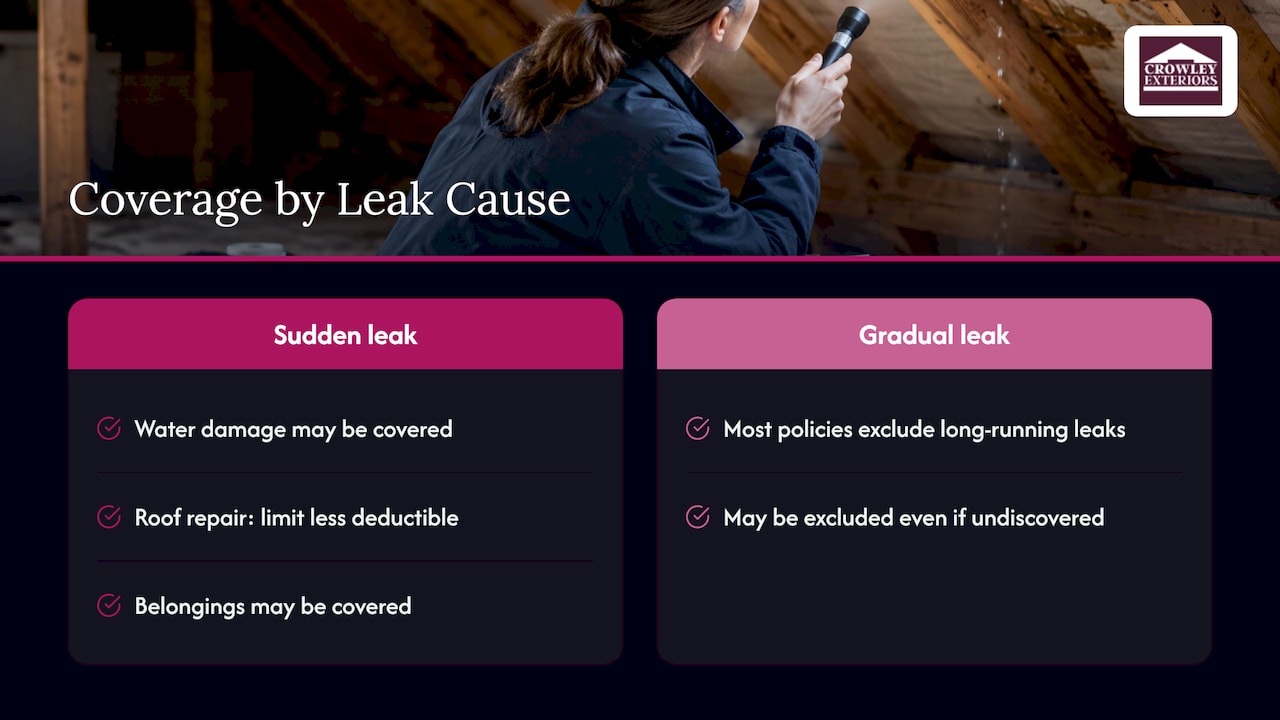
It depends on the cause and the speed of discovery. Most homeowner policies cover sudden, accidental water damage, but most do not cover gradual leaks that have continued for a long time, even if the homeowner had no way of knowing. Progressive says that when a leak is caused by a covered peril, dwelling coverage may pay to repair or replace the roof up to the coverage limit minus the deductible. Damaged belongings may also be covered.
Policies differ, so your own policy and your insurer’s adjuster decide what applies to you. The practical lesson holds either way: after a hailstorm or high-wind event, inspect promptly and document the damage, because a sudden, storm-caused leak is far easier to claim than a slow one found a year later. We provide storm and hail damage repair and insurance claim assistance, and the free inspection report is a good starting point for the paperwork.
What a leak repair costs
This Old House reports that homeowners spend an average of $531 on roof repairs nationwide, with most projects ranging from $482 to $579 or more. It says patching a hole or fixing a leak runs between $100 and $1,500, depending on the extent of the damage and the roofing material. Those are national figures. Wet insulation, rotted decking and mold cleanup are separate from the roof work and push the total up the longer water has been getting in.
We don’t publish fixed prices, because a flashing reseal and a rotted-deck repair are very different jobs. We give a free, itemized, no-obligation estimate so you see what each line costs before you sign.
How often to check
Because the signs of condensation and leaks overlap, GAF’s Dawn Killough recommends inspecting the attic and roof at least twice a year and after significant storms. A spring and fall look catches problems before they spread. Add a check after every hail or high-wind event. Our roof maintenance schedule covers what to check on the roof, in the attic and in the gutters each season.
Get the cause confirmed
If you have stains, damp insulation or a musty attic, our roof inspection and leak detection service is free. We are a family-owned company with more than 20 years of experience in St. Charles County, and our work is built for Missouri weather. We find where the water is coming from and give you an itemized estimate with no obligation. Our roofing services carry a workmanship warranty (10 years on full roof replacements, 1 year on most repairs).

If the inspection shows the roof itself has reached the end of its life, we also handle roof replacement, along with gutters and siding, so one crew deals with the whole envelope. Planning a sale? Our pre-listing roof inspection gives buyers a clear report.
Our perspective
Most attic moisture calls start with a guess. A homeowner sees a stain and assumes shingles, or sees frost and assumes a leak. Both guesses cost money when they are wrong.
We start in the attic and on the roof, with the weather history in mind. Missouri swings between freezing nights, thaws, storms and hail, so the same attic can have a flashing problem in April and a condensation problem in January. A real fix names which one you have, or both.
That is why our inspections are free and our estimates are itemized. You should see the cause, the repair and the cost on paper, then decide. We are a family-owned company and we answer calls quickly, because water does not wait. When the roof needs work, the workmanship warranty stands behind it.
If you have noticed damp insulation, a musty smell or a new ceiling stain, call us before it spreads.
Mario
FAQ
How can I tell if it’s a leak or condensation?
Look at timing and location. A leak usually appears in one spot during or after rain, while condensation tends to spread across the attic during cold weather. Because the signs overlap, a roof and attic inspection is the reliable way to confirm the cause.
Is moisture in the attic dangerous?
Over time, yes, for the house. The Department of Energy says poor ventilation lets moisture build up, which can cause mold, ruin insulation and damage wood. Dealing with it early keeps a small repair from becoming a structural one. If anyone in your home has asthma or mold sensitivity, mention it when you arrange the work.
Does homeowners insurance cover a leaking roof?
Often when a covered peril like wind or hail caused it, minus your deductible. Policies generally do not cover gradual leaks that have gone on for a long time. Check your policy and report storm damage promptly.
How much does it cost to fix a roof leak?
Nationally, This Old House puts leak patching between $100 and $1,500, depending on damage and roofing material. Your cost depends on the source, the roof and any damage to decking or insulation. A free itemized estimate shows the exact figure for your home.
Can I fix attic condensation by adding vents?
Not by itself. Condensation comes from humid indoor air reaching cold surfaces, so air sealing, insulation and exhaust routing matter as much as vent area. An inspection shows which pieces your attic is missing.
Sources
- Guide to Durable Attics, U.S. Department of Energy
- Consumer Guide to Durable Attics, U.S. Department of Energy
- Condensation Control in Attics and Roofs in Cold Weather, PNNL Building America Solution Center
- Assessing and Repairing Leaky Roofs, University of Wisconsin Extension
- Causes and Cures of Attic Condensation and Roof Ice Damming
- Signs of a roof leak, NRCIA
- How To Find and Fix a Roof Leak, This Old House
- What Is the Cost of Roof Repair?, This Old House
- Understanding Roof Condensation Solutions, GAF
- Roofing guidelines on attic ventilation, National Roofing Contractors Association
- Does Homeowners Insurance Cover Roof Leaks?, Progressive
Recommended
- What To Do About A Roof Valley Leak Before It Wrecks Your Ceiling
- Roof Ventilation Problems: Signs, Causes, And Fixes
- Ceiling Water Stain: What It Means And What To Do Next
- 10 Roof Flashing Types Every Homeowner Should Know
This article was prepared with AI assistance for general information. For recommendations specific to your property, contact Crowley Exteriors. Call or text us at 314-839-3800.