


Water spilling over your gutters almost always traces back to one of six culprits: clogged troughs or downspouts, blocked underground drain lines, incorrect pitch, an undersized system, heavy runoff from roof valleys, or physical damage like sagging and detached seams. Sometimes a violent storm just overwhelms a perfectly good system. Here’s how to figure out which one you’re dealing with, what to fix yourself, and when it’s time to call in help.
Run these checks first:
- Look inside the gutter for visible debris piles, especially near downspout openings.
- Watch the downspout during rain. If water barely trickles out while the trough is full, something’s blocked downstream.
- Check for sagging sections or gutters pulling away from the fascia.
- Note where overflow happens. Overflow right below a roof valley points to a different problem than overflow along a flat, straight run.
Pro Tip: Skip the ladder during active rain or wind. You’ll get the clearest diagnostic picture standing at ground level with an umbrella, not perched on an aluminum extension ladder in a downpour.
Key Takeaways
Most gutter overflow comes down to a blockage, a pitch or capacity problem, or a storm that simply exceeds what the system was built to handle.
| Point | Details |
|---|---|
| Clogs are the top cause | Leaves, needles, and shingle grit block flow more often than any other single factor. |
| Check downspout flow in rain | Weak flow with a full trough usually means a blocked downspout or drain line, not a clog in the gutter. |
| Follow the pitch rule | Gutters should slope about 1/4 inch per 10 feet; standing water at one spot signals bad pitch. |
| Space downspouts correctly | Aim for one downspout every 20 to 35 feet, with 40 feet as a practical maximum. |
| Get a free inspection | Crowley Exteriors offers free inspections and a 25-year guarantee for repairs and replacements in St. Charles County. |
Table of Contents
- What Causes Gutters to Overflow?
- How Do You Diagnose a Gutter Blockage?
- Quick Fixes vs. When to Call a Pro
- What’s the Right Gutter Pitch and Downspout Spacing?
- How Much Does Gutter Repair or Replacement Cost?
- How Often Should You Clean and Maintain Gutters?
- When Should You Call Crowley Exteriors for Gutter Help?
- Frequently Asked Questions
- Sources
What Causes Gutters to Overflow?
Clogged gutters and downspouts are the single most common reason water pours over the edge instead of through the system. Leaves, pine needles, shingle grit, and even bird nests pack into troughs and downspout openings, damming water until it has nowhere to go but over the side. Angi’s breakdown of overflowing gutter causes lists debris buildup alongside undersized gutters and poor pitch as the recurring reasons homeowners call for repairs.

Blocked downspout outlets and underground drain lines are trickier because the blockage is often invisible from the ground. If the gutter itself looks clear but water still backs up and spills over near the downspout, the clog is likely lower in the system, sometimes buried in an underground drain extension.
Incorrect pitch causes standing water and overflow at a single low point rather than along the whole run. Gutters need a slight, consistent slope toward the downspout. When installers get that wrong, or when a hanger loosens over time and creates a dip, water pools instead of draining.
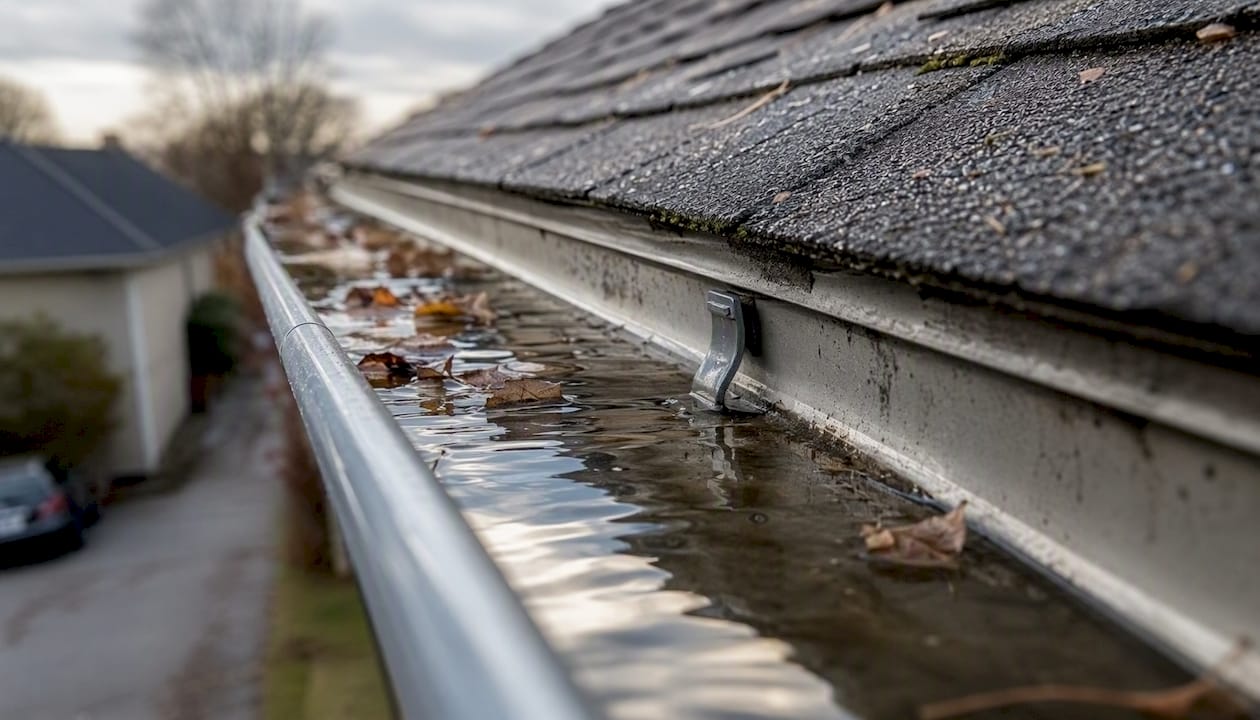
Undersized gutters or too few downspouts simply can’t move enough water fast enough during a real storm, even when nothing is blocked. This is a capacity problem, not a maintenance problem, and no amount of cleaning fixes it.
Roof valleys and concentrated runoff deserve special attention. Two roof planes meeting at a valley funnel a surprising volume of water into a short stretch of gutter. Practitioners at Gold Shield Roofing And Gutters note that clogged gutters account for a large share of service calls, but roof valleys can overwhelm even a clean, well-pitched system during intense rain.
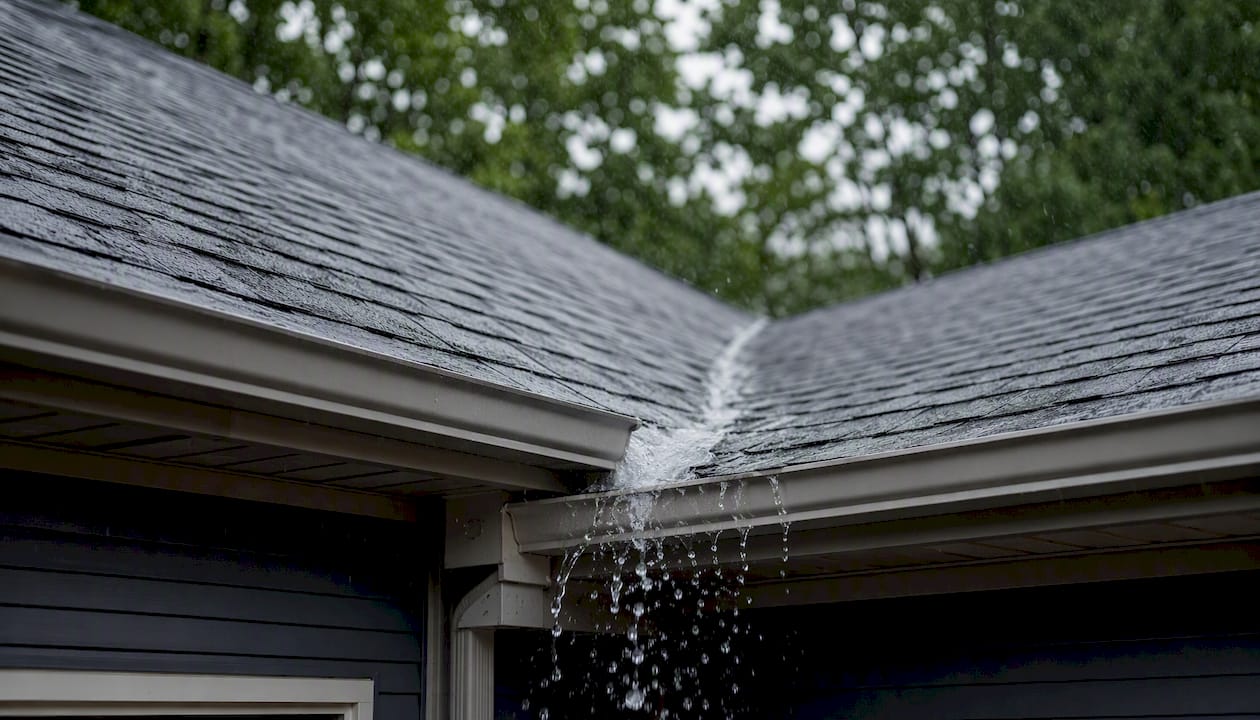
Sagging, detached, or damaged gutters create their own low points and seam gaps that dump water where it doesn’t belong. Keeney Home Services also flags ice dams as a cold-weather variant: frozen downspouts and ice buildup force meltwater to back up and spill over the same way debris does.
Gutter guards can help with leaf debris but sometimes make things worse, causing water to shoot straight over the guard’s edge during heavy flow instead of dropping into the trough.
Pro Tip: Watch for shingle grit and seed pods, not just leaves. Asphalt shingles shed granules for years after installation, and maple or sweetgum seed pods clog small gaps that leaves never reach.
How Do You Diagnose a Gutter Blockage?
- Watch your gutters during an actual rainstorm from a safe, dry vantage point, and photograph where water overflows.
- Check whether the downspout is flowing weakly while the trough stays full. That points to a downspout or drain-line clog rather than a trough problem.
- Run a controlled hose test from the far end of the gutter toward the downspout, but remember its limits. BestGutterServices notes a hose test doesn’t replicate the volume of a real downpour, so a system that passes can still overflow in a storm.
- Look for one-spot overflow (pitch or sagging), whole-run overflow (undersized system), or overflow only below a valley (concentrated runoff).
- Skip the ladder if the roof is steep, multi-story, or the ground is wet. Note the problem and wait for dry, calm conditions, or call a pro.
Quick Fixes vs. When to Call a Pro
- Clear visible debris by hand or with a garden trowel, working from the downspout outward.
- Flush each downspout from the top with a hose to dislodge hidden clogs.
- Reset any hangers that have pulled loose and are causing minor sagging.
- Reseal small seam leaks with gutter sealant, and add a splash block or downspout extension if water pools near the foundation.
- Recognize what these fixes won’t solve: an undersized system or too few downspouts needs new hardware, not more cleaning.
Call a professional when overflow keeps happening right after you’ve cleaned everything, when you see water tracking behind the gutter onto the fascia, or when the fascia board feels soft or shows rot — a situation where experienced gutter installation & repair in Omaha, NE contractors can provide expert diagnosis and repair. Complex roof-valley runoff, buried drain-line blockages, and any access above a single story also belong to a pro. Document what you see during the storm itself rather than climbing up mid-downpour to fix it.
What’s the Right Gutter Pitch and Downspout Spacing?
Two rules of thumb tell you a lot before you ever call anyone out.
- Gutters should slope roughly 1/4 inch for every 10 feet of run toward the downspout. Less than that, and water sits instead of draining; visibly rushing or pooling water usually means the pitch is off.
- Downspouts generally belong every 20 to 35 linear feet of gutter, with 40 feet as a practical outer limit. Stretch beyond that and even a clean system backs up in heavy rain.
Steep roofs and large roof areas push more water into the same gutter footprint, so a house with several valleys or a steep pitch often needs larger gutters or an extra downspout that a standard layout wouldn’t require. These numbers are guidelines, not a substitute for someone measuring your actual roof.
How Much Does Gutter Repair or Replacement Cost?
Costs vary by market and how complicated your roofline is, but a few patterns hold true almost everywhere. A basic cleaning is the cheapest fix and usually finishes same-day. Minor repairs, resealing joints, replacing a few hangers, cost more but still typically wrap up in a single visit. Full gutter replacement takes longer, often one to three days depending on the home’s size and the weather.
- Basic cleaning: fastest, lowest cost, same-day in most cases.
- Minor repairs: same-day to next-day depending on parts needed.
- Full replacement: one to three days depending on linear footage and complexity.
Because pricing depends heavily on your specific roof and gutter layout, a free inspection gets you a firm number instead of a guess.
How Often Should You Clean and Maintain Gutters?
Twice a year is the standard baseline: once in late spring and once in late fall. Homes surrounded by mature trees, especially pines or maples that shed constantly, often need a third check midseason.
Gutter guards reduce leaf buildup, but they’re not a fix for an undersized system, and some designs cause water to shoot past the guard entirely during heavy flow instead of channeling it into the trough. Guards work best paired with a properly sized, correctly pitched system, not as a substitute for one.
Add these to your seasonal routine:
- Confirm each downspout drains freely, not just the visible gutter run.
- Check seams and hangers for movement or gaps.
- Inspect the fascia board for soft spots or discoloration.
- Look specifically at roof valleys for granule buildup or standing debris.
Pro Tip: Pair your seasonal cleaning with a five-minute check of every roof valley and edge. That’s where concentrated runoff problems start, and catching them early is a lot cheaper than fixing fascia rot later.
A Note From the Publisher
Crowley Exteriors has spent over 25 years diagnosing and repairing gutter systems across St. Charles County, and every inspection we run is free. This guide reflects what we actually see on ladders, not textbook theory.
When Should You Call Crowley Exteriors for Gutter Help?
If you’ve cleaned everything and the overflow keeps coming back, or you’re seeing water track behind the trough onto soft fascia, that’s your signal to stop troubleshooting and get a professional set of eyes on it. Complex roof valleys, buried drain-line clogs, and any access above one story fall into the same category. These aren’t jobs where a second cleaning attempt is going to change the outcome.

Crowley Exteriors has spent more than 25 years fitting gutter systems to Missouri’s weather, not a generic template, which is exactly the kind of judgment call a rule of thumb can’t make for you. Every job comes with a free inspection, a no-obligation estimate, and a 25-year guarantee backing the work. If your gutters keep overflowing after you’ve tried the DIY fixes above, request a free inspection through our gutter services page and get a firm answer on pitch, capacity, and repair cost before you spend another weekend on a ladder.
Frequently Asked Questions
Why do my gutters overflow even when they’re clean?
Clean gutters still overflow when the system is undersized, pitched wrong, or facing runoff from a roof valley that dumps more water than a short gutter run can handle.
Why do gutters overflow specifically during heavy rain?
Heavy rain exposes capacity limits that light rain never reveals; a slow leak or minor clog might go unnoticed until storm-level volume pushes past what the gutter and downspouts can move.
How can I tell if it’s a pitch problem or a clog?
A clog usually shows full water sitting near one downspout with weak outflow, while a pitch problem shows standing water or overflow at a low spot along an otherwise clear run.
Does a garden hose test prove my gutters won’t overflow?
Not fully. A hose test helps trace leaks and confirm basic flow, but it doesn’t replicate the volume of an actual heavy downpour, so a system that passes can still overflow in a real storm.
Are gutter guards a permanent fix for overflow?
No. Guards reduce debris buildup, but they don’t fix an undersized system, and some designs cause water to shoot past the guard entirely during heavy flow.
Sources
- Top 5 Reasons for Overflowing Gutters and How To Fix It | Angi
- Why Are My Gutters Overflowing? 6 Causes + Fixes | Gold Shield Roofing And Gutters
- Why Are My Gutters Overflowing? 5 Causes & Fixes | Keeney Home Services
- Gutters Leak Only During Heavy Rain: Causes, Tests, And Fixes | BestGutterServices