


When your roof is actively leaking, do three things immediately: get everyone away from dripping water and any sagging ceiling, place buckets and towels under the drip, and call a licensed emergency roofer for same-day tarping. If water is near a light fixture, outlet, or your breaker panel, treat it as an electrical emergency first.
- Protect people. Move everyone away from the affected area. If a ceiling is bulging, leave that room entirely.
- Cut the power. If water is near any electrical fixture or panel, shut off the breaker for that zone only if you can reach the panel without standing in water. Otherwise, call your utility company.
- Contain the water. Set buckets under drips and lay towels around them to wick overflow. Spread plastic sheeting over floors and furniture.
- Document everything. Take timestamped photos and video of the ceiling, walls, and any visible roof damage from the ground before anything is moved or dried.
- Call an emergency roofer. Crowley Exteriors offers 24/7 response, same-day tarping, and a free inspection for homeowners in St. Charles County.
- Do not climb on the roof. A wet or storm-damaged roof is one of the most dangerous surfaces a homeowner can step onto, and doing so can void your insurance coverage.
One thing most homeowners don’t realize: the drip point on your ceiling is almost never directly below the actual roof entry point. Water travels along rafters, insulation, and joints before it finally drops through. That’s why a professional inspection matters even when the leak looks small.
Key Takeaways
When a roof is actively leaking, the first minutes determine how much interior damage you end up with. Protect people first, contain the water second, and get a licensed roofer on the phone as fast as possible.
| Point | Details |
|---|---|
| Protect people first | Move everyone away from dripping water and any sagging or bulging ceiling immediately. |
| Electrical risk is the top danger | Shut off the breaker for the affected zone if safe; otherwise call your utility company before anything else. |
| Contain and document | Place buckets, spread plastic sheeting, and take timestamped photos before moving or drying anything. |
| Never climb on a wet roof | DIY roof access during a leak risks falls, voids insurance, and often misses the real entry point. |
| Call Crowleyexteriors | Crowleyexteriors offers 24/7 response, same-day tarping, free inspections, and insurance-claims support in St. Charles County. |
Table of Contents
- Is your roof leak a real emergency?
- Step-by-step actions to limit damage while you wait
- What an emergency roofer will do when they arrive
- Why you should not attempt a DIY emergency roof repair
- What emergency roof repair costs and how long it takes
- How to choose an emergency roofing contractor fast
- Crowleyexteriors is ready for your emergency call right now
- Sources
Is your roof leak a real emergency?
Not every roof leak demands a 2 AM phone call, but some absolutely do. Knowing the difference saves you from both panic and costly delay.
These situations are genuine emergencies requiring an immediate call to an emergency roofer or, in some cases, 911:
- Water actively dripping or flowing into a living space, bedroom, or kitchen
- Any water near light fixtures, outlets, ceiling fans, or the electrical panel
- A ceiling that is bulging, sagging, or has already partially collapsed
- A hole or opening in the roof structure exposing the attic or interior to the weather
- Tree impact, fallen power lines, or heavy storm damage that has physically breached the roof
- Heavy, fast-moving water flow rather than a slow drip
According to IKO’s emergency repair guide, water threatening electrical fixtures or the panel, structural exposure, and bulging ceilings all qualify as conditions requiring immediate professional response. Electrical exposure is the single most common reason to treat a leak as a safety emergency rather than a maintenance issue.
These situations are urgent but not immediate emergencies:
- A small, stable water stain that appeared after rain but is not actively dripping
- A slow seep confined to an unfinished attic or detached garage with no electrical risk
- Discoloration on drywall with no active moisture
Vertice Roofing’s triage guidance makes a useful point: slow stains and contained attic leaks can be scheduled for prompt repair rather than emergency service, but early evaluation prevents a manageable problem from becoming a structural one.
Pro Tip: If a power line has come down near or on your roof, do not approach the house from that side. Call 911 and your utility company before calling a roofer. No roof repair is worth contact with a live line.
Step-by-step actions to limit damage while you wait
The first hour matters more than most homeowners expect. Here is a prioritized sequence you can follow right now.
- Get people and pets out of the affected room. A sagging ceiling can release without warning.
- Shut off electricity to the affected zone if you can reach the breaker panel safely and without walking through standing water.
- Place buckets directly under drips. Lay old towels around each bucket to absorb overflow and slow the spread across the floor.
- Spread plastic sheeting over floors, furniture, and electronics in the surrounding area.
- Puncture a bulging ceiling carefully if you see one. Use a screwdriver to make a small, controlled hole at the lowest point of the bulge. This releases pooled water in a single stream rather than letting the ceiling collapse suddenly and flood the room.
- Move valuables, electronics, and documents out of the room or cover them with plastic.
- Start airflow. Once the electrical situation is confirmed safe, run fans and a dehumidifier to begin drying. Containment and immediate drying with airflow and dehumidification are the top priorities for limiting interior water damage.
- Check the attic only when safe. If you can access it without a ladder in wet conditions, the attic often reveals the true footprint of the leak, including how far water has traveled along insulation and framing.
- Document from the ground. Photograph and video the ceiling, walls, any visible roof damage, and the surrounding exterior. Capture timestamps. Note the date, time, and what weather event preceded the leak.
- Call your emergency roofer. Have your address, a description of the leak, the triggering weather event, and your insurance policy number ready.
A few things to keep in mind while you work through this list:
- Never operate a breaker panel while standing on a wet floor
- Do not use a shop vac or any electrical appliance near standing water
- Do not climb on a wet or storm-damaged roof under any circumstances, including at night
- Photograph damage before you move or dry anything when possible, since insurers need pre-mitigation evidence
What an emergency roofer will do when they arrive
Knowing what to expect from a professional crew takes some of the stress out of a bad situation. A qualified emergency roofer follows a consistent process.
The typical on-site sequence:
- Rapid structural assessment. The crew evaluates the roof and attic for structural damage, active water entry points, and any collapse risk before anything else.
- Temporary weatherproofing. Heavy-duty tarps or temporary patches are installed over the damaged area to stop additional water from entering. This is not a permanent fix; it buys time until a full repair or replacement is scheduled.
- Interior protection advice. The crew will often walk through the affected interior and flag any areas you may have missed.
- Photo documentation. A professional roofer photographs the damage from the roof surface, not just the ground, capturing evidence your insurer needs.
- Written estimate. Before leaving, you receive a written scope of work and cost estimate for the permanent repair.
- Scheduling permanent repair. Depending on storm backlog and material availability, permanent repairs are typically scheduled within days to a few weeks.
Emergency responders commonly tarp affected areas, assess for structural damage, document with photos, and provide a written estimate before scheduling permanent repairs. The tarp is a temporary measure that reduces additional interior damage, not a structural solution.
What to have ready when you call:
- Your full address and the best way to access the property
- A description of the leak (location, severity, how long it has been active)
- The weather event that preceded it (hail, wind, tree impact, ice)
- Your homeowner’s insurance carrier name and policy number
- Any photos you have already taken
Crowleyexteriors provides free inspections and no-obligation estimates, 24/7 emergency response, same-day tarping, insurance-claims assistance with photo documentation, and a 25-year workmanship guarantee. Their past projects reflect the kind of work St. Charles County homeowners can expect.
Why you should not attempt a DIY emergency roof repair
The instinct to grab a ladder and a tube of roofing caulk is understandable. It is also one of the more dangerous decisions a homeowner can make during a storm event.
- Fall risk is severe. Wet roofing materials, steep pitches, and wind make a roof one of the highest-risk work surfaces outside of construction sites. Falls from roofs are a leading cause of home-improvement fatalities.
- You can void your insurance. Many homeowner policies include clauses that reduce or deny claims when unauthorized repairs precede the adjuster’s inspection. A well-meaning patch applied before documentation can cost you the entire claim.
- Incorrect temporary fixes cause more damage. Improperly applied caulk or misplaced tarps can redirect water into new areas, saturate insulation further, or trap moisture that accelerates mold growth.
- You will likely miss the real entry point. Because water migrates along framing before it drips through a ceiling, the visible damage rarely marks the actual breach. A professional inspection above the ceiling line is needed to trace the true source.
When a restoration team is the right first call: if insulation is visibly saturated, if framing or sheathing is wet to the touch, if you can smell mold, or if any ceiling section has already partially collapsed, a water damage restoration company should be engaged alongside the roofer. Restoration professionals verify drying and salvage materials when insulation, sheathing, or large attic areas are wet. The roofer stops the water; the restoration team handles what the water already reached.
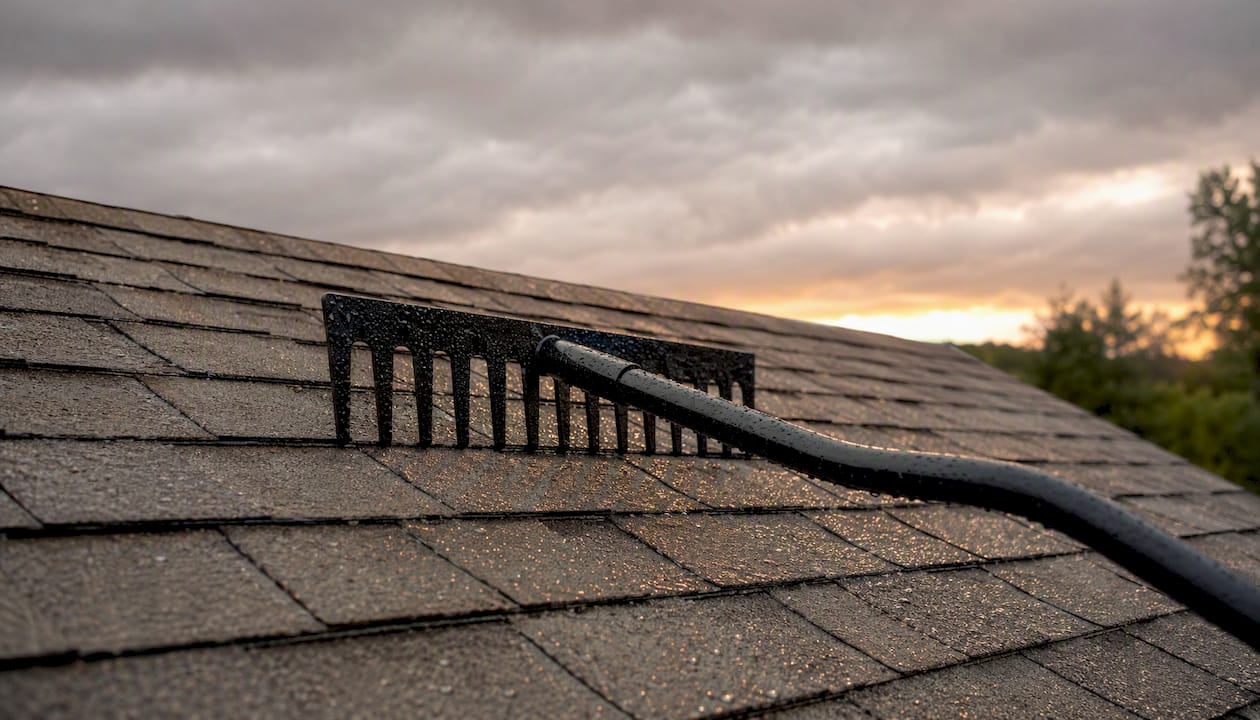
One firm rule: do not climb on a wet or storm-damaged roof. That applies to homeowners and to any contractor who shows up without proper safety equipment.
What emergency roof repair costs and how long it takes
Realistic expectations here prevent a second wave of stress after the immediate crisis passes.
Typical response timeline:
- Call to arrival: Same-day response is standard for most emergency roofing contractors when weather permits, though heavy storm events create backlogs that can push arrival to the next day.
- Tarping: Usually completed within a few hours of arrival for straightforward damage.
- Permanent repair estimate: Delivered the same day as the emergency visit or within 24 hours.
- Permanent repair or replacement: Scheduled within days to a few weeks, depending on material availability and post-storm contractor demand. NOAA storm climatology data illustrates how severe-weather events create regional surges in roofing demand that extend timelines.
Cost factors to understand:
- Emergency tarping and temporary patching typically costs less than a permanent repair, but the price varies by roof size, pitch, and damage extent.
- Permanent repairs range from a targeted patch to a full roof replacement, depending on the age of the roof, the extent of structural damage, and material costs.
- Region, labor market, and material availability all influence final pricing. Get a written estimate before authorizing any work.
Insurance and financing reminders:
- Document damage before permanent repairs begin whenever possible. Insurers need pre-repair photos to process claims accurately.
- Take reasonable mitigation steps (tarping, containment) and keep every receipt. Most policies cover emergency mitigation costs.
- Contact your insurer before permanent repairs if a storm caused the damage, and ask whether an adjuster needs to inspect first.
- Short-term financing options such as a personal line of credit or contractor financing can bridge the gap between repair and insurance reimbursement. Read the terms carefully before signing.
How to choose an emergency roofing contractor fast
Under stress, it is easy to hire the first truck that shows up after a storm. That is exactly when storm chasers and unlicensed contractors are most active.
Vetting checklist before you sign anything:
- Valid state contractor’s license and proof of general liability plus workers’ compensation insurance
- Documented 24/7 availability and same-day tarping capability
- Written estimate provided before work begins, with itemized scope
- Verifiable recent reviews (Google, BBB) and at least one reference you can call
- Clear process for working with your insurance adjuster and providing photo documentation
- Workmanship guarantee in writing
Five questions to ask when you call:
- Are you available today, and can you tarp the roof the same day?
- Are you licensed and insured in this state, and can you send proof before arrival?
- Do you work directly with homeowner’s insurance claims and provide photo documentation?
- Will I receive a written estimate before any permanent work begins?
- What workmanship warranty do you offer on repairs?
Red flags that should end the conversation:
- Demanding full payment upfront before any work is done
- No written estimate, or pressure to sign immediately at the door
- Unmarked vehicles and no verifiable business address
- Large upfront cash-only requests
- No license or insurance documentation available
For a vetted option in the St. Charles area, Crown Brothers Roofing & Construction is a known regional contractor. Crowleyexteriors handles emergency calls directly and will ask for your address, a description of the damage, and your insurance information when you call.
What most homeowners get wrong about roof emergencies
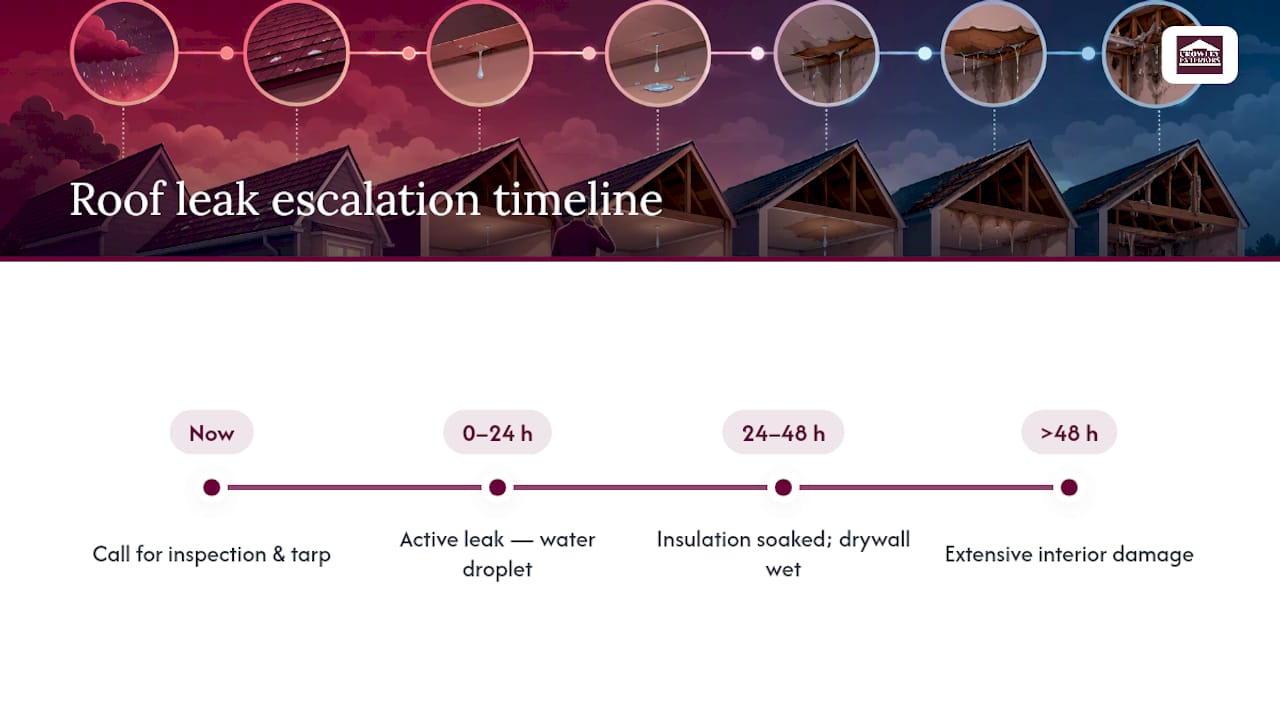
The calls that concern me most are the ones that come in two or three days after the storm. By then, insulation is soaked through, drywall has started to wick moisture up the wall, and what could have been a targeted repair is now a much larger job. The leak itself is rarely the whole problem. It is the 48 hours of unchecked moisture that follow.
The other pattern I see regularly: homeowners who patched the visible drip point themselves and assumed the problem was solved. Water does not move in straight lines through a roof system. It follows the path of least resistance along rafters and insulation, sometimes traveling several feet before it drops. A patch over the wrong spot does nothing except delay the call.
If your ceiling is dripping, call for a free inspection and same-day tarp if needed. Do not wait to see whether it gets worse.
Crowleyexteriors is ready for your emergency call right now
A leaking roof in St. Charles County does not have to become a flooded interior. Crowleyexteriors has served the area for over 25 years as a family-owned, licensed, and insured roofing contractor built specifically for Missouri’s weather conditions.

When you call, you get 24/7 emergency response, same-day tarping and temporary weatherproofing, a free inspection with no-obligation estimate, full insurance-claims assistance with photo documentation, and a 25-year workmanship guarantee on all roofing work. If the damage turns out to need a full roof replacement, Crowleyexteriors handles that too, from the emergency tarp to the final shingle.
Have your address, a description of the leak, and your insurance policy number ready when you call. Crowleyexteriors serves homeowners in St. Charles County, Missouri. Contact Crowleyexteriors now for immediate emergency assistance.
Sources
These resources informed this article and offer practical follow-up guidance for documentation, drying, and emergency preparation.
- Emergency Roof Repairs – A Homeowner’s Guide – IKO
- Roof leak water damage cleanup (Total Dry Restoration)
- Emergency Roof Leak: What to Do Before Help Arrives | Homer Roofing
- Is a Roof Leak Always an Emergency? How to Decide When to Call a Roofer – Vertice Roofing
- How water actually moves through a roof and into a home – Tahughes