

Yes, you can replace a roof in winter, and yes, sometimes you should wait. Emergency installs (active leaks, storm damage, collapse risk) proceed year-round because asphalt shingles can still be installed properly below 40°F with the right precautions. Elective replacements are different math. If your climate consistently runs below manufacturer guidance and there’s no active damage, waiting for warmer weather usually saves money and hassle. Active leak or storm damage now? Call someone today. Cosmetic wear with no leak? You’ve got time.
Key Takeaways
Winter roof replacement works when contractors follow manufacturer cold-weather procedures, hand-seal below 40°F, and store shingles properly before installation.
| Point | Details |
|---|---|
| Emergency work proceeds now | Active leaks, storm damage, and collapse risk justify winter installation regardless of temperature. |
| Elective work can often wait | Cosmetic wear with no active leak usually costs less to fix once temperatures rise. |
| 40°F is the key threshold | Below this, shingles need hand-sealing with approved cement since factory sealant won’t activate. |
| Storage prevents defects | Shingles stored above 50°F before installation stay pliable and lie flat during installation. |
| Crowley Exteriors handles winter jobs locally | Free inspections, staged scheduling, and hand-sealing protocols back a 25-year guarantee on the finished roof. |
Table of Contents
- When Winter Roof Replacement Actually Makes Sense
- What “40°F” Actually Means for Your Roof
- Which Materials Hold Up Best in Cold Weather
- How a Professional Crew Adjusts Its Process
- Costs, Timelines, and What Insurance Will Cover
- Vetting a Contractor for Winter Work
- How Crowley Exteriors Approaches a Winter Roof Job
- Should You Wait or Move Forward Now?
- Get a Winter Roof Assessment Before Small Problems Grow
- Frequently Asked Questions
- Sources
When Winter Roof Replacement Actually Makes Sense
Some situations don’t leave room for debate. An active leak soaking your insulation, a section of decking sagging under snow load, or storm damage that’s already let water inside your attic all justify calling a contractor this week, not in April.
Other situations reward patience. Shingles that look worn but aren’t leaking, minor granule loss, or curling edges with no active water intrusion can usually wait. This matters more in regions where winters stay brutally cold for months at a stretch.
Before authorizing work, run through this:
- Is there active water intrusion or a safety hazard right now?
- What’s the risk of interior damage if you wait until spring?
- Is a qualified winter-experienced contractor actually available?
- Does your insurance claim have a timeline that forces the issue?
What “40°F” Actually Means for Your Roof
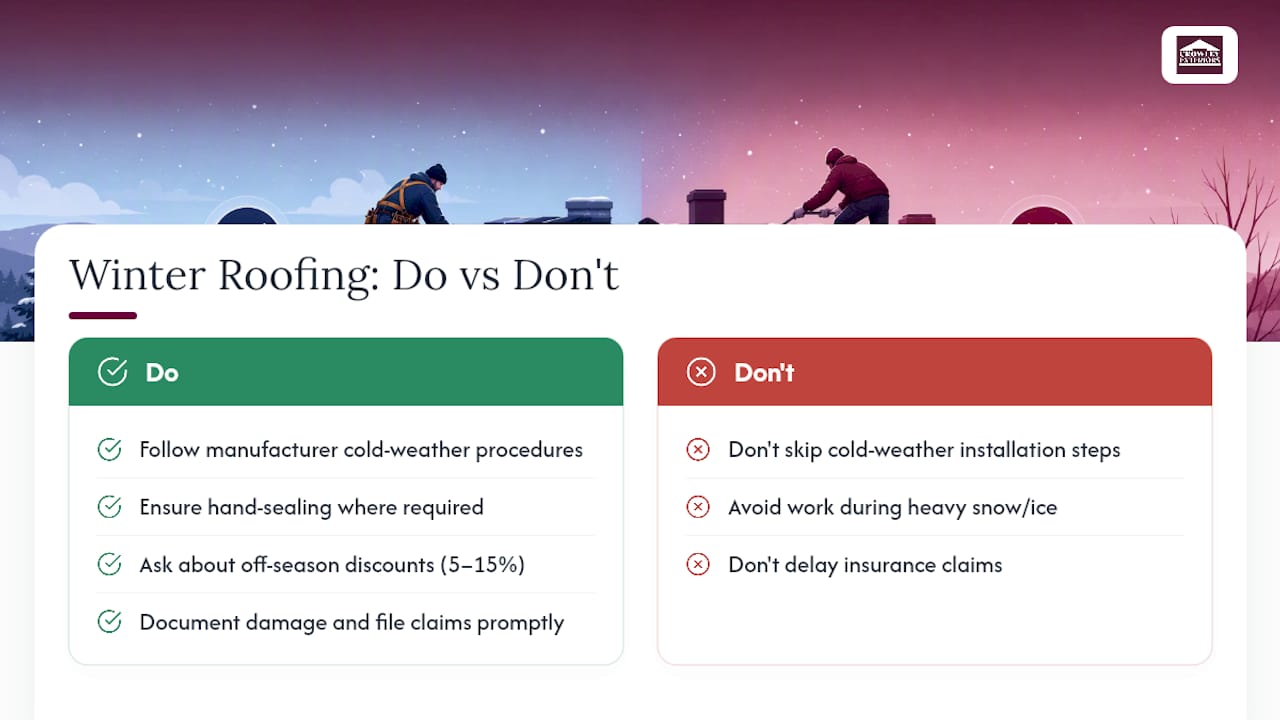
The temperature guidance you’ll hear from every major manufacturer isn’t arbitrary caution. GAF recommends installing asphalt shingles above 40°F, and IKO, Owens Corning, and Atlas all publish similar thresholds. Below that line, shingles lose flexibility and become prone to cracking during handling and installation. More importantly, the factory-applied sealant strip that bonds each shingle to the one below it needs heat (usually from sun exposure) to activate. No heat, no bond, and a shingle that can lift in high wind.
The industry-standard workaround is hand-sealing: applying dabs of approved asphalt roofing cement under each tab to create a mechanical bond while temperatures are too low for the factory sealant to fuse on its own.
Hand-sealing isn’t a shortcut or a downgrade. It’s the manufacturer-sanctioned method for preserving warranty coverage when a job can’t wait for warmer weather.
Pro Tip: Ask your contractor point-blank whether they hand-seal in cold weather and what cement brand they use. A vague answer is a red flag.
Which Materials Hold Up Best in Cold Weather
Not every roofing material fights the cold the same way. Standard asphalt shingles remain the most common choice for winter installs, but they need the cold-weather precautions above to perform correctly. Polymer-modified asphalt shingles stay more flexible at low temperatures and resist cracking better during handling. Metal roofing is largely temperature-agnostic at install time, since it has no sealant strip that depends on heat activation. Ice and water shield membranes and winter-rated underlayments matter just as much as the shingles themselves, since they’re your backup layer against ice-dam leaks.
Handling matters as much as material choice. Shingles should be stored above 50°F for at least a day before installation, kept flat rather than stacked on edge, and pulled from storage only shortly before use.
- Store bundles in a warm, enclosed space, not an unheated trailer overnight.
- Keep bundles flat; cold shingles that “set” bent will refuse to lie right on the roof.
- Add extra fasteners per manufacturer spec in high-wind, low-temperature conditions.
- Hand-seal tabs when temperatures fall below the activation threshold.
How a Professional Crew Adjusts Its Process
A contractor who treats a January install exactly like a July one is cutting corners somewhere. On-site, that means clearing frost and snow from the deck before laying underlayment, using tarps to protect open sections during breaks, and staging shingle bundles close to the work area in a warmed space rather than leaving pallets exposed to the elements.
Scheduling shifts too. Crews often work shorter days, timing the physically demanding parts of the job for the warmest window of daylight when shingles are most pliable. Multi-day jobs get planned in sections so no section of roof sits exposed overnight, and crews pause entirely when ice, high wind, or heavy snow makes the deck unsafe to walk.
A winter roof job that finishes on time with zero callbacks almost always comes down to nailing precision and disciplined hand-sealing, not luck with the weather.
Quality checks intensify too: precise nailing patterns, verified hand-sealing on every affected tab, and a follow-up look on the next warm day to confirm the factory sealant activated as intended.
Costs, Timelines, and What Insurance Will Cover
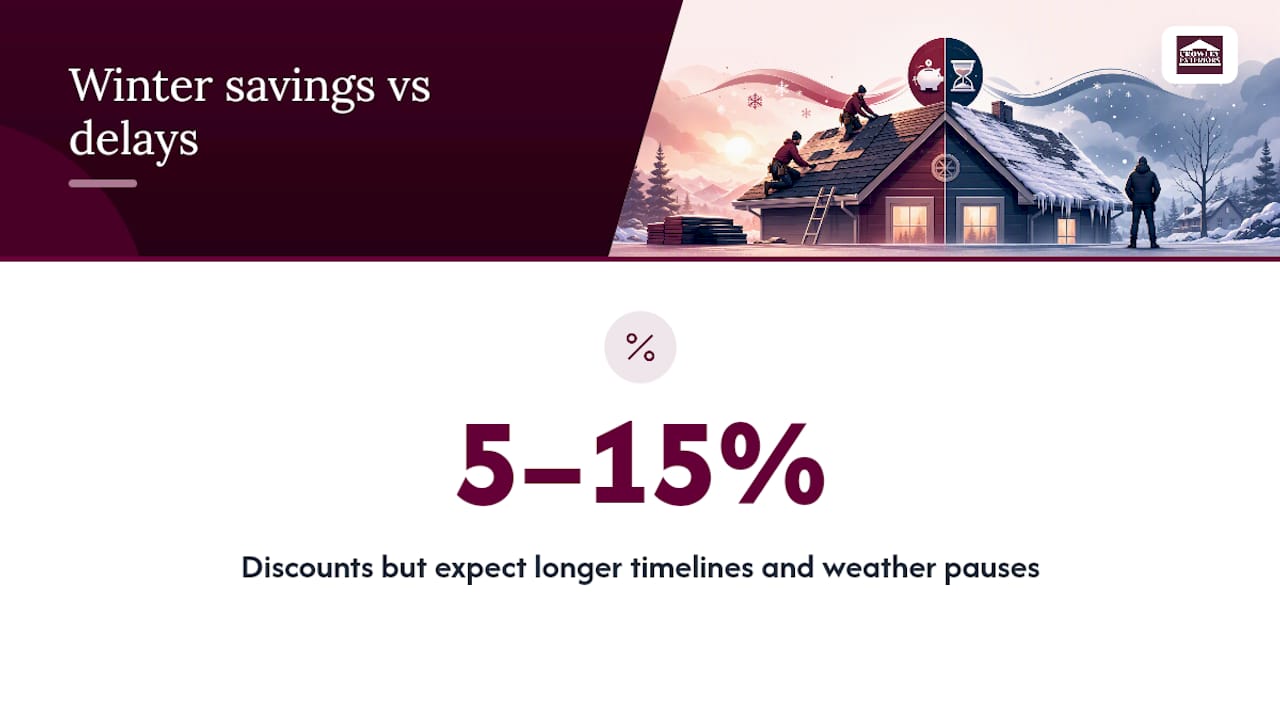
Winter carries real trade-offs. Contractor demand typically drops in the off-season, and seasonal pricing analyses show discounts in the range of 5 to 15 percent in many U.S. markets during winter months. That savings can get offset by longer project timelines, since crews work shorter days and pause for weather more often than they would in June.
Insurance adds another layer. Standard homeowners policies generally cover sudden, accidental damage, a tree limb through the roof, a sudden ice-dam leak, or a collapse from snow load, but they exclude damage attributed to neglect or ordinary wear. If ice dams have already caused water intrusion, document it immediately; delaying that claim can complicate coverage. Expect hand-sealing labor and staged scheduling to factor into your quote.
Vetting a Contractor for Winter Work
Not every roofing crew handles cold-weather jobs the same way, and that gap shows up fast when a storm hits in February. Ask direct questions before signing anything:
- How many winter installs has this crew completed, and can they name specific cold-weather procedures they follow?
- Do they hand-seal, and what’s their material storage plan for the job?
- Will cold-weather methods affect the manufacturer warranty, and can they confirm that in writing?
- Can they provide proof of insurance and describe their crew safety protocols for icy conditions?
Walk away from anyone offering a steep discount with no described winter procedure, no references from past cold-weather jobs, or pressure to sign before a proper inspection. A legitimate contractor hands you a written timeline with weather contingencies built in, not a verbal promise; for instance, Crown Brothers Roofing & Construction’s roofing services provide detailed cold-weather procedures that homeowners can expect from qualified regional contractors.
How Crowley Exteriors Approaches a Winter Roof Job
Our process starts the same way year-round: a free inspection to assess damage and triage any active interior leaks first. From there, we stage the tear-off and install around the warmest daylight hours, store shingles in warm conditions until they’re needed, and hand-seal tabs on days when temperatures won’t activate the factory sealant.
Homeowners should expect a slightly longer timeline in winter, daily site cleanup, and documentation we can hand over if you’re filing an insurance claim.
That’s backed by decades of local roofing experience in Missouri’s weather swings, a no-cost estimate policy, and a 25-year guarantee on completed roofing work.
Should You Wait or Move Forward Now?
Safety and active damage settle the question fast: a leaking roof or storm-compromised deck gets fixed now, regardless of the calendar. Where it gets harder is the gray zone, aging shingles with no leak, in a climate where winter temperatures sit well below manufacturer guidance for weeks at a time. In that scenario, waiting for spring often costs you nothing but patience.
The one-sentence version: if delaying risks interior damage or structural harm, act immediately; if it doesn’t, let the calendar work in your favor.
Get a Winter Roof Assessment Before Small Problems Grow
If you’re staring at a leak, a bald patch of shingles, or storm damage and wondering whether it can wait until spring, the fastest way to know is a free inspection, not a guess. Crowley Exteriors has handled winter roof replacements throughout St. Charles County long enough to know exactly when a job needs hand-sealing, staged scheduling, or a straightforward tear-off on a mild afternoon.

When you request an estimate, ask us directly for a written cold-weather plan: storage procedures, whether hand-sealing applies to your job, and how it affects your warranty. Every roof replacement we quote comes with a 25-year guarantee and a straight answer about timeline. If ice damming or gutter backup is part of your problem, we can also look at your gutter system during the same visit. Reach out through Crowley Exteriors today and get a free, no-obligation inspection scheduled before the next cold snap makes the decision for you.
Frequently Asked Questions
Can you replace a roof in winter without voiding the warranty?
Yes, as long as the contractor follows manufacturer cold-weather procedures, including hand-sealing where required. Owens Corning’s guidance confirms winter work is possible without sacrificing warranty coverage when instructions are followed correctly.
What’s the best time for roof replacement if I have a choice?
Late spring through early fall gives contractors the widest temperature margin, but a properly executed winter roof install performs just as well long term. If your climate has a longer construction season, off-season winter scheduling can also mean faster contractor availability.
Does snow on the roof stop replacement work from happening?
Crews clear snow and frost from the deck before work begins each day. Heavy, ongoing snowfall or ice storms will pause work for safety reasons until conditions improve.
Is winter roofing cheaper than other seasons?
Often yes. Off-season demand tends to be lower, and discounts in the range of 5 to 15 percent aren’t unusual, though longer timelines from weather pauses can offset some of that savings.
Will my insurance cover roof damage found in winter?
Typically yes for sudden, accidental damage like ice dam leaks or storm-related collapse, but not for damage attributed to age or neglect. Document damage and file claims promptly.
Sources
For deeper technical detail beyond this guide, GAF’s cool-weather installation tips cover temperature thresholds and hand-sealing, while IKO’s cold-weather blog focuses on storage and handling. Atlas’s technical bulletin gives exact sealing patterns for installers.
Ice dams cause a disproportionate share of winter roof emergencies, and understanding how they form is the fastest way to judge whether your situation needs immediate attention.
University extension guidance on ice dams explains prevention steps every homeowner in a cold climate should know.
- Can You Replace a Roof in the Winter?
- Must-Know Tips For Installing Shingles In Cold Weather – IKO Roofing
- Cold-Weather Shingle Installation Recommendations (Technical Bulletin)
- Dealing and preventing ice dams