


A nail pop is a roofing fastener that has backed out and broken the shingle seal, leaving a raised bump or an exposed nail head where water can work its way in. Most single pops are a routine repair, but clustered pops, rust stains, or granule loss near the hole are signs you should document with photos and schedule an inspection soon rather than wait.
TL;DR:
- Most nail pops are minor repairs, but clustered pops, rust, or granule loss indicate potential systemic issues requiring inspection.
- Installation errors, decking movement, moisture buildup, rusted fasteners, and aging sealant are common causes of nail pops, especially if they appear in patterns.
- Spotting nail pops involves checking for bumps or exposed nails from the ground, taking detailed photos, and inspecting the attic for water entry signs.
- Proper repair involves lifting the shingle, removing the bad fastener, and installing a new one in the correct zone, followed by hand-sealing; hammering or cement-only fixes are ineffective.
- Insurance typically covers nail pops only if caused by storm damage, making documentation and professional inspections essential for a claim.
Table of Contents
- What causes a shingle to pop in the first place
- Common causes of nail pops and why each one matters
- How to spot nail pops during a roof check
- When a nail pop stops being minor
- The correct repair sequence (and why hammering it down usually fails
- Should you fix it yourself or call a roofer?
- What insurance typically covers on a nail pop
- Practical note from Mario and Crowley Exteriors
- Get a free inspection before small pops become a bigger repair
- FAQ
- Sources
What causes a shingle to pop in the first place
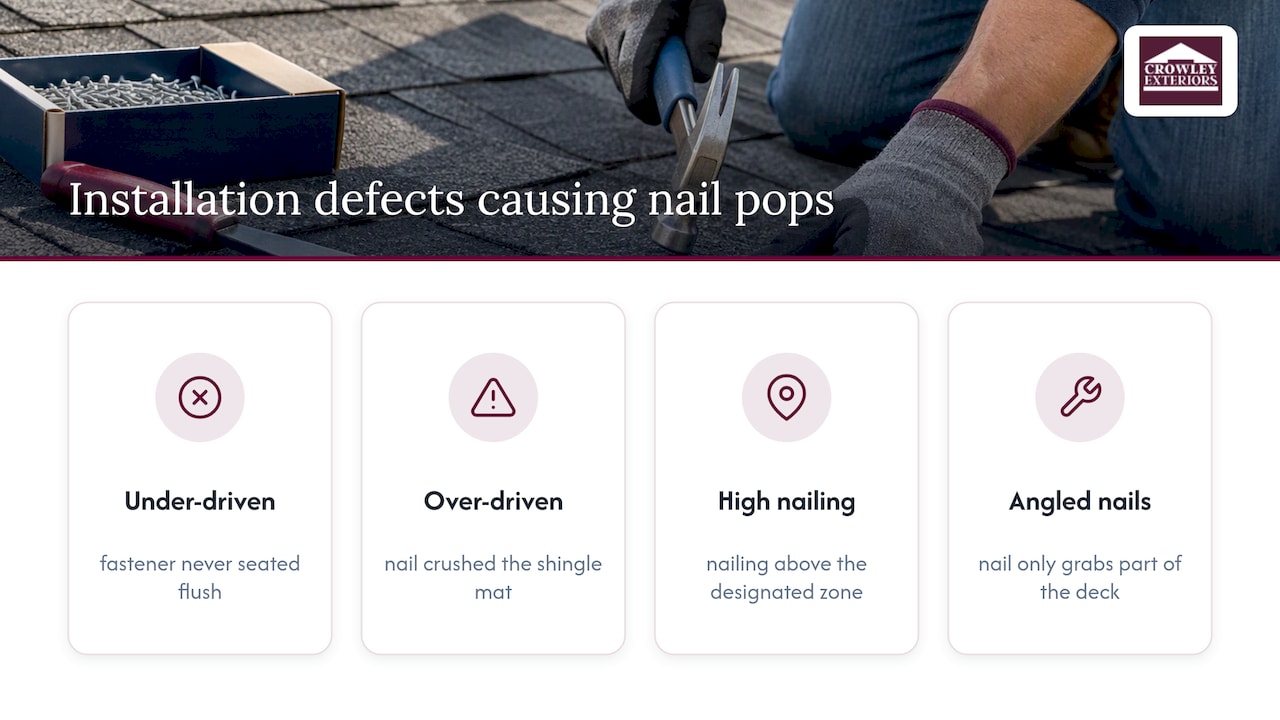
A nail pop happens when a fastener works its way up through the shingle and the deck, breaking the seal strip that keeps water out. The hole left behind sits above the nail head, exposed to wind and rain. Several installation defects create this: under-driven nails that never seated flush, over-driven nails that crushed the shingle mat, high-nailing above the designated nailing zone, and angled nails that only grab part of the deck. GAF’s technical guidance on hand nailing catalogs these as distinct defects, not one problem with one fix.
Deck movement plays a role too. Plywood or OSB expands and contracts with temperature swings, and a nail driven on a cold morning can shift as the wood warms through summer. Sealant aging adds to it: the adhesive strip that bonds shingles together softens in heat and stiffens in cold, and after enough cycles it loses its grip around the fastener.
Common causes of nail pops and why each one matters
Pinning down the cause changes how you fix the problem. A single pop from a bent nail calls for a simple swap, but a pattern of pops across the roof usually points to something systemic.
- Installation errors: nails placed above or below the manufacturer’s nailing zone rarely hold long term.
- Thermal expansion: decking that swells and contracts with temperature cycles gradually works fasteners loose.
- Moisture and poor attic ventilation: trapped humidity swells the deck and softens the wood around the nail shank.
- Rusted or mismatched fasteners: galvanized nails that corrode lose holding strength, and the wrong nail gauge never seated properly to begin with.
- Age-related fatigue: sealant strips that have cycled through enough hot and cold seasons stop bonding even when the nail itself is fine.
Pro Tip: If you find pops clustered in one section rather than scattered randomly, check that area’s attic ventilation first. A moisture problem usually shows up as a pattern, not a single random fastener.
How to spot nail pops during a roof check
You can catch most nail pops without climbing onto the roof. From the ground or a ladder at the eave, look for small humps or bumps in a shingle course, which usually means a nail head is pushing up from underneath. Closer up, watch for an exposed nail head, a torn or “tented” area where the shingle has cracked around the fastener, missing granules in a tight circle, and any rust streaking down from the hole.
Photograph each spot you find: a close-up of the nail or tear, a wider shot showing where it sits on the roof plane, and any matching stain on the attic ceiling or rafters below. An attic check is often the safest way to confirm whether water is already getting through, since daylight visible through the deck or dark staining on the sheathing tells you more than the shingle surface alone.
- Ground and ladder scan: look for humps, discoloration, or shiny exposed nail heads.
- Close-up photos: capture the fastener, the surrounding shingle, and granule loss.
- Attic check: look for daylight through the deck, staining, or damp insulation.
IBHS guidance notes that water entry through a nail hole can occur even without a visible ceiling stain, since self-sealing performance declines as shingles weather. Absence of a stain is not proof the roof is dry.
When a nail pop stops being minor
A single exposed nail on a dry roof is rarely an emergency, but several conditions push a nail pop into urgent territory. Lifted or tented shingle tabs, a hole punched clean through the shingle mat, visible rust around the fastener, and granule loss concentrated at one spot all suggest the seal has failed for longer than it looks. Pops clustered together, or located in valleys and near eaves where water concentrates, carry more risk than an isolated pop on a flat run of roof.
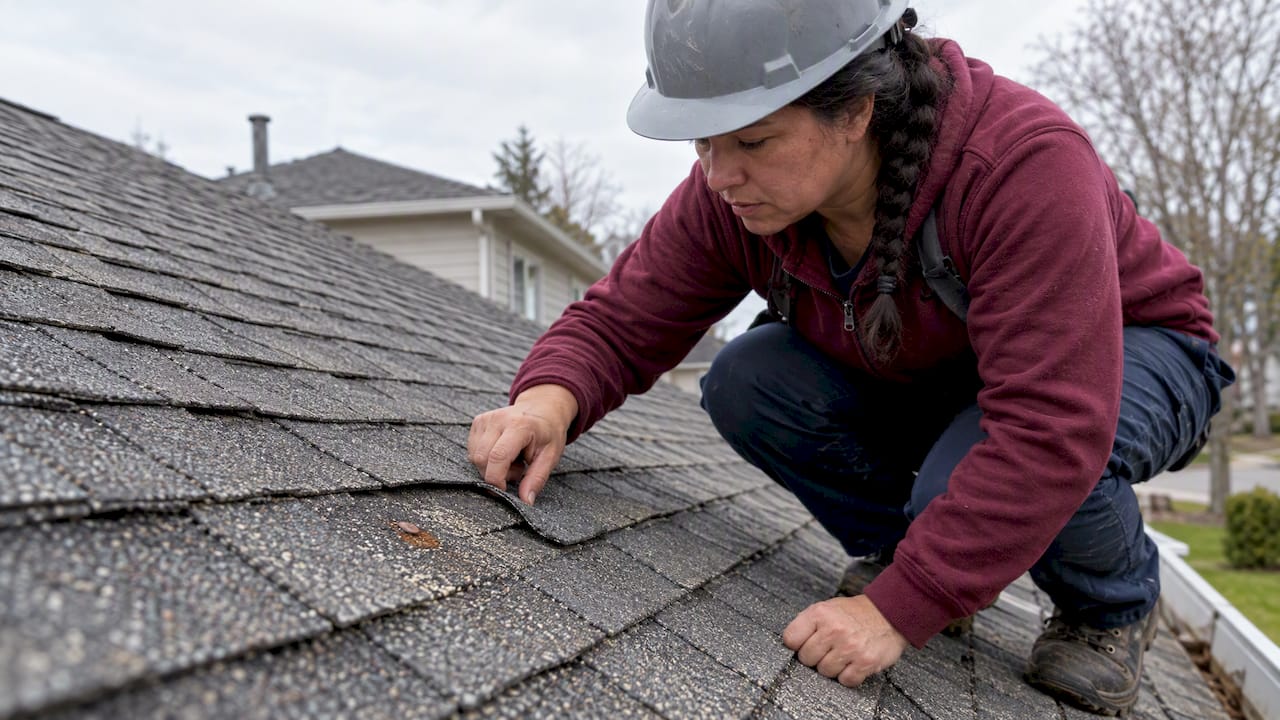
Broken seals also affect wind performance, not just water entry. IBHS testing on shingle wind uplift found that the seal strength between shingles is a primary factor in wind resistance, and a popped nail often means that seal is already compromised in that spot. Combine that with the water-entry risk IBHS has documented at nail holes, and a handful of clustered pops is worth a closer look sooner rather than later.
The correct repair sequence (and why hammering it down usually fails
Tapping a raised nail back down with a hammer looks like a fix, but it rarely holds. The hole in the shingle above the nail head stays open, the original fastener may have already lost its bite in the deck, and the seal strip underneath is still broken. GAF’s bulletin on improperly driven nails warns that roof cement alone is not a permanent fix for an exposed, face-nailed shingle either; it may stop a leak for a season, then crack and let water back in.
The manufacturer-aligned sequence looks like this:
- Identify the shingle and deck condition around the popped nail, checking for soft spots or rot before planning the repair.
- Lift the overlying shingle carefully, usually with a flat bar, to expose the nail without tearing the tab.
- Remove the popped or incorrectly placed nail rather than driving it back in, since a bent or under-seated shank rarely regains full holding power.
- Drive a new fastener in the correct nailing zone, sized and placed to code and to the shingle manufacturer’s spec; penetration depth and nail type matter here, and some installers prefer ring-shank nails in exposed or open-overhang areas to resist future back-out.
- Repair or replace the damaged shingle if the mat is torn, cracked, or has lost significant granule coverage around the hole.
- Hand-seal the disturbed shingle and dab a small amount of roofing sealant over the old nail hole, following the product’s own instructions rather than relying on sealant as the whole repair.
Pro Tip: A repair that skips the hand-sealing step often fails faster than the original nail pop, because the shingle’s factory seal was already broken when the tab was lifted.
Quick fixes that skip removal and re-fastening can also run into warranty trouble. Manufacturer bulletins tie workmanship coverage to installation that follows their nailing and sealing instructions, so a cement-only patch or a hammered-down nail may leave a roof technically out of compliance even if it looks fine from the ground.
Should you fix it yourself or call a roofer?
A single nail pop on a low, walkable roof is within reach for a confident DIYer with the right tools and a stable ladder. But OSHA’s residential fall-protection guidance notes that work exposing a person to a fall of 6 feet or more generally calls for conventional fall protection, and a sloped asphalt roof reaches that height fast. That threshold is worth taking seriously before you climb up with a hammer and a handful of nails.
Certain conditions call for a professional instead: if you need expert help, consider hiring roofing services to ensure a safe and lasting repair.
- Steep roof pitch where footing is unreliable even for a short repair.
- Multiple pops across different roof planes, which suggests a systemic cause worth a full inspection.
- Suspected deck damage, rot, or soft spots found during an attic check.
- Pops near valleys, chimneys, or other roof features where a misstep risks additional damage.
Pro Tip: If fixing the pop means working anywhere a fall of 6 feet or more is possible, treat that as a sign to call a roofer rather than improvise safety gear.
A contractor brings anchored fall protection, a trained eye for deck condition, and a documented inspection report you can keep on file.
What insurance typically covers on a nail pop
Isolated nail pops usually fall under routine maintenance, which NAIC’s consumer guidance on homeowners insurance and industry guidance generally treat as the homeowner’s responsibility rather than a covered loss. Coverage changes if a specific event caused the damage, such as wind or hail dislodging shingles and exposing fasteners that were previously sealed.
Before filing anything, document the roof’s condition: photos of each affected area, a written inspection report, any receipts for prior roof work, and a rough timeline of when you first noticed the issue. Adjusters weigh actual cash value against replacement cost differently depending on your policy, and a contractor’s itemized estimate gives them a concrete number to evaluate rather than a vague description. If a storm is the likely cause, read our first 72 hours after storm damage guide for what to document immediately.
Practical note from Mario and Crowley Exteriors
I have spent years walking roofs across St. Charles County, and nail pops are one of the most common defects we catch during inspections, often clustered near ridge lines or valleys where installation shortcuts show up first. Our team at Crowley Exteriors has over 25 years of local roofing experience, and every inspection we run comes with an itemized estimate and our 25-year workmanship guarantee behind the repair.
— Mario
Get a free inspection before small pops become a bigger repair
If you have spotted a nail pop, an inspection settles the question fast: the team checks the fastener pattern, the attic side of the deck, and any nearby flashing or valley areas for related wear, then gives you an itemized estimate before any work starts.
We handle the repair itself, from removing the bad fastener to hand-sealing the shingle correctly, and we assist with insurance paperwork when storm damage is the likely cause. Our roof repair and inspection services cover exactly this kind of work across St. Charles County, and most inspections can be scheduled within days. If a contractor finds the deck or shingle field is too far gone for a patch repair, we will walk you through our repair versus replacement guidance honestly before recommending next steps.
FAQ
How do I fix a nail pop in my shingles?
The reliable fix is to lift the shingle, remove the popped or misplaced nail, and drive a new fastener in the correct nailing zone rather than hammering the old one back down. GAF’s technical bulletin notes that roof cement alone is not a permanent fix, so the shingle also needs hand-sealing once it is repositioned.
Why do nails pop through shingles?
Nails back out when they were placed outside the correct nailing zone, driven at an angle, or installed too high or too low to seat properly in the deck. Deck movement from temperature swings and aging sealant strips also loosen fasteners over time, even when the original installation was done correctly.
When should I be worried about nail pops?
Worry increases when you see clustered pops rather than one isolated spot, rust around the fastener, granule loss, or a torn shingle with daylight visible through it. IBHS guidance notes that water can enter through a nail hole even without a visible ceiling stain, so the absence of a leak does not mean the roof is dry.
Are roof nail pops covered by insurance?
Isolated nail pops are typically treated as routine maintenance and fall to the homeowner, according to NAIC consumer guidance. Coverage usually applies only when a specific event like wind or hail caused the damage, so documenting the cause with photos and an inspection report matters for any claim.
Sources
- IBHS — Natural weathering and hazard exposure
- OSHA — Residential fall protection guidance
- NAIC / consumer homeowners insurance guidance
Recommended
- What To Do About Hail Damage To Your Roof Right Now
- Roof Leak Emergency: What Homeowners Must Do Now
- 25 To 30% Rule: When Homeowners Should Repair Or Replace A Roof
- 10 Roof Flashing Types Every Homeowner Should Know
This article was prepared with AI assistance for general information. For recommendations specific to your property, contact Crowley Exteriors. Call or text us at 314-839-3800.