


Yes, a correctly installed downspout extension is a low-cost way to keep roof runoff away from your foundation and reduce the risk of basement water damage. Well-sited extensions cut soil saturation near your walls, limit basement flooding, and stop erosion. Codes typically call for discharge at least 5 feet from foundations on expansive soils. Simple surface extensions suit a DIY afternoon, but buried outlets, tricky grading, or repeat flooding call for a professional.
TL;DR:
- Properly installed downspout extensions should discharge at least 5 feet from foundations to prevent soil saturation and basement water issues.
- Rigid materials are preferred for durability, but buried piping is the most long-term solution, generally requiring professional installation.
- Discharge points should be placed on well-drained, absorbent areas away from low spots, sidewalks, or neighbors, with slope and grading being critical factors.
- Regular inspection and maintenance, especially after storms, are essential to prevent clogging, dislodging, or misdirected water that can cause damage.
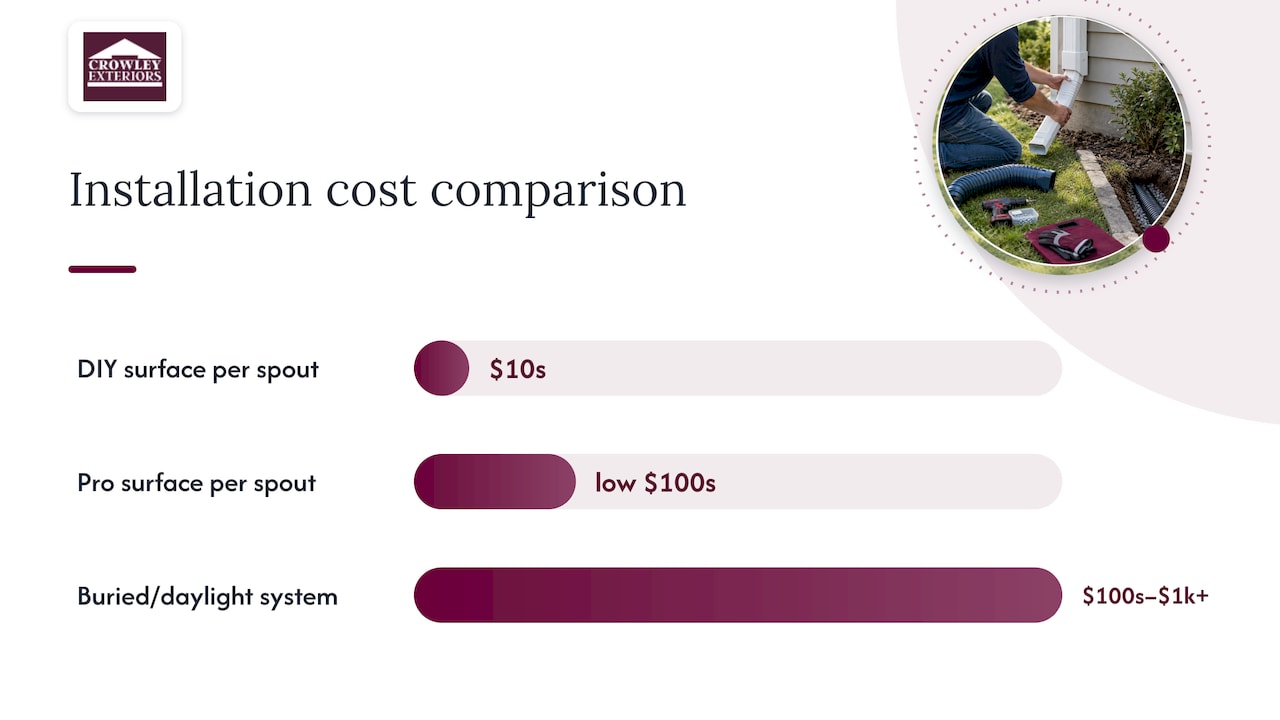
- Surface extensions cost between tens to hundreds of dollars DIY, while buried or daylighted systems can exceed $1,000 depending on complexity and property specifics.
Table of Contents
- Top benefits of downspout extensions
- Types and materials: rigid, flexible, underground, and splash-block options
- How far should downspouts extend? siting, grading, and code-backed distances
- Installation options and cost expectations
- Maintenance and common mistakes to avoid
- Expert perspective: how we evaluate complex drainage issues
- What actually matters with downspout extensions
- Get your gutters and downspouts checked by a local team
- FAQ
- Sources
Top benefits of downspout extensions
A downspout extension does one job: it moves water that would otherwise pool next to your house somewhere safer. That single function pays off in several directions at once.
Foundations suffer most when soil near the footing stays saturated. Wet soil swells and shifts, and the pressure against basement walls (hydrostatic pressure) can eventually cause cracks or bowing. Pushing discharge points away from the house reduces that saturation cycle before it starts.
Basements and crawlspaces also benefit directly. Water that used to collect at the foundation and seep through small cracks gets redirected to the lawn instead, which lowers interior moisture and the mold risk that comes with it. EPA guidance on redirecting downspouts points to landscaped areas as a better destination for roof runoff than pooling against a wall or flowing straight into storm drains.
Beyond the foundation, extensions protect the rest of the property:
- Erosion control: concentrated roof runoff can carve channels through mulch beds, gravel, and the edges of patios or walkways.
- Splashback reduction: water hitting bare ground near the house bounces onto siding and mortar joints, accelerating wear.
- Roof and gutter longevity: a system that drains cleanly puts less backpressure and standing water stress on the gutters feeding it.
A home’s roof can shed thousands of gallons of water per storm, and where that water lands determines whether it becomes a nuisance or a foundation problem. None of this works in isolation. Extensions are one piece of an integrated drainage approach that also includes clean gutters, correct yard grading, and downspout placement that avoids low spots. Skip any one piece and the others have to work harder.
Types and materials: rigid, flexible, underground, and splash-block options
Material choice affects how much maintenance an extension needs and how long it lasts.
- Rigid metal or plastic elbows and tubing: durable, low-maintenance, and resistant to crushing from lawn equipment, though they take more effort to cut and fit during installation.
- Flexible corrugated hoses: cheap and easy to connect, but their ridges trap leaves and sediment, and they tend to wear out faster than rigid pipe.
- Buried PVC or underground piping with a daylight outlet: gives a clean, mow-over look and a long-term solution, though burying pipe and tying it to a daylight point is usually a job for a professional.
- Splash blocks and rip-rap: a low-cost way to control erosion right at the discharge point, useful when a short run is all that’s needed and burying pipe isn’t justified.
Practitioners generally favor rigid, gutter-grade materials over flexible hose for anything meant to last, even though the hose costs less upfront.
Pro Tip: If you go with flexible corrugated extensions for now, check them after every heavy storm. They clog faster than rigid tubing and a blocked extension sends water right back to the foundation.
How far should downspouts extend? siting, grading, and code-backed distances
Distance and slope matter more than material. Municipal disconnection guidance sets practical minimums: discharge at least 6 feet from basement walls and 2 feet from crawlspaces or slabs. IRC and ICC technical guidance backs this up, recommending roof drainage reach at least 5 feet from foundations where soils are expansive, alongside a minimum final grade of a 6 inch drop over the first 10 feet away from the house.
Before you commit to a length, run through a short checklist:
- Measure the landscaped area that will receive the water; it should be large enough to absorb the flow without pooling.
- Test the slope with a level or a simple string-and-stake setup to confirm water will actually move away from the house.
- Avoid discharging onto sidewalks, driveways, or a neighbor’s property, which building science resources flag as both a hazard and a potential legal issue.
- Check for septic drain fields or buried utilities before routing water into that part of the yard.
When the lot is too flat or too small to hit those distances, buried piping to a daylight point, a dry well, or a professionally designed swale or rain garden can substitute for a simple surface run.
Installation options and cost expectations
A basic surface extension is a reasonable DIY project. A buried system usually isn’t.
For a simple surface install:
- Measure the distance from the downspout outlet to your target discharge point, accounting for slope.
- Cut the extension piece to length and dry-fit it against the existing downspout.
- Attach an elbow if you need to change direction, then connect the extension.
- Secure every joint with screws or waterproof tape so wind and lawn mowers don’t knock it loose.
- Finish with a splash block or by routing the end into a planted bed to disperse the flow.
Work slowly around ladders and ensure the downspout itself is securely fastened before adding length to it.
Burying piping, tying into a daylight outlet or dry well, regrading a section of yard, and pulling any required permit are jobs better left to a contractor who does this regularly. Recent market cost estimates put basic DIY materials in the tens of dollars, professional surface installs commonly in the low hundreds per downspout, and buried or daylighted systems anywhere from several hundred dollars to over $1,000 depending on depth, distance, and the number of downspouts involved.
Pro Tip: Ask any contractor you’re considering how they handle permitting for buried drainage work. A vague answer, or a bid dramatically lower than the others, is usually a sign the scope isn’t fully thought through.
Maintenance and common mistakes to avoid
An extension that works on installation day can fail months later if nobody checks it.
Clean gutters at least twice a year and inspect downspout connections after major storms, since heavy wind and debris loosen joints over time. Confirm periodically that the outlet still drains away from the house, especially after any landscaping or mulch work that can quietly change the grade.
Common mistakes to watch for:
- Flexible hose extensions that clog with leaves and stop draining.
- Discharge points aimed at a low spot, a driveway, or a neighbor’s yard.
- Grading that shifted after new sod, mulch, or hardscaping was added, sending water back toward the foundation.
In colder climates, check for ice buildup at the outlet each winter, and consider a hinged elbow if the extension sits in the mowing path. If buried lines back up repeatedly or a low area keeps collecting water, that’s usually the signal to convert to a properly engineered buried drain or add a rain garden rather than patching the surface setup again.
Expert perspective: how we evaluate complex drainage issues
Some drainage problems go beyond what a splash block can fix. Persistent basement dampness, standing water after storms, clay-heavy soil, or several downspouts that all need coordinated rerouting usually call for a professional look rather than another DIY patch.
When we assess a property for drainage, we look at roof catchment area, how well the soil absorbs water, existing grade lines, and whether utilities or a septic field limit where water can go. We also check how the fix lines up with code setbacks so the solution holds up over time, not just through the next storm.
We offer free inspections and itemized, no-obligation estimates, and our work carries a workmanship guarantee. In practice, downspout routing rarely stands alone. We often coordinate it with gutter repairs and grading adjustments so the whole system, roof to yard, moves water the same direction.
What actually matters with downspout extensions
Most advice on this topic treats length as the whole story: just get the water 5 or 6 feet away and call it solved. That misses the bigger issue. A 6 foot extension draining onto a slope that tips back toward the house does almost nothing, while a shorter run into a well-graded bed can outperform it.
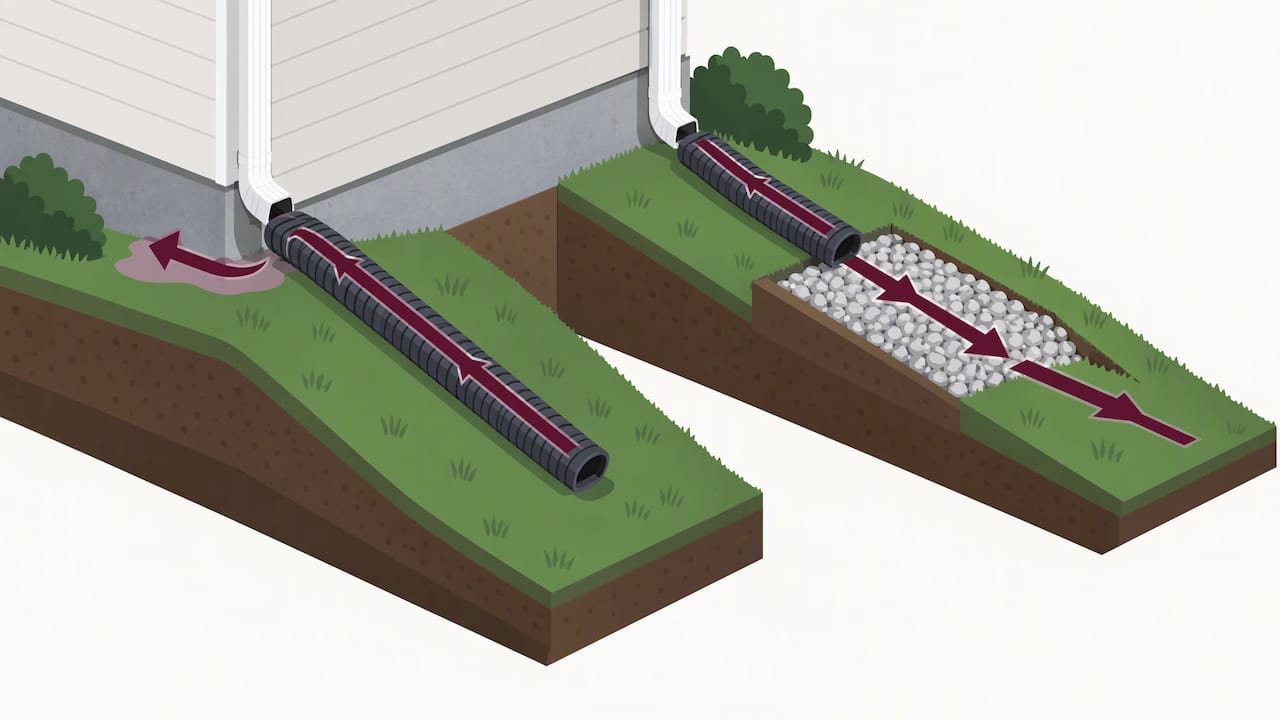
The conventional checklist also underrates maintenance. An extension installed correctly in April can be clogged or knocked loose by October, and nobody notices until a wet basement shows up. If you’re prioritizing one thing, prioritize slope and a seasonal check, not the extension length alone.
Where I’d push back on the general DIY-first instinct: if your soil is heavy clay, or you’ve already had basement moisture more than once, a surface extension is a band-aid. Buried drainage or a dry well solves the actual problem instead of relocating it six feet.
— Mario
Get your gutters and downspouts checked by a local team
We install and repair seamless gutters and downspout systems throughout the region, backed by free inspections and itemized estimates so you know the full scope before any work starts.

If your yard keeps collecting water or you’re not sure your current setup meets code, book a free inspection and we’ll walk you through the right fix and a real cost estimate.
FAQ
What does a downspout do?
A downspout carries water collected by your gutters down from the roof and away from the house, preventing it from sheeting off the roof edge directly onto the foundation or walkways. Without one, roof runoff would concentrate in one spot and saturate the soil right next to your walls.
How much does it cost to extend a downspout?
Basic DIY surface extensions typically run in the tens of dollars for materials, while professional surface installs commonly fall in the low hundreds per downspout. Buried or daylighted systems can cost several hundred dollars to over $1,000 depending on depth, distance, and how many downspouts are involved.
Why do new builds not have gutters?
Builders sometimes skip gutters initially to keep upfront costs down or because the final grading and landscaping plan isn’t finished yet, which affects where downspouts should discharge. Once grading is complete, adding gutters and properly sited downspout extensions is a common next step for protecting the foundation.
What are splash blocks?
Splash blocks are small, shaped pieces of concrete or plastic placed under a downspout outlet to spread water out and slow its flow, reducing erosion right at that spot. They work well for short runs but don’t replace a longer extension or buried pipe when water needs to travel farther from the foundation.
Sources
- Soak Up the Rain: Disconnect / Redirect Downspouts | US EPA
- Downspout Disconnection (municipal how-to brochure)
- Rain & Groundwater Management: Reducing the Risk of Water Intrusion & Damage (ICC / IRC guidance)
- Downspout extension install costs guide (market cost example)
Recommended
- IRC Drip Edge: Contractor Verified Checklist For Homeowners & Pros
- Gutter Overflow Causes: Quick Diagnosis And Fixes
- Homeowners: 6 Step Checklist To Spot Storm Chaser Roofers
This article was prepared with AI assistance for general information. For recommendations specific to your property, contact Crowley Exteriors. Call or text us at 314-839-3800.