

If you need a reliable roofing contractor in O’Fallon, a strong local option is to schedule a free inspection or no-obligation estimate before committing to any work. The sections below walk through warning signs, realistic costs, insurance help, and how to vet any contractor you’re considering.
TL;DR:
- One cracked shingle usually needs repair, but sagging decking, widespread granule loss, or repair costs near 25% to 30% of a new roof favor replacement.
- After hail or wind, avoid walking on the roof, photograph damage, tarp active leaks, and obtain a written inspection report before finalizing an insurance claim.
- A proper inspection checks the full roof, attic, and flashing, then provides photos and a written report suitable for sharing with an insurer.
- Before hiring, verify current licensing and insurance, and require a written contract covering materials, timing, cleanup, permits, and warranty; reject pressure to sign immediately.
- Roofing costs vary with size, pitch, materials, old shingle removal, and hidden deck damage; compare itemized estimates rather than hourly rates.
Table of Contents
- Services O’Fallon Homeowners Typically Need
- Signs You Need Repair Versus Replacement
- What Happens During an Inspection and Replacement
- Storm Damage: What to Do First
- How to Vet a Roofing Contractor Before You Hire
- Pricing Factors and Typical Cost Ranges
- Crowley Exteriors: Local Experience and Guarantees
- Permits and Code Compliance for O’Fallon Roofing Projects
- Roofing Materials Available in O’Fallon and How They Compare
- What O’Fallon Homeowners Say About Local Roofing Work
- What Matters Most When Hiring a Local Roofer
- Schedule Your Free Roof Inspection
- FAQ
- Sources
Services O’Fallon Homeowners Typically Need
A full-service local roofer should cover the whole lifecycle of your roof, not just one repair. Most homeowners end up needing one or more of these services at some point:
- Roof inspections to catch wear before it becomes a leak, especially before buying or selling a home.
- Leak repair for isolated issues like flashing failures, valley leaks, or a cracked vent boot.
- Full roof replacement when the shingles are past their service life or damage is widespread.
- Storm and hail repair after a severe weather event damages shingles, gutters, or siding.
- Gutter and siding work, often bundled with roofing since all three protect the same structure.
Whichever service applies, a dependable contractor delivers an itemized estimate, pulls the required permits, and leaves your property clean when the job wraps up.
Signs You Need Repair Versus Replacement
Knowing what to look for helps you decide how urgently to call someone and whether you’re looking at a patch job or a full tear-off.
- Visual wear: missing, cupped, or curling shingles, heavy granule loss in gutters, moss or dark streaking, and any visible sagging in the roof deck.
- Leak indicators: brown stains on attic sheathing, active drips during rain, or ceiling stains inside the home that weren’t there before.
- Storm signs: a roof-wide pattern of hits rather than one or two spots, dented plumbing vents or gutters, and shingles knocked loose or displaced.
A single cracked shingle usually means a repair. Sagging decking, widespread granule loss, or a roof nearing the end of its expected lifespan point toward replacement, and a professional inspection can confirm which situation you’re in before you spend money on the wrong fix.
What Happens During an Inspection and Replacement
A thorough inspection isn’t a quick glance from the driveway. It should include:
- An exterior walk of the entire roof surface, not just the sections visible from the ground.
- An attic check for moisture, daylight gaps, or insulation damage.
- A review of flashing around chimneys, vents, and valleys, where most leaks start.
- Photo documentation and a written report you can keep or share with an insurer.
From there, the estimate should spell out material choices, labor costs, and warranty terms in plain language rather than vague line items. Scheduling varies by season, but small repairs often turn around within days, while a full replacement process can be completed on-site in one to three days once materials are staged and permits are in hand.
Storm Damage: What to Do First
Hail and wind events are the most common reason O’Fallon homeowners end up calling a roofer on short notice, as explained in detail in Hail Size and Roof Damage: When to Inspect and Act. Acting in the right order protects both your home and your insurance claim.
- Check that the roof and attic are safe to approach, and avoid walking on the roof yourself after a storm.
- Photograph visible damage immediately, including shingles, gutters, vents, and siding.
- Cover active leaks with a tarp and move furniture or belongings away from water intrusion.
- Request a storm inspection and written damage report before filing or finalizing a claim.
Pro Tip: Photograph damage from multiple angles and include a dated note or timestamp, since adjusters rely on clear, specific documentation rather than general descriptions.
A contractor’s written report and photos often make the difference between a smooth claim and a disputed one, since adjusters look for objective indicators like dented metal vents or granule loss rather than general wear.
How to Vet a Roofing Contractor Before You Hire
Not every company that knocks on your door after a storm deserves your business. A short list of questions filters out most problems before you sign anything.
- Ask for proof of current licensing and insurance, and get it in writing, not just a verbal confirmation.
- Request a written contract that spells out materials, timeline, cleanup, and who handles permits.
- Ask about warranty length and coverage, specifically whether it covers workmanship, materials, or both.
- Check for local references, a project portfolio, and manufacturer certifications.
Local contractors in St. Charles County often have profiles on sites like the Better Business Bureau, where customer ratings and complaint histories are public. Checking a BBB listing for any contractor you’re considering takes a few minutes and tells you how they handle disputes.
Watch for red flags: refusal to provide a written estimate, high-pressure same-day signing demands, requests for large cash payments upfront, and vague answers about who actually performs the work.
Pricing Factors and Typical Cost Ranges
Every roofing bid depends on a handful of variables, and understanding them helps you judge whether a quote is reasonable.
- Square footage and roof pitch: steeper, more complex roofs take longer and cost more to work on safely.
- Material choice: asphalt shingles are the most common and budget-friendly option, while metal and premium materials cost more upfront but can last longer.
- Tear-off versus overlay: removing old layers down to the deck costs more than installing over existing shingles, but it’s usually the better long-term choice.
- Structural repairs: rotted decking found during tear-off adds to the final price.
Because costs vary so much by home size, material, and roof condition, a written itemized estimate is the only reliable way to know your actual number. If you’re trying to decide whether a repair makes sense at all, the 25 to 30% rule is a useful framework: when repair costs approach a quarter to a third of full replacement cost, replacement often makes more financial sense.
Crowley Exteriors: Local Experience and Guarantees
We’ve worked as a family-owned roofing, siding, and gutter company in St. Charles County for more than 25 years, which means our team has seen how Missouri hail, wind, and seasonal swings affect local roofs. Every estimate starts with a free inspection and a no-obligation quote, so you know the full scope before deciding anything.
We back our installations with a workmanship guarantee and help homeowners navigate insurance claims when storm damage is involved. During your estimate, feel free to ask for portfolio photos from completed roof replacement projects, a sample copy of our warranty language, and documentation of our insurance coverage. Our services page outlines everything we handle if you want the full list before reaching out.
Permits and Code Compliance for O’Fallon Roofing Projects
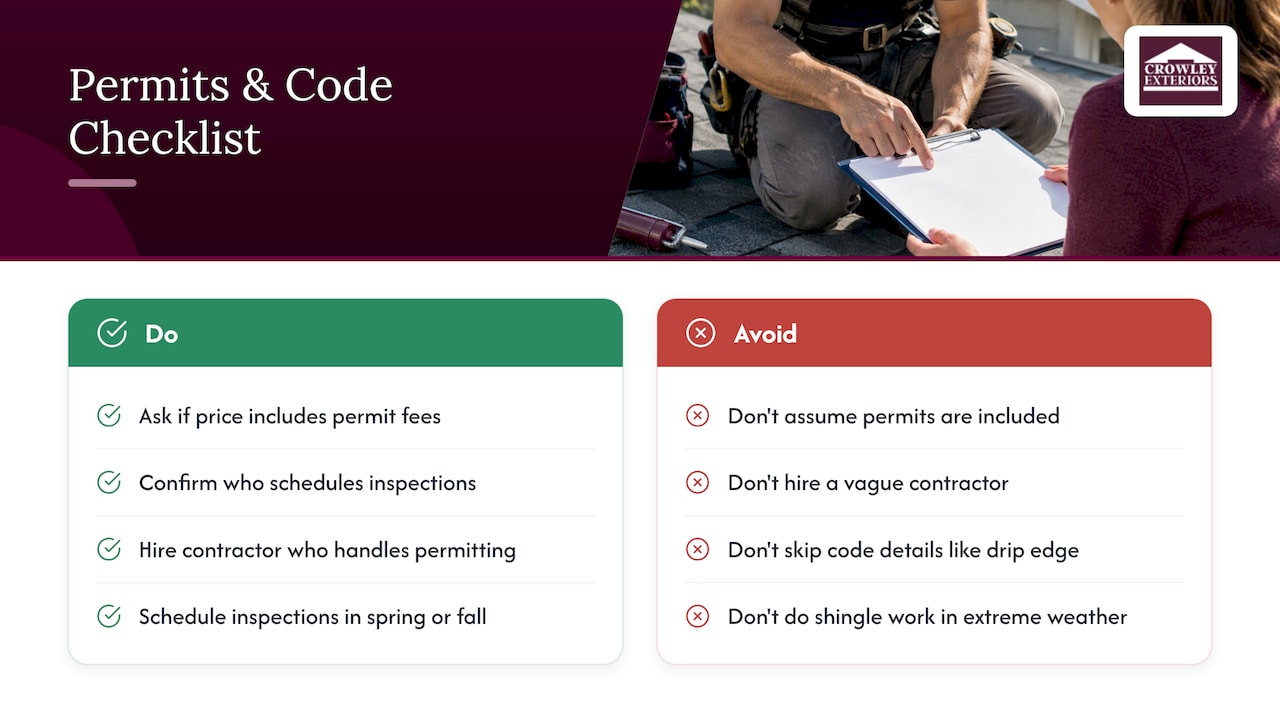
Most roofing replacement and major repair work in the St. Charles County area requires a permit before work begins, and code requirements cover details like underlayment, flashing, ventilation, and how many layers of shingles are allowed before a full tear-off is required. A contractor who handles permitting for you removes one more thing from your plate and reduces the risk of a failed inspection that delays your project.
Local code typically references the International Residential Code, which sets baseline standards for things like drip edge installation and proper flashing around penetrations. These details matter more than they might seem: a missing drip edge or improperly lapped flashing is a common cause of leaks that show up months after installation looks finished.
When you’re comparing bids, ask directly whether the quoted price includes permit fees and who is responsible for scheduling any required inspections during the project. A contractor who’s vague about this is either inexperienced with local requirements or planning to skip the step, both of which can leave you liable if problems surface later. It’s worth asking the question outright rather than assuming it’s included, since permit handling is one of the easiest things to overlook when comparing multiple estimates side by side.
Seasonal timing matters too. Spring and fall are typically the best windows for inspections and non-emergency work in this region, since extreme summer heat and winter cold both make shingle work harder to execute well.
Roofing Materials Available in O’Fallon and How They Compare
Homeowners in this area generally choose from a handful of material categories, each with its own tradeoffs.
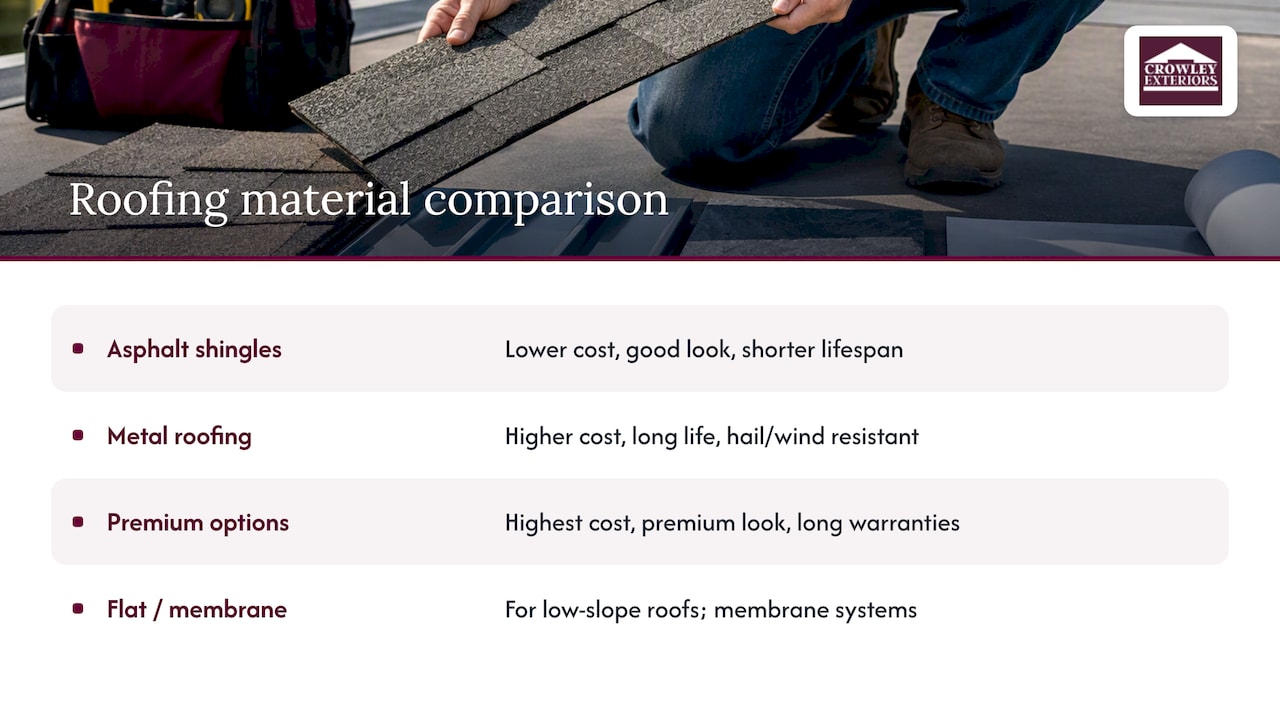
Asphalt shingles remain the most common choice because they balance cost, appearance, and durability well for most homes. They’re widely available in a range of colors and styles, and most contractors can source and install them quickly, though they generally have a shorter lifespan than premium alternatives.
Metal roofing costs more upfront but holds up well against hail and wind, which makes it appealing in a region that sees both. It also tends to last longer than asphalt, though matching repairs to existing panels later can be trickier than replacing a shingle.
Premium options like synthetic slate or architectural shingles offer a higher-end appearance and often come with longer warranties, at a higher price point than standard three-tab shingles.
Flat or low-slope roofing, common on additions or detached structures, usually calls for a different material category entirely, such as a membrane system, rather than standard shingles.
The right choice depends on your budget, how long you plan to stay in the home, and how much weather resistance you want to pay for upfront. A contractor should walk through these tradeoffs with you during the estimate rather than defaulting to whatever is easiest to install.
What O’Fallon Homeowners Say About Local Roofing Work
Homeowners evaluating a roofing contractor often look for proof that the company has handled work similar to theirs, in their own neighborhood, under the same weather conditions they’re dealing with. That’s part of why a visible project portfolio matters as much as any sales pitch: it shows real houses, real materials, and real outcomes rather than generic stock photos.
When you’re reviewing a contractor’s past work, ask to see photos from completed projects in your area, not just renderings or manufacturer catalog images. A company confident in its workmanship will have before-and-after photos ready to share, along with a sense of which neighborhoods or home styles it has worked on most. If a contractor can’t produce any project history specific to your region, that’s worth factoring into your decision.
What Matters Most When Hiring a Local Roofer
In reviewing how local contractors operate, the clearest advice is to prioritize contractors who hand you a detailed written estimate over whoever quotes the lowest number. A vague bid and a weak warranty cost more down the road than a slightly higher price with clear terms.
— Mario
Schedule Your Free Roof Inspection
Getting a straight answer about your roof’s condition starts with a free inspection, and we’re ready to walk your property, document what we find, and hand you a no-obligation estimate.
- Free inspections with no pressure to sign anything on the spot.
- 25-year workmanship guarantee backing every roof replacement.
- Insurance claim assistance if storm damage is part of the picture.
Reach out through our contact page to get a visit on the calendar this week.
FAQ
What is the average cost to put on a roof?
Costs vary widely based on square footage, pitch, and material, so there’s no single number that applies to every home. The only accurate way to know your cost is a written, itemized estimate from a contractor who has inspected your specific roof.
What is the 25% rule for roofing?
Our guide to this rule walks through the reasoning in more detail.
How much do roofing contractors charge per hour?
Most roofing work is quoted as a flat project price rather than an hourly rate, since labor is only one part of the total cost alongside materials and disposal. Ask for an itemized estimate rather than an hourly figure when comparing bids.
How much does it cost to replace a roof on a $4000 square foot house?
Cost depends heavily on roof pitch, material choice, and local labor rates, which means there’s no fixed answer that applies universally. A contractor needs to inspect the actual roof and provide a written estimate before you can compare real numbers.
Sources
- BBB listing for a local roofing contractor (example)
- BBB listing for another local roofing contractor (example)
Recommended
- Homeowners: 12 Line Roofing Estimate With Crowley Exteriors Example
- What Should Be On Your Roof Estimate Checklist?
- Three Checks Homeowners Can Do In 10 Minutes To Choose A Roofer
- When To Replace Your Roof: Signs, Timelines, And Costs
This article was prepared with AI assistance for general information. For recommendations specific to your property, contact Crowley Exteriors. Call or text us at 314-839-3800.