

Tempered glass is heat-treated safety glass that is several times stronger than ordinary window glass. When it breaks, it crumbles into small pebble-like pieces instead of long, sharp shards. Most home windows are not tempered. Building codes require it only in certain “hazardous locations”: near doors, close to the floor, around tubs and showers, and next to stairs. This guide shows how to spot those spots in your own house, what tempered glass costs, and how it relates to noise and storm protection.
TL;DR
- Tempered glass is about three to five times stronger than regular (annealed) glass and breaks into small, blunt pieces.
- Most standard residential windows use annealed glass. Tempered is required in specific places, such as near doors, large low panes, and bathroom windows within 60 inches of a tub or shower floor.
- Replacing a tempered window pane typically runs $200 to $600 per window, according to Angi’s 2026 figures.
- Tempered glass is not impact-rated glass and it is not a soundproofing upgrade. Laminated glass and extra panes do those jobs.
- Local code decides in the end, so confirm with your building department or your installer before ordering.
Table of Contents
- What tempered glass is and how it breaks
- Are most windows tempered?
- Where tempered glass is required
- Bathroom windows and tempered glass
- What tempered glass windows cost
- Tempered glass is not the same as impact-resistant glass
- Noise reduction: what actually helps
- How to choose: a short checklist
- Get your windows checked by a local team
- FAQ
- Sources
What tempered glass is and how it breaks
Regular window glass is annealed: it is cooled slowly, so it has little built-in stress. Tempered glass is heated and then cooled very quickly. That process puts the outer surfaces in compression and the interior in tension. The result, per the Building America Solution Center, is glass up to five times stronger than traditional glass. When it fails, it shatters into small pebble-sized bits without dangerous edges.
The U.S. Forest Service security guide puts the strength at three to five times that of annealed glass, and notes the pieces are cube-like and far less dangerous than annealed shards. Cardinal Glass explains that tempered glass meets the ASTM C1048 specification and the ANSI Z97.1 and CPSC 16 CFR 1201 safety standards.
Two practical consequences follow:
- It cannot be cut or drilled afterward. Every cut, edge and hole has to be done before tempering. That is why a replacement pane is ordered to exact size.
- It can fail without warning in rare cases. The U.S. Consumer Product Safety Commission’s tempered glass safety alert notes that scratches, installation errors or other factors can cause spontaneous breakage, because the surface is under constant pressure. Careful handling and professional installation reduce that risk.
Are most windows tempered?
No. Most residential window glass is annealed. ProVia, for example, describes annealed glass as the standard in its windows, with tempered available as an upgrade, and notes that state and local codes may require tempered glass for certain applications.
So if you are shopping for new windows, expect tempered glass on some openings and not others. A well-planned order mixes both: standard glass in ordinary bedroom and living room windows, tempered where the code calls for it.
How to tell if your window is tempered
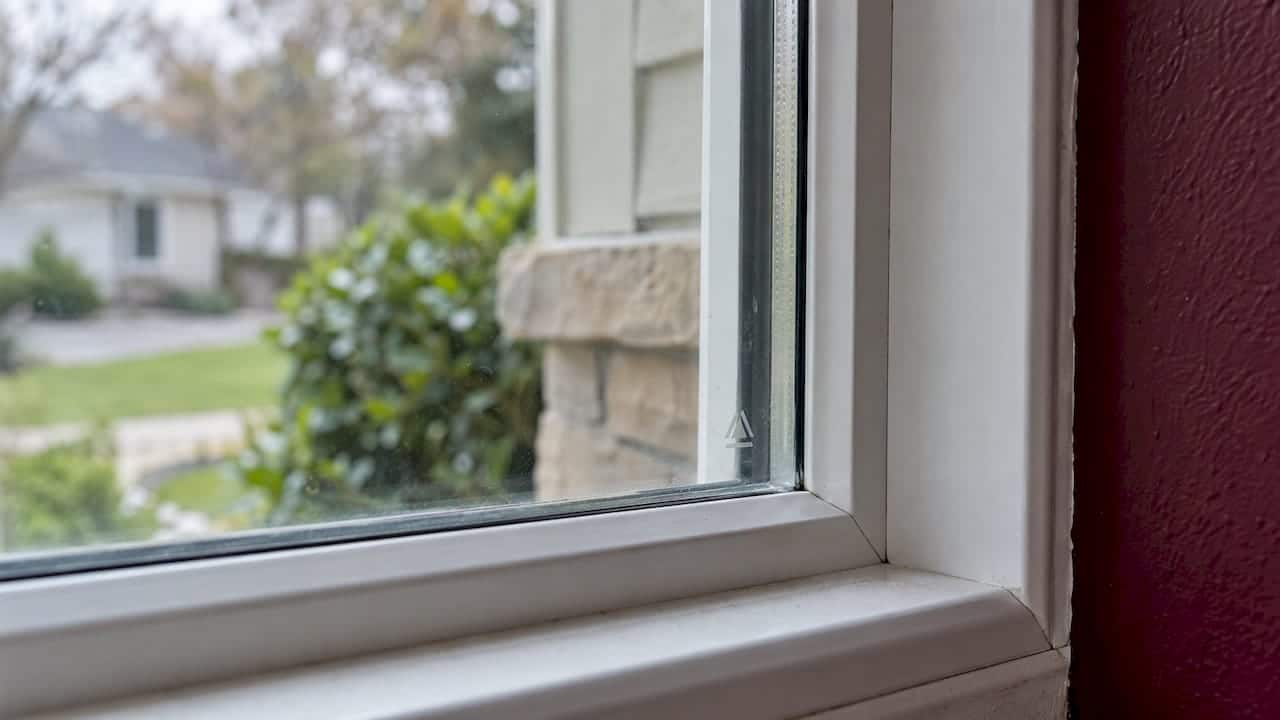
Look in a corner of the glass for a small etched mark, sometimes called a “bug,” that identifies the glass type and manufacturer. Boise Bath’s window guide points to this etched mark as the sign of tempered glass. Insulated units can carry the stamp on one or both panes. If you cannot find a mark, ask the installer who put the window in, or have the window checked during an inspection.
Where tempered glass is required
The International Residential Code (IRC) is the model code most U.S. jurisdictions build on. Each state, county and city adopts its own version, with amendments. The 2021 IRC safety glazing summary published by one city lists these hazardous locations: glazing in doors and next to doors, certain large low windows, guards and railings, wet-surface areas, and glazing near stairs, ramps and the bottom stair landing.
The large low window rule
Under IRC Section R308.4.3, as Boulder County explains, a single pane counts as a hazardous location when all four of these are true:
- The exposed area is larger than 9 square feet.
- The bottom edge is less than 18 inches above the floor.
- The top edge is more than 36 inches above the floor.
- A walking surface is within 36 inches horizontally of the glass.
A big picture window that starts near the floor next to a deck or hallway is the classic case.
Windows near doors
Under the International Residential Code, which St. Charles County and most local cities adopt with local amendments (Section R308.4), safety glass is generally required in a window within 24 inches of a door in its closed position when the bottom of the glass is less than 60 inches above the floor. A narrow sidelight beside your front door is the typical example.
Stairs, railings and wet areas
Glass beside stairways, ramps and landings, and glass used in guards and railings, falls under the same safety glazing rules. Wet areas are covered in the bathroom section below.
Local rules differ
The same code section covers other places where people are likely to hit the glass, such as doors, tub and shower enclosures, and glass next to stairways. Because adoption dates and amendments vary, the final word belongs to your local building department. When we replace windows, we check the openings against local requirements before the order goes in.
Bathroom windows and tempered glass
Bathrooms generate the most questions, and for good reason: wet floors, hard surfaces and glass close to a person’s body.
Under IRC Section R308.4.5, glazing in walls, enclosures or fences containing or next to hot tubs, spas, whirlpools, saunas, steam rooms, bathtubs, showers and indoor or outdoor pools is a hazardous location when its bottom exposed edge is less than 60 inches above a standing or walking surface. The same city summary adds that this applies to single glazing and to each pane of multiple glazing.
In plain terms: if a window sits over your tub, or in a shower wall with the glass low enough to reach, it needs safety glass. A small window set high above a shower, with its bottom edge more than 60 inches above the floor of the tub, usually falls outside the rule, but check your local version.
Choosing a bathroom window
- Measure from the standing surface. Measure from the bottom of the tub or shower floor, not the bathroom floor.
- Ask about privacy glass. Frosted or patterned glass has to be available in tempered form. Confirm that before ordering, since tempered glass cannot be modified afterward, as Sonshine Glass notes.
- Think about ventilation. An operable window helps with moisture. Check that the tempered option is offered in the style you want.
- Keep the stamp visible for the inspector. If you are pulling a permit, the etched mark makes the inspection simple.
What tempered glass windows cost
Tempered glass costs more than annealed, mainly because of the extra processing and the custom sizing. For a finished job, Angi’s 2026 cost guide reports that tempered glass replacement costs $200 to $600 per window, while general window glass replacement averages $285, with most homeowners paying $181 to $414.
What moves the number:
- Size. Larger panes cost more and are harder to handle.
- Thickness. Heavier glass costs more per square foot.
- Shape and finish. Custom shapes, patterned or tinted glass raise the price.
- Insulated unit vs. single pane. A double-pane unit with tempered glass in one or both panes costs more than a single sheet.
- Access. A second-floor or hard-to-reach opening adds labor.
We do not publish set prices for window work, because every opening is different. We give a free, itemized estimate after looking at the windows, so you can see each line before you decide.
Tempered glass is not the same as impact-resistant glass
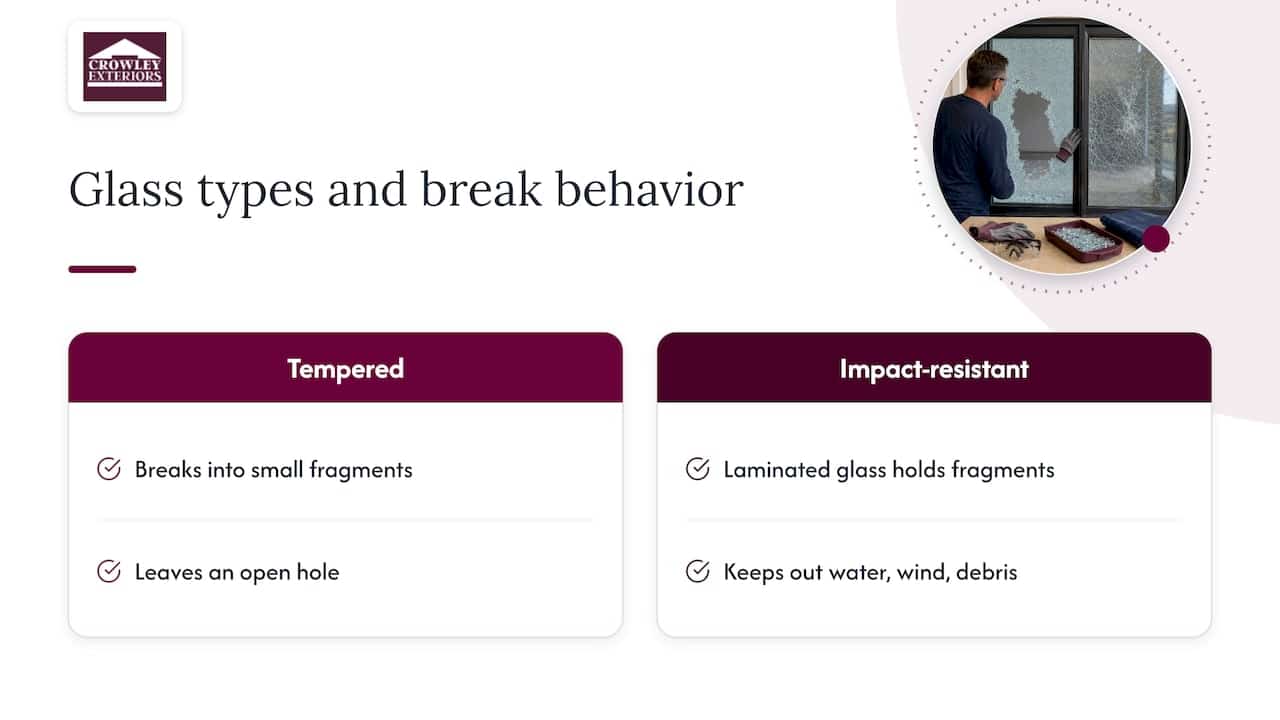
Homeowners often assume tempered means storm-proof. It does not. Tempered and impact-resistant windows are different: tempered glass breaks into small, relatively harmless fragments, while impact-resistant laminated glass holds the fragments together so water, wind or flying debris cannot get in.
That difference matters in Missouri, where hail, straight-line winds and tornado-season storms are part of the calendar. Tempered glass can still break from a hard hail strike. If it does, it falls apart in a way that is safer for people but leaves an open hole. If you have hail-damaged glass, our guide to hail damaged windows and how to claim walks through the photos and steps to take.
Heat and thermal stress
Tempered glass handles heat better than annealed. The Building America Solution Center cites research showing it performs more than four times better than single-pane annealed glass under heat exposure. Even so, windows can break after only one to three minutes of direct flames or heat, according to the Insurance Institute for Business & Home Safety as quoted there. The Forest Service guide also cautions that tempered glass can break on its own under thermal shock or high winds.
One everyday heat issue is reflected sunlight. Highly reflective or low-E glass can bounce heat onto things nearby. For an example outside the glass itself, this piece on preventing turf melting near windows shows how reflected heat can damage a lawn surface. If you are curious how coatings change heat flow through the glass, see our explanation of low-E glass benefits.
Noise reduction: what actually helps
The search for quieter windows often leads to tempered glass, but the glass type is only part of the picture. Noise is measured with a Sound Transmission Class (STC) number; a higher number means less sound passes through. In general terms, these things make a window quieter:
- Laminated glass. Two layers of glass bonded with a plastic interlayer damp vibration. This is the single most effective glass change for noise. Tempered glass on its own does not do this.
- Different thicknesses in a double-pane unit. Using panes of unequal thickness stops a wider range of sound frequencies than two identical panes.
- A tight seal. Gaps around the sash and frame let sound through even when the glass is good. Fixed and well-sealed windows tend to outperform ones that leak air.
- Good installation. Proper flashing, insulation and caulking around the frame matter as much as the glass.
- Added panes. A third pane can help, though gains depend on how the unit is built.
The practical order of operations: fix air leaks first, then choose a laminated or mixed-thickness insulated unit if noise is a major concern. If drafts are your problem too, our winter window drafts guide covers sealing basics. For fogged units that have lost their seal, see foggy double pane windows.
STC ratings vary by manufacturer and by test, so compare the published rating for the exact window you are considering instead of relying on glass type alone.
How to choose: a short checklist
- Walk the house and mark every opening near a door, near the floor, beside stairs, or around a tub or shower.
- Measure the glass area and heights against the rules above.
- Check your local building department for the adopted code and any amendments.
- Decide on extras such as laminated glass for noise or impact, and low-E coatings for energy.
- Get an itemized estimate that lists tempered panes separately from standard ones.
- Confirm the etched mark is on the finished windows.
Our perspective
More than 20 years of working on Missouri homes, we have seen the same pattern: homeowners hear “tempered” and assume the whole window is stronger in every way. It is stronger, and safer when it breaks, but it is one piece of a well-built opening. The installation, the flashing, the seal and the right glass for each location decide how a window performs through hail, wind and winters.
That is why we start with a free inspection and an itemized estimate. We walk the openings, point out where safety glazing is called for, and show you what each option adds, so you are not guessing at the price or the code. We are a family-owned team, and we answer quickly because a broken window or a leak should not wait.
If a storm has already done damage, we also help with insurance claim support so the repair is documented properly from day one.
Mario
Get your windows checked by a local team
If you are in St. Charles County and planning a window replacement, we will look at each opening, flag the ones that need tempered glass, and give you a free, no-obligation estimate with every line itemized. Our work is backed by a workmanship warranty (10 years on full roof replacements, 1 year on most repairs). See our window replacement service or reach us through the Crowley Exteriors site.

If the window problem is part of a bigger storm repair, ask us about roof, siding and gutter work at the same visit.
FAQ
Is tempered glass 100% glass?
Yes. It is ordinary soda-lime glass that has been heat-treated, not a different material. The treatment changes its internal stress, which is what makes it stronger and gives it the crumbling break pattern. It has no plastic layer, unlike laminated glass.
How much does tempered glass for a window cost?
Angi’s 2026 figures put tempered glass replacement at $200 to $600 per window, depending on size, thickness and shape. Larger, thicker or custom panes sit at the high end. A written estimate that itemizes each pane shows exactly where your total comes from.
Is tempered glass the strongest glass for windows?
It is much stronger than annealed glass, but strength is not the same as impact resistance. Laminated impact-rated glass holds together after a hit and keeps wind and water out, which tempered glass does not. Which one is best depends on whether your goal is injury safety, storm protection or noise.
Can tempered glass be cut to fit after I buy it?
No. All cutting, edge work and drilling must be done before tempering. If the size is wrong, the pane has to be remade, so measure carefully and have an installer confirm sizes.
Does tempered glass block noise?
Not by itself. Laminated glass, panes of different thickness and a tight, well-installed frame do more to cut outside sound than tempering does.
Sources
- Building America Solution Center: Windows Have Impact-Rated Glass, Fire-Resistant Glass, or Protective Coverings
- U.S. Forest Service Physical Security Toolbox: Types of Glazing
- Cardinal Glass: Tempered Glass Definition
- CPSC Tempered Glass Safety Alert
- ProVia: Clear Glass Windows
- Boise Bath: Bathroom Window Types and Placement Guide
- Boulder County: Safety Glazing B30
- Sonshine Glass: Glass Buyer’s Guide
- Angi: 2026 Window Glass Replacement Cost
- Prevent Turf Melting: Installer Tested Fixes
Recommended
- Cut 30–50% Window Energy Loss With Low E Glass For Your Climate
- Save 10–20% On Energy Bills With Low-E Glass: Homeowner Checklist
- Fix Window Drafts This Winter For Under $50, St. Charles Homeowners
- Stop Wasting Money On Foggy Double Pane Windows: 4 Fixes For Homeowners
This article was prepared with AI assistance for general information. For recommendations specific to your property, contact Crowley Exteriors. Call or text us at 314-839-3800.