


Condensation on windows is almost always moisture from your indoor air landing on cold glass, not a defect in the window. Where the water shows up tells you what to do. On the inside, lower your indoor humidity and move air across the glass. On the outside, it is usually a sign the glass is doing its insulating job. Between the panes, the seal has failed and the unit needs repair or replacement.
TL;DR
- Water on the room side of the glass means indoor air is too humid for the glass temperature. Ventilate, run exhaust fans and dehumidify.
- Water on the outside in summer or spring and fall is normal and often a sign of efficient glass. It is not a leak.
- Fog or droplets trapped between the panes mean a failed seal. Wiping will not fix it.
- Wipe interior condensation off promptly. Moisture left day after day can lead to mold and damaged frames, sills and paint.
- Persistent moisture plus soft, stained or rotting wood is the point to call a pro for an inspection.
Table of Contents
- Why windows sweat
- Inside, outside or between the panes?
- Is condensation in winter normal?
- How to stop condensation on windows in winter
- Water on the outside of the window
- Condensation between the panes
- Should you wipe it off?
- What persistent moisture can damage
- When it is not condensation at all
- Drafts and condensation are linked
- A simple one-week plan
- Get a professional look at your windows
- FAQ
- Sources
Why windows sweat
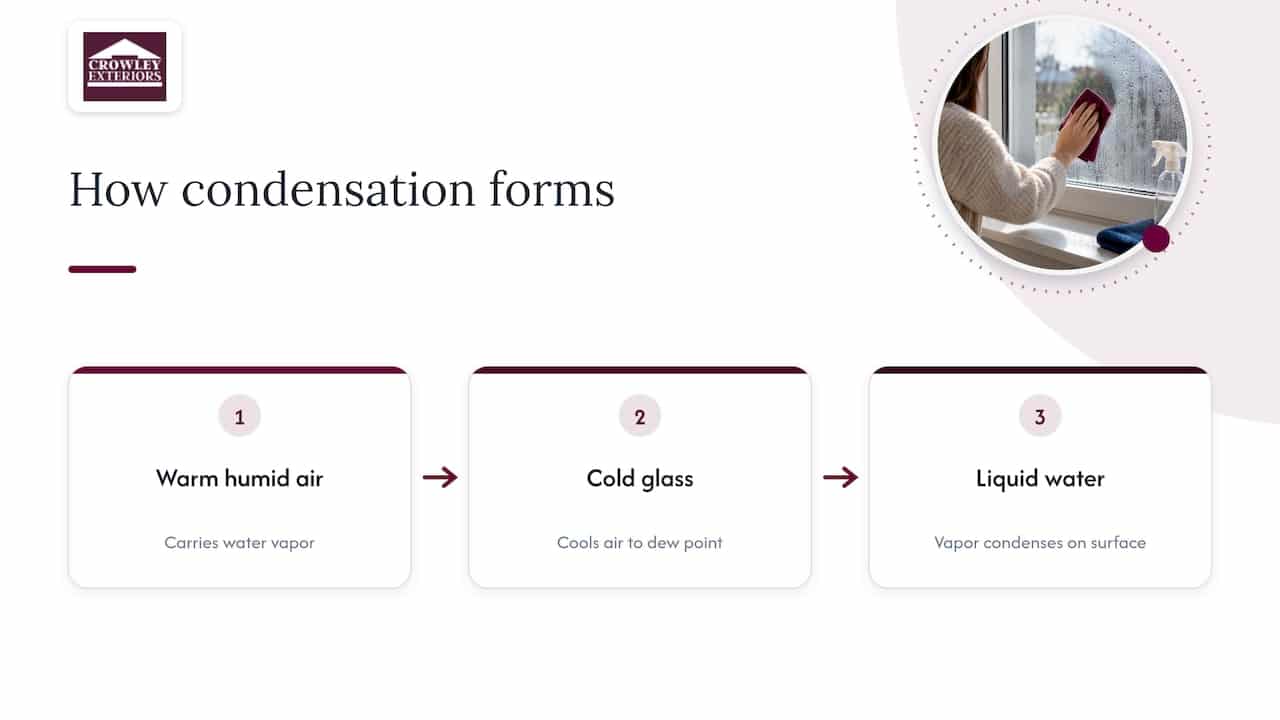
Condensation forms when a vapor is cooled to its dew point. In a house, that means warm air carrying water vapor touches a surface cold enough to pull the vapor out as liquid. Fleetwood describes condensation in exactly those terms: air cooled to the temperature where it can no longer hold its moisture.
Glass is the coldest surface in most rooms, so it is where you see it first. In winter, indoor air is warmer and more humid while cold outdoor temperatures drop the surface temperature of the glass, which is why room-side condensation is so common in cold weather. The window is just the messenger. The moisture came from somewhere inside your home.
Where the moisture comes from
Everyday life puts a surprising amount of water vapor into the air:
- Showers, baths and cooking, especially boiling and simmering with the lid off
- Breathing and sleeping, which is why bedroom windows fog overnight
- Drying laundry indoors
- Unvented dryers or gas appliances
- Houseplants, aquariums and humidifiers
- Damp crawl spaces or basements that send moisture up into the living space
If you have a houseful of people in a closed-up house during a Missouri cold snap, expect foggy glass by morning.
Why newer homes can see more of it
It feels unfair: you replaced the old windows and now the glass is wet. Modern windows are not creating the moisture. Tighter, energy-efficient construction reduces airflow, so moisture that once leaked out through gaps now stays inside and shows up on the coldest surfaces. Sierra Pacific makes the same point: tight homes restrict the natural air leakage that used to vent excess moisture.
That is also why a leaky, drafty window can look “dry” while a well-sealed one fogs. The dry window is simply letting your heat and your humidity escape.
Inside, outside or between the panes?
The location of the water is the whole diagnosis. Use this table before you buy anything.
| Where the water is | What it means | Usual fix |
|---|---|---|
| Inside, on the room-side glass | Indoor humidity is high relative to glass temperature | Lower humidity, improve airflow, run fans |
| Outside, on the exterior glass | Glass is colder than the dew point of outdoor air | Usually none needed; small adjustments can help |
| Between the panes | Failed seal in the insulated glass unit | Repair or replace the glass or window |
| On the frame or sill, with staining or softness | Long-term moisture, possible rot | Dry out the cause, then repair or replace |
A quick test: wipe the glass. If the water comes off on the side you wiped, it was on that surface. If the haze stays after wiping both sides, it is inside the sealed unit.
Is condensation in winter normal?
Yes, occasional condensation is normal and usually not a cause for concern. What matters is how long it stays. Moisture that lingers on windows for extended periods can lead to damage and other problems.
A useful rule of thumb:
- Light fog that clears by mid-morning: normal. Wipe it if you like and carry on.
- Beads or streams of water every morning on many windows: your home is carrying too much moisture. Act on humidity.
- Water pooling on sills, peeling paint, dark spots or a musty smell: treat as a moisture problem that has already started doing damage.
How to stop condensation on windows in winter
You have two levers: reduce the water vapor in the air, and keep the glass surface from getting so cold. Start with the free, fast steps.
1. Vent the moisture out
Run the bathroom fan during every shower and for a while afterward. Use the range hood when you cook. Make sure both actually vent outdoors, not into the attic. Opening windows for 10 to 15 minutes each morning, before the heating comes on, lets humid indoor air escape. In a cold Missouri January it feels counterintuitive, but a short burst of fresh air costs far less heat than constantly re-warming damp air.

2. Keep air moving across the glass
Heavy drapes and closed blinds trap a pocket of still, cold air against the window. Opening blinds and drapes, directing warm air toward windows or using a fan improves circulation near the glass. Raise blinds during the day, and consider leaving them cracked open on bedroom windows overnight. Keep furniture and heating vents unblocked.
3. Aim for a target humidity
A small hygrometer costs little and takes the guesswork out. One window-industry source recommends keeping indoor humidity between 30% and 50%. In deep winter you may need to run toward the lower end of that range when outdoor temperatures plunge, because the colder the glass, the less humidity the air can carry before it fogs.
A dehumidifier helps in damp basements and tightly built homes. Place it where the moisture is highest, and empty or drain it so the water does not go straight back into the air.
4. Cut the sources
- Dry laundry outside or in a vented dryer, never on indoor racks in a closed room
- Cover pots while cooking
- Take shorter, cooler showers or keep the door closed and the fan on
- Limit open-water sources such as large aquariums in bedrooms
- Keep a crawl space ground cover in place so soil moisture stays below the floor
5. Check the glass itself
Older single-pane and early double-pane windows have colder interior glass, so they fog at lower humidity. Modern low-E glass slows heat loss through the window, which is good for your bills. Our guides on low-E glass benefits and what low-E glass is and how to evaluate it explain how coatings and gas fills work. Keep in mind low-E glass can leave the outer pane colder, which matters in the next section.
Water on the outside of the window
Seeing dew on the outside of your glass in the morning can be alarming, but it is usually a good sign. Exterior condensation is a natural atmospheric phenomenon, common in summer, spring and fall, and often indicates an energy-efficient window that keeps indoor heat from warming the outer pane. High-performance glass reduces heat flow outward, so the outside surface can be colder than the surrounding air, just like a cold drink on a patio table.
Window condensation in summer
Summer fog appears when your air conditioning cools the glass below the dew point of the humid outdoor air. Missouri summers are muggy, so this is normal. If it bothers you, the manufacturer guidance suggests a few adjustments that may help:
- Open window coverings at night
- Redirect cool air vents away from the glass
- Raise the thermostat a couple of degrees
- Trim shrubs near windows and doors so air circulates
If you see water on the inside during summer instead, your house is likely carrying humid outdoor air indoors, or the AC is oversized and cycling off before it dehumidifies. A technician can check that.
Condensation between the panes
Modern double- and triple-pane windows are sealed units filled with air or gas. If moisture or a permanent haze appears between the panes, the seal has failed and humid air has gotten inside. No amount of dehumidifying will clear it, and it will not stay clear if you remove it temporarily.
Your options depend on the age and condition of the frame:
- Newer frame, intact: the glass unit can sometimes be replaced alone.
- Older or damaged frame, or several units failing: full replacement usually makes more sense.
- Under warranty: check with the manufacturer first, since many cover seal failure for a set period.
We break down the choices in 4 fixes for foggy double pane windows. If you want a professional to look at yours, our window replacement service is built for exactly that decision.
Should you wipe it off?
Yes. Remove condensation as soon as possible, because leaving it day after day increases the risk of mold and damage to wood or painted surfaces. A dry microfiber cloth or a squeegee works well. Wipe the sill and the bottom of the frame too, where water collects.
What persistent moisture can damage
Water that sits on a sill every morning does slow work. Ongoing moisture can contribute to mold and damage wood frames, furnishings and paint. Wood absorbs moisture as humidity rises and releases it as the air dries, and that cycle can cause swelling, shrinking, warping, cracking and splitting.
Watch for these signs:
- Paint bubbling or peeling around the frame
- Dark stains or black speckling on the sill, caulk or drywall return
- A sill that feels soft when you press a screwdriver tip gently into it
- A musty smell in a room that stays closed
- Stains on the wall or ceiling below the window
Bathrooms are the usual hot spot for hidden growth, and it helps to know where bathroom mold hides before it spreads from the window area to grout, ceilings and corners.
If you find soft wood, our rotted window sill repair or replace guide walks through how to judge the damage. If staining shows up on exterior walls, read about water behind siding, because a window problem and a wall problem can look alike from the inside.
When it is not condensation at all
Some “condensation” is actually a leak. Condensation is spread evenly across the glass and often clears when the air dries or warms. A leak shows up as a streak or drip from one point, often after rain or wind, and stains the wall or sill. Common outside causes:
- Failed caulk or flashing around the window
- Gutter overflow dumping water against the wall
- Siding damage that lets water get behind the cladding
- Roof or attic problems that send moisture down interior walls
If the water shows up only after storms, look outside. Our guides to gutter overflow causes and roof ventilation problems cover two sources homeowners often miss. Poor attic ventilation can push warm, moist air into the ceiling and walls and make the whole house harder to keep dry.
Drafts and condensation are linked
Homeowners sometimes seal every gap to chase drafts, then wonder why humidity climbs. Sealing is good for comfort and bills, but a tighter house needs a deliberate way to vent moisture: working exhaust fans, a clean dryer vent and regular short airing. For cheap draft fixes that keep windows comfortable, see fixing window drafts for under $50.
A simple one-week plan
- Day 1: Buy a hygrometer. Put it in the bedroom and the main living area. Note morning readings.
- Day 2: Check that bath fans and the range hood vent outdoors. Run them during and after use.
- Day 3: Open blinds and drapes in the day. Pull furniture back from vents and glass.
- Day 4: Open windows for 10 to 15 minutes in the morning before the heat comes on.
- Day 5: Move indoor laundry drying to a vented dryer. Cover pots.
- Day 6: Add a dehumidifier to the dampest room if readings stay high.
- Day 7: Recheck. If the bedroom is still above your target and glass still streams, call a pro to look at ventilation and the windows.
Our view on window condensation
We get this call every cold season from St. Charles County homeowners: “My windows are sweating. Do I need new ones?” Most of the time the honest first answer is to deal with humidity and airflow, because condensation tells you about the air in your house.
What we look for is the pattern. Moisture that comes and goes with the weather is one thing. Moisture that leaves stains, soft sills or fogged glass between the panes tells us the window or the wall around it is no longer protecting the home.
After more than 20 years working under Missouri weather, we think the best fix is a proper look at the whole exterior: windows, siding, gutters and roof ventilation together. Water finds the weakest point, and our free inspection and itemized estimate are designed to show you exactly where that is, with no obligation.
When a window has failed, replacing it with efficient glass that suits our climate is a sound investment in comfort and in protecting the structure around it.
Mario
Get a professional look at your windows
If the glass is fogged between the panes, the sills are soft, or you cannot tell whether you have condensation or a leak, we can help. Crowley Exteriors is a family-owned company serving St. Charles County, and we offer free inspections and no-obligation, itemized estimates for window replacement, siding, gutters and roofing.

Book a visit through our services page or start from the Crowley Exteriors home page. We will tell you what is causing the problem and what your options are.
FAQ
Should I be worried about condensation on my windows?
Not if it is occasional and clears quickly. Worry when water sits on the glass and sills daily, when paint peels or frames feel soft, or when you see mold. At that point, reduce humidity and have someone inspect the window and surrounding wall.
Why do my windows sweat at night?
We breathe out moisture while we sleep, and bedrooms are often closed up. Glass is also coldest in the early morning. Crack the door or a window briefly, keep blinds open, and run a dehumidifier if the readings stay high.
Does a dehumidifier stop window condensation?
It can help a lot, because it lowers the amount of water vapor in the air. It works best alongside fans, venting and moving air across the glass. Keep humidity in the 30% to 50% range referenced by window makers and check it with a hygrometer.
Is condensation on the outside of windows bad?
No. It forms when the glass is cooler than the outdoor dew point and is common with efficient windows. Opening coverings at night, trimming nearby shrubs and raising the AC a couple of degrees can reduce it in summer.
Can new windows stop condensation?
They can reduce it when old, single-pane or failed units are the cause, since the interior glass stays warmer. They will not fix excess indoor moisture on their own, so combine new windows with good ventilation.
Sources
- Condensation on High-Performance Glass, Fleetwood
- Condensation Owners Manual
- Condensation on windows, Andersen Windows
- How to stop window condensation in winter, RACV
- Clad and Wood Care and Maintenance Guide, Sierra Pacific Windows
- When to Replace Your Windows in a Humid Climate
Recommended
- Stop Wasting Money On Foggy Double Pane Windows: 4 Fixes For Homeowners
- Fix Window Drafts This Winter For Under $50, St. Charles Homeowners
- Cut 30–50% Window Energy Loss With Low E Glass For Your Climate
This article was prepared with AI assistance for general information. For recommendations specific to your property, contact Crowley Exteriors. Call or text us at 314-839-3800.