


Peeling paint or a small stain on your soffit can usually wait for a scheduled inspection. Sagging panels, active water dripping into the attic, or gaps big enough for pests to enter cannot. If you see any of those three, photograph the damage now, tarp or cover any active leak, and get a professional inspection scheduled within the week.
TL;DR:
- Most soffit and fascia repairs cost between $600 and $6,000, with costs increasing if hidden rot or extensive damage is discovered during removal.
- Active leaks, sagging panels, or large holes require urgent action within days, while minor issues like paint peeling can wait for scheduled maintenance.
- Damage usually stems from water intrusion, poor ventilation, pests, or wind damage, which can cause problems to spread into the roof deck and framing.
- Proper inspection involves attic checks for fresh water stains and mold, with a focus on early detection to prevent costly structural repairs.
- Homeowners should prioritize professional assessments and avoid DIY repairs involving framing, roof decking, or large holes, especially on windy or storm-damaged homes.
Table of Contents
- What Are Soffit and Fascia, and Why Do They Matter?
- How Do You Spot Soffit and Fascia Damage?
- What Causes Soffit and Fascia Damage?
- What Are the Repair and Replacement Options?
- How Much Does Soffit and Fascia Repair Cost?
- DIY vs. Hiring a Contractor: What’s Safe to Handle Yourself?
- Crowley Exteriors: How Our Inspection and Repair Process Works
- The Bottom Line: Act Early, Document Everything
- Building an Inspection Checklist and Knowing Your Timeline
- Long-Term Maintenance Tips to Prevent Future Damage
- Environmental Considerations for Material Choice and Durability
- What Safety Hazards Come from Neglected Soffit and Fascia Damage?
- Primary Sources for Homeowners Researching This Topic
- What Most Homeowners Get Wrong About This Repair
- Get a Free Inspection Before Small Damage Gets Expensive
- Sources
- FAQ
What Are Soffit and Fascia, and Why Do They Matter?
The fascia is the horizontal board that runs along the edge of your roofline, right where the gutters attach. The soffit is the panel underneath it, closing the gap between that fascia board and your exterior wall. Together they finish the roofline and give your gutters something solid to hang from.
They also do a job most homeowners never think about until it fails: airflow. Soffit vents pull in outside air that travels up through the attic and out a ridge vent, which keeps the roof deck cool and dry. Building codes generally call for roughly 1 square foot of net-free ventilation area per 150 square feet of attic space, and that ratio is what keeps moisture from condensing on the underside of your roof.
Materials vary by home age and region:
- Wood — traditional, paintable, but prone to rot without diligent upkeep
- Aluminum — lightweight, rarely rots, can dent
- Vinyl — low maintenance, affordable, can warp in extreme heat
- Fiber cement — durable and fire resistant, heavier to install
How Do You Spot Soffit and Fascia Damage?
Most damage announces itself in stages, from paint problems to structural gaps. Catching it early is the difference between a patch job and a full tear off.
Exterior signs to check from the ground or a ladder:
- Peeling, bubbling, or flaking paint on the fascia board
- Dark streaks or water stains running down the siding below the soffit
- Soft or crumbling wood you can press a screwdriver into
- Missing or hanging soffit panels
- Gutters pulling away from the fascia, or visible nail heads backing out
- Small holes or gaps where birds, squirrels, or wasps have moved in
Attic and interior signs worth checking twice a year:
- Water stains on the underside of the roof deck near the eaves
- Musty odor or visible mold on insulation or framing
- Insulation that feels damp or has compacted in one area
- Daylight visible through gaps at the eaves when the attic light is off
A sagging fascia board, a hole larger than a few inches, or water actively dripping into the attic after a storm all count as emergencies. Everything else usually tolerates a scheduled visit.
Pro Tip: Check your attic with a flashlight right after a heavy rain, not days later. Fresh water stains are darker and wetter than old ones, and that timing tells you whether the leak is current or historical.
What Causes Soffit and Fascia Damage?
Almost every case traces back to one of four causes, and they often overlap.
- Water intrusion from clogged or overflowing gutters, a missing or poorly installed drip edge, or ice dams that back water up under the shingles and into the soffit cavity
- Poor ventilation that traps humid attic air against the roof deck and fascia, accelerating rot from the inside out
- Pests and biological decay, including carpenter ants, wasps, squirrels, and dry rot fungus that thrives in trapped moisture
- Wind damage, which FEMA has documented as a leading cause of soffit failure in high-wind events, especially when panels aren’t fastened at both the wall and the fascia
Ignoring any of these lets the problem migrate. Water that starts at the soffit rarely stays there. It travels into the roof decking, softens the framing underneath, and eventually shows up as a ceiling stain rooms away from where the leak began. That’s also when repair costs jump from a few hundred dollars to a full section rebuild.
What Are the Repair and Replacement Options?
Not every damaged section needs a full replacement. A contractor typically decides between three approaches based on how far the damage has spread.
- Spot patching works when rot or a hole is isolated to one board and the surrounding wood is still solid.
- Section replacement covers a run of soffit or fascia, often 10 to 20 feet, when damage clusters near one gutter downspout or corner.
- Full replacement makes sense when rot has spread along most of the roofline, or when the work is already bundled into a reroof or siding replacement project.
Material choice affects both cost and longevity. Wood is cheapest upfront but needs repainting every few years. Aluminum and vinyl resist rot entirely and suit homes in humid or storm-prone areas. Fiber cement costs more but holds up best against wind and fire exposure.
A typical repair sequence looks like this: the contractor inspects the roofline and attic, removes the damaged soffit or fascia, checks the roof decking and framing underneath for hidden rot, installs new material, reattaches the gutters and drip edge, and finishes with paint or trim to match the existing roofline. Homes in wind-exposed areas benefit from soffit products tested for wind-driven rain performance, a detail FEMA specifically flags after reviewing widespread soffit failures.
How Much Does Soffit and Fascia Repair Cost?
Most soffit and fascia repair jobs land between $600 and $6,000, depending on how much rot is hidden behind the visible damage and how much of the roofline needs new material.
Small patch jobs on a single section sit at the low end. Full roofline replacement, especially when scaffolding, gutter removal, and hidden decking repair get added in, pushes toward the top of that range. The biggest cost driver isn’t the visible board. It’s what the contractor finds once they pull it off.
Insurance typically covers soffit and fascia damage when a sudden, accidental event causes it, like wind, hail, or a falling tree limb. Damage from long-term wear, rot, or lack of maintenance is usually excluded, so document the cause carefully and check it against your deductible before filing. Get a written estimate, photograph everything, and have your contractor present or available during the adjuster’s visit.
DIY vs. Hiring a Contractor: What’s Safe to Handle Yourself?
Cleaning gutters, repainting a fascia board with no rot, and caulking small gaps are reasonable weekend projects. Anything involving structural framing, roof decking, or a hole larger than a few inches belongs to a licensed contractor, especially if it involves working near the roof edge on a ladder.
Before signing anything, ask these eight questions:
- Are you licensed and insured for this type of work?
- How do you check for hidden rot before quoting a price?
- What’s included in your warranty, and how long does it last?
- What’s the realistic timeline from estimate to completion?
- Can I get an itemized, written estimate?
- Do you have local references I can call?
- Have you worked with insurance adjusters on similar claims?
- What’s your plan to mitigate further damage if it rains before the job starts?
Pro Tip: A contractor who won’t give you an itemized estimate, or who pressures you to sign before inspecting the attic side of the damage, is a red flag worth walking away from.
Crowley Exteriors: How Our Inspection and Repair Process Works
Mario oversees inspection and repair standards at Crowley Exteriors, a family-owned company that has served St. Charles County homeowners for over 25 years. Every inspection is free and comes with a no-obligation, itemized estimate, so you know exactly what’s being replaced and why. When storm damage is involved, the team documents everything with photos and can attend adjuster visits directly. All repair work carries a 25-year workmanship guarantee.
The Bottom Line: Act Early, Document Everything
Small fascia problems rarely stay small. Document what you see, mitigate any active leak with a tarp, and get a professional estimate before the next storm finds the weak spot for you.
Building an Inspection Checklist and Knowing Your Timeline
A useful inspection habit splits into two passes: a quick seasonal check and a deeper annual look. Spring and fall, walk the perimeter of your house and scan the roofline for the exterior signs already covered, paint failure, gaps, gutter separation. That takes ten minutes and catches most problems before they escalate.
Once a year, ideally before winter, get into the attic with a flashlight. Look at the underside of the roof deck near the eaves for staining, check insulation for dampness or compaction, and confirm you can feel airflow near the soffit vents on a breezy day. If you can’t, ventilation may be blocked from the outside, inside, or both.
Timeline urgency breaks into three tiers. Cosmetic issues, faded paint, minor hairline cracks, can wait for your next scheduled maintenance pass. Moderate issues, a soft board, a small gap, loose gutter brackets, deserve a contractor visit within a month before they worsen. Severe issues, active dripping, a section that’s fallen away, visible daylight through the attic from outside, need attention within days, not weeks. The ice dam roof damage guide covers what winter-specific urgency looks like when ice, not rain, is driving the damage.
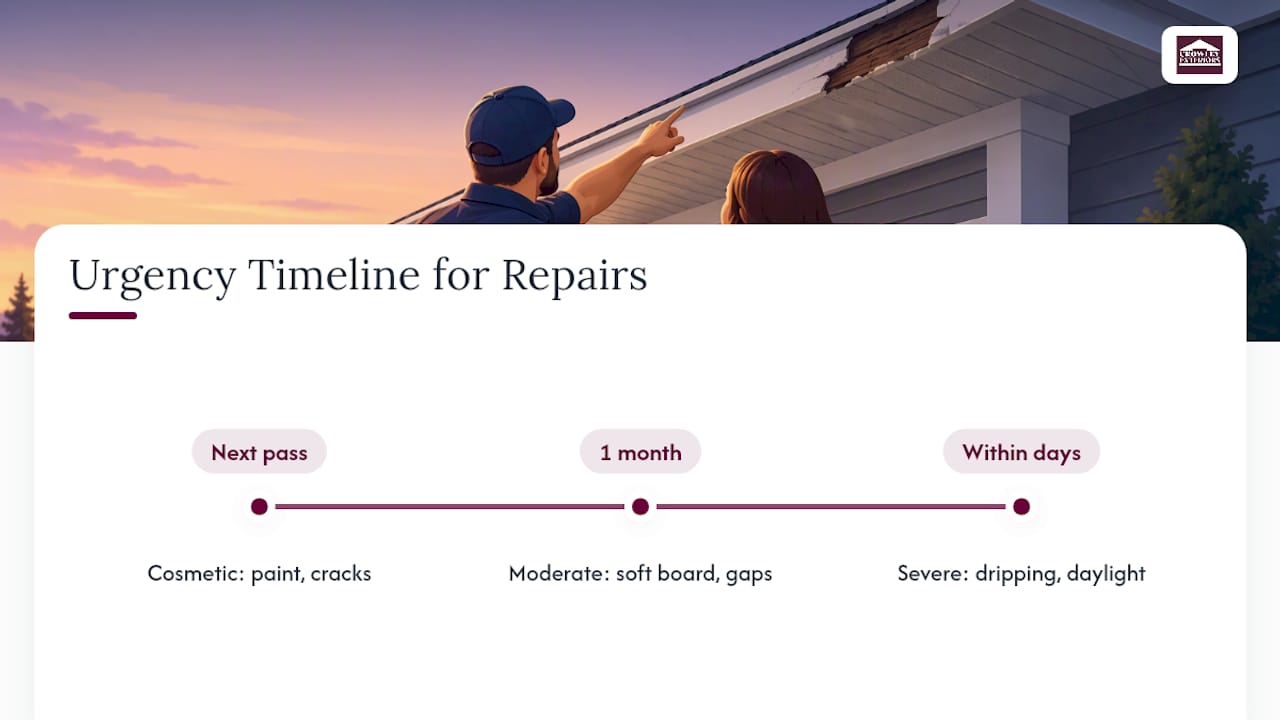
Waiting through a full season on a moderate issue is usually the mistake homeowners make. What looks like a cosmetic problem in October can become a severe one by the time spring thaw arrives.
Long-Term Maintenance Tips to Prevent Future Damage
Most soffit and fascia failures trace back to years of small neglect, not one dramatic event. A handful of habits keep that from happening.
Clean gutters twice a year, spring and fall, since overflowing gutters are one of the most common water sources reaching the fascia board directly beneath them. Repaint or reseal wood fascia every three to five years depending on your climate. Trim tree branches that overhang the roofline, since falling limbs and constant shade both accelerate wear.
Check attic ventilation once a year rather than assuming it’s fine because it was installed correctly. Insulation shifts, vents get blocked by nesting material, and what worked in year one can choke off by year ten. The roof ventilation problems guide walks through how to spot a blocked vent from inside the attic.
Look at masonry and chimney flashing while you’re up there too. A chimney leak after rain can travel sideways along the roof deck and show up as a soffit stain nowhere near the chimney itself, which throws off a lot of homeowners doing their own diagnosis.
Finally, keep a simple photo log. Take a picture of your roofline every spring and fall from the same few angles. Side-by-side comparisons over a couple of years catch slow changes, a growing stain, a sagging section, that are easy to miss in the moment but obvious once you line up the photos.
Environmental Considerations for Material Choice and Durability
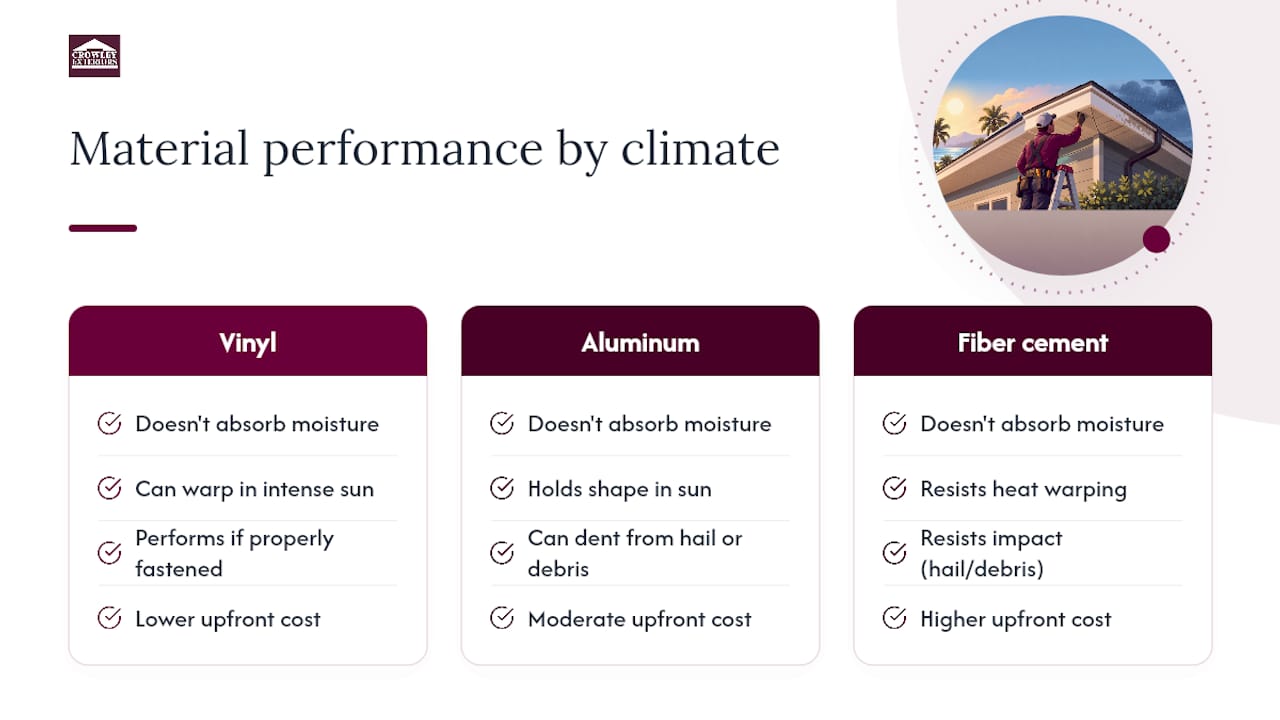
Climate should drive your material decision more than price alone. Homes in humid regions or areas prone to heavy rain do better with vinyl, aluminum, or fiber cement, since none of them absorb moisture the way wood does. Wood fascia in a humid climate needs repainting almost every other year to hold up, which adds cost over the life of the house even though the upfront material is cheaper.
Homes in high-wind or coastal-adjacent areas should prioritize soffit products tested for wind-driven rain performance. FEMA’s review of hurricane damage found that soffit panels failed most often when they weren’t properly fastened at both the wall and fascia, a detail that matters as much as the material itself.
Sun exposure matters too. Vinyl on a south-facing roofline in intense heat can warp over time, while aluminum holds its shape but can show dents from hail or debris. Fiber cement resists both heat warping and impact, though it costs more upfront and weighs more during installation.
Durability isn’t just about the material surviving weather. It’s about how the material interacts with your home’s existing moisture management. A humid attic with poor airflow will rot even the best wood fascia eventually, while a well-ventilated attic extends the life of nearly any material you choose. That’s why air sealing the ceiling plane before adding vent area matters more than most homeowners realize. Piling on more vents without fixing air leaks from the living space below can actually worsen condensation problems rather than solve them.
What Safety Hazards Come from Neglected Soffit and Fascia Damage?
A rotted fascia board isn’t just an eyesore. It’s a structural weak point holding up your gutters, and gutters full of water are heavy. A fascia board that’s lost its structural integrity can let a gutter section tear away entirely, sometimes during the exact storm that’s already stressing the rest of your roof.
Beyond the immediate structural risk, prolonged moisture behind a failed soffit almost always leads to mold. The EPA advises treating visible or extensive mold in attics as a genuine health concern, not a cosmetic nuisance, and it often calls for professional remediation rather than a simple wipe down. Mold spreading through attic insulation can also lower indoor air quality throughout the house, since attic air exchanges with living space more than most homeowners assume.
Pest entry is the other overlooked hazard. Gaps in soffit panels are an open invitation for squirrels, wasps, and birds, and once they’re established in your attic, they chew wiring, damage insulation, and are far more expensive to remove than the soffit repair would have been. Contractors often describe minor fascia damage as a warning sign of deeper problems in the roof deck or framing, one visible clue pointing at issues you can’t see from the ground.
None of these risks develop overnight, which is exactly why they catch homeowners off guard. A small stain ignored for two years can become a structural repair, a mold remediation job, and a pest removal bill, all stacked on top of what started as a $600 fix.
Primary Sources for Homeowners Researching This Topic
For readers who want to dig deeper: FEMA’s Hurricane Michael report documents real-world soffit wind failures. ICC code guidance sets the ventilation standard referenced above. PHRC/Penn State and UMass Building Technology explain ventilation design in depth. The EPA’s mold guidance and Angi’s cost breakdown round out the health and budget side.
What Most Homeowners Get Wrong About This Repair
The conventional advice treats soffit and fascia damage as a cosmetic problem you can schedule around at your convenience. That’s backwards. The visible damage is almost never the actual problem. It’s the symptom of moisture or airflow failure that’s been running quietly for months, sometimes years, before it shows up as peeling paint or a soft board.
Where most guides fall short is treating ventilation and water intrusion as separate topics. They’re not. A gutter that overflows because of poor pitch feeds water directly into a soffit cavity that’s already struggling with trapped humid air from bad attic ventilation. Fix one without the other and you’ll be back here again in three years, paying for the same repair twice.
If you take one thing from this, prioritize the attic-side inspection over the curb-side one. Anyone can spot peeling paint from the driveway. Very few homeowners climb into their attic after a hard rain to check for fresh staining, and that’s exactly where the real diagnosis happens. The board you can see is rarely the whole story.
— Mario
Get a Free Inspection Before Small Damage Gets Expensive
A reliable exterior services company provides homeowners with an honest, hands-on look at what’s actually happening behind the visible damage. Experienced teams familiar with local weather challenges offer free inspections with no-obligation, itemized estimates.
If you’re staring at a stained soffit or a fascia board that’s starting to sag, don’t guess at whether it’s cosmetic or structural. Some contractors provide workmanship guarantees, and when damage is storm-related, they may document it and assist customers in working with insurance adjusters. Schedule a free inspection through the Crowley Exteriors services page and get a written estimate before the next storm makes the decision for you.
Sources
- FEMA — Minimizing wind and water infiltration damage (Hurricane Michael report)
- UMass Building and Construction Technology — Preventing ice dams
- EPA — How can I tell if I have a mold problem?
- Angi — How much does it cost to repair fascia and soffit?
FAQ
Is soffit damage covered by homeowners insurance?
It depends on the cause. Insurance typically covers soffit and fascia damage from a sudden, accidental event like wind, hail, or a falling branch, but damage from long-term wear, rot, or deferred maintenance is usually excluded. Document the cause with photos immediately and check your policy’s deductible before filing.
What are the most common problems with soffit and fascia?
The most frequent issues are peeling paint, rotted or soft wood, missing panels, and gutters pulling away from the fascia board. Most of these trace back to water intrusion, poor attic ventilation, or wind damage, and FEMA’s review of hurricane damage found improperly fastened soffit panels among the most common failure points.
How much does it cost to replace soffit and fascia?
Most repair jobs range from $600 to $6,000, depending on how much of the roofline needs new material and whether hidden rot is found once the old boards come off. Reputable contractors often provide free inspections with itemized, no-obligation estimates to help homeowners understand potential costs before making decisions.
Can damaged fascia be repaired instead of fully replaced?
Yes, when the rot or damage is isolated to one board or a short section, a contractor can patch or replace just that piece rather than tearing off the whole roofline. Full replacement becomes the better option when rot has spread along multiple sections or the project is already bundled with a reroof.
Recommended
- Inspect Siding Hail Damage Within 72 Hours To Protect Your Claim
- What To Do About Hail Damage To Your Roof Right Now
- Storm Damage Roof: What To Do In The First 72 Hours
- Homeowners: 24–72 Hour Wind Damage Roof Photo Checklist For Claims
This article was prepared with AI assistance for general information. For recommendations specific to your property, contact Crowley Exteriors. Call or text us at 314-839-3800.