

If your roof is under about 15 years old and the damage is confined to one area, a repair is usually the smarter move. If it’s near the end of its expected lifespan, has widespread damage, or the repair bid is a significant fraction of what a full replacement would cost, replacement often wins on value. The exception is anything tied to structural rot or an active insurance claim. Get a professional inspection and two written quotes before you commit either way.
TL;DR:
- Repair is generally advisable for roofs under 15 years old with localized damage, but replacement becomes more cost-effective if the damage is widespread or nearing the end of its lifespan.
- Expenses exceeding 25 to 30% of replacement costs, or a roof older than 15 years, typically signal the need for full replacement rather than repairs.
- Structural issues such as deck rot, soft spots, or sagging wooden components automatically require replacement, not repair.
- Repair costs usually range from $300 to $1,500, while replacement costs can be between $8,000 and $18,000, depending on size and materials.
- Having a professional inspection, two written quotes, and documentation of repairs can prevent costly mistakes and support insurance claims or selling processes.
Table of Contents
- Roof Repair vs. Replacement: Key Factors to Weigh
- When a Roof Repair Is the Right Call
- Signs It’s Time to Replace the Roof
- Roof Repair and Replacement Costs, and How Long Each Takes
- How to Decide: Inspection Steps and Contractor Questions
- What a Trusted Local Contractor Actually Checks
- Environmental Impact of Repairing vs. Replacing Your Roof
- Long-Term Value: Which Option Pays Off More
- Can a New Roof Boost Your Home’s Resale Value?
- Safety Risks During Roof Repair and Replacement Work
- Why the 25-30% Rule Beats “Gut Feeling” Every Time
- Get a Free Roof Inspection and Estimate From Crowley Exteriors
- Sources
Roof Repair vs. Replacement: Key Factors to Weigh
Every roofing decision comes down to five variables, and most homeowners only think about one of them (cost) before calling a contractor.
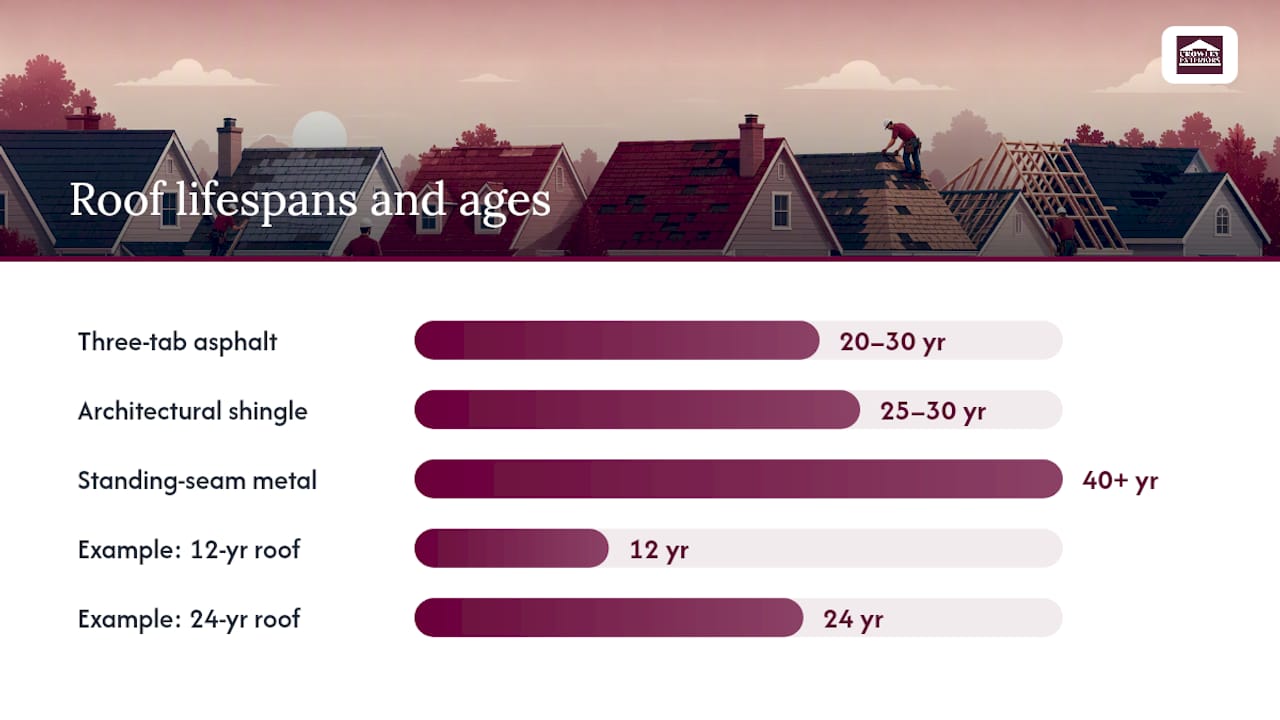
Roof age relative to material lifespan matters more than most people realize. Standard three-tab asphalt shingles run 20 to 30 years, architectural (dimensional) shingles stretch to 25 to 30 years, and standing-seam metal roofs can last 40 years or more. A 12-year-old architectural shingle roof with a leak is a very different conversation than a 24-year-old one with the same leak.
Extent and location of the damage tells you whether you’re patching a wound or treating a chronic condition. Once damage spreads across multiple slopes or shows up in more than two or three separate spots, you’re often looking at systemic failure, not a one-off.
Deck and structural condition is the factor that changes everything. Soft spots underfoot, daylight visible through the attic roof boards, or a sagging ridge line all point to decking rot, and NRCA reroofing guidelines treat these as automatic replacement triggers, not repair candidates.
Other factors worth checking:
- Repair history: three or more repairs in five years signals a roof that’s fighting you
- Material type: tile and slate repairs cost significantly more per hour due to specialized labor
- Existing layers: two layers of shingles already down often forces tear-off by code
- Insurance status: an active claim can shift who pays for what
When a Roof Repair Is the Right Call
Repair makes sense when the problem is contained and the roof still has real life left in it.
- Minor repairs ($300–$800): a handful of cracked or missing shingles, a small flashing leak around a vent pipe, or minor granule loss in one spot.
- Moderate repairs ($500–$1,500): a damaged valley, a section of lifted shingles after wind, or a soft spot smaller than a few square feet that hasn’t spread to the deck.
- Repair after storm events: hail or wind damage limited to one slope, especially when your homeowners policy covers the cost.
A good repair doesn’t reset the roof’s age. It buys you years, not decades, and that’s exactly the point if you’re planning to sell within two or three years or your existing roof still has a solid decade of life left.
Pro Tip: Keep every repair receipt and invoice in one folder. Buyers’ agents and insurance adjusters both ask for repair history, and a documented maintenance trail can support your asking price or speed up a claim.
Signs It’s Time to Replace the Roof
Replacement stops being optional once the math or the damage crosses a clear line.
- Repair estimates hit or exceed 25 to 30% of full replacement cost, the threshold GAF’s own guidance uses to define the tipping point
- The roof is approaching or past 15 years old, which puts it in the window many insurers flag for non-renewal
- Two shingle layers already exist, or the deck shows rot, gaps, or visible sagging, all of which manufacturer bulletins list as tear-off requirements
- Granule loss is heavy across most slopes, not just one patch
By the numbers: Industry cost data for 2025 to 2026 puts a full residential roof replacement in the $8,000 to $18,000 range depending on size and material, while a severe repair can run $1,500 to $8,000. When repair pricing starts approaching replacement pricing, you’re not saving money by patching, you’re just delaying the inevitable at a discount that keeps shrinking.
Replacement also resets your warranty clock, upgrades ventilation and underlayment, and gives you a shot at better energy performance, benefits no repair can offer.
Roof Repair and Replacement Costs, and How Long Each Takes
Numbers make this decision concrete, so run them before you sign anything.
Take a $12,000 replacement estimate. If a contractor quotes $2,200 to patch a damaged section, repair clears the bar. If the quote comes back at $3,800, you’re paying repair money for replacement-level problems and getting none of the upside.
Regional pricing swings on a few predictable factors:
- Permit fees: vary by municipality, typically a few hundred dollars
- Tear-off and disposal: removing old layers adds labor and dumping costs, often 10 to 15% of the total bid
- Material choice: architectural shingles cost more upfront than three-tab but last longer per dollar
Timelines differ just as sharply. A minor repair usually wraps in a few hours to a single day. A full replacement on an average single-family home takes one to four days, weather permitting, and winter or peak storm season can push scheduling out by weeks simply due to contractor demand.
Running a rough 10-year total-cost comparison, factoring in likely future repairs and insurance risk, often makes the real cost gap between repair and replace much clearer than a single quote ever will.
How to Decide: Inspection Steps and Contractor Questions
Turn this into a process, not a guess, and you’ll rarely get burned.
- Schedule a professional inspection before damage spreads or a leak becomes an emergency.
- Get two or more written quotes that spell out scope, materials, and warranty terms.
- Ask each contractor whether they recommend tear-off or a recover job, what underlayment and flashing they’re using, whether the warranty transfers to a future buyer, who pulls the permit, and where debris disposal fits in the price.
- Compare scope line by line, not just the bottom-line number.
During the inspection, have them check the attic for daylight or moisture stains, walk the deck for soft spots, inspect flashing around chimneys and vents, confirm ventilation is adequate, and note any past patch jobs that were never properly sealed.
Watch for red flags: a bid with no itemized scope, an estimate dramatically lower than every other quote, or a salesperson pushing you to sign the same day. None of those are how legitimate contractors operate, and any one of them is reason enough to call someone else. If you’re dealing with an active leak while you sort this out, temporary emergency measures can prevent interior damage while you wait for quotes.
What a Trusted Local Contractor Actually Checks
Crowley Exteriors has spent over 25 years inspecting roofs across St. Charles County, and the pattern holds: waiting until a roof fails completely almost always costs more than acting on an honest inspection. Free inspections and no-obligation estimates mean you get the deck, flashing, and ventilation checked before you’re stuck making an emergency call. Every job carries a 25-year guarantee, and the team helps document damage for insurance claims. Always ask for written scope and photos before deciding.
Environmental Impact of Repairing vs. Replacing Your Roof
Repair is almost always the lighter environmental option in the short run, simply because it uses less material and generates less landfill waste. Patching a damaged section of shingles doesn’t require tearing off and disposing of an entire roof system, and asphalt shingle waste is a real volume problem: a typical tear-off on a mid-size home produces multiple tons of debris.
Replacement isn’t automatically the worse long-term choice, though. A new roof with better ventilation and modern underlayment can improve attic energy performance, which lowers heating and cooling demand for as long as you own the home. Many replacement jobs now route old shingles through asphalt shingle recycling programs that reclaim material for road paving, which cuts landfill impact substantially compared to a straight dump-and-replace job.
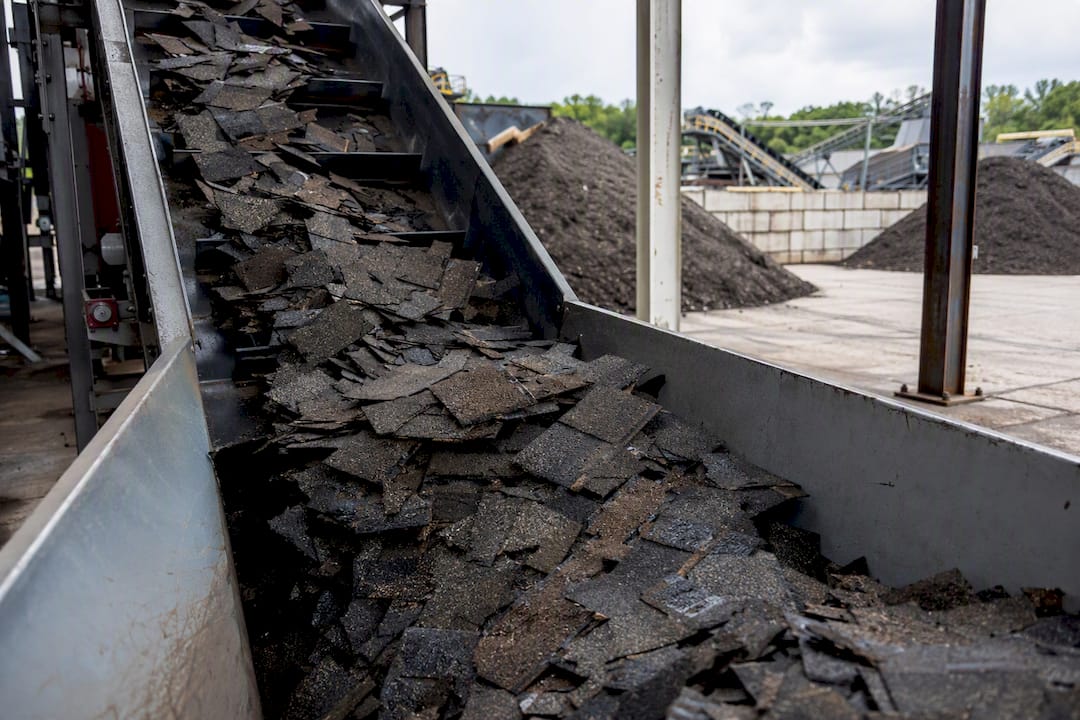
The sustainable move isn’t always “repair everything forever.” A roof patched five separate times over eight years has generated more cumulative waste, labor, and material use than one clean replacement would have. If you’re weighing the environmental angle seriously, ask your contractor whether they recycle tear-off material and whether the new system includes upgraded insulation or ventilation. Those two questions matter more to your actual footprint than whether you repair or replace in isolation.
Long-Term Value: Which Option Pays Off More
Repair wins on immediate cash outlay almost every time, but that’s not the same as winning on value. A $2,000 repair on a 22-year-old roof buys you maybe three to five more years before you’re back to square one, often with a bigger problem underneath by then.
Replacement resets the clock entirely. You get a fresh warranty (frequently comparable in length to Crowley Exteriors’ own 25-year guarantee), current building code compliance, and materials engineered for better wind and impact resistance than what was likely installed 20 or 25 years ago. Over a 10-year ownership window, homeowners who replace an aging roof instead of chasing repeated repairs typically spend less overall, once you account for the repair-after-repair cycle that aging systems tend to fall into.
The return on investment question really hinges on your ownership horizon. Selling within two years? A targeted repair plus disclosure often beats a full replacement financially. Staying put for a decade or more? Replacement’s higher upfront cost gets absorbed by avoided repair calls, lower energy bills from improved ventilation, and the peace of mind that comes from not wondering what the next storm will expose. Run the 10-year cost comparison with your specific numbers before deciding either way.
Can a New Roof Boost Your Home’s Resale Value?
A newly replaced roof does more for resale than most homeowners expect, and it goes beyond curb appeal. Buyers and their agents treat roof age as a direct proxy for near-term maintenance cost, and a roof past 15 to 20 years often triggers a price reduction request or a demand for a credit at closing, regardless of whether it’s actually leaking.
Some manufacturers and contractors offer a post-installation inspection certificate confirming the roof was installed to code and manufacturer specification, sometimes with a transferable warranty attached. That documentation can be a real selling point during negotiations, since it gives the buyer’s insurance company and lender a paper trail instead of a guess. A roof without any of that history, or with a string of undocumented patch jobs, tends to make buyers nervous even when the roof itself is fine.
If you’re within five years of listing your home, ask your contractor whether they provide certification paperwork and a transferable warranty as part of a replacement. It’s a small ask that can make a real difference when an appraiser or inspector shows up during the sale.
Safety Risks During Roof Repair and Replacement Work
Both jobs put workers on a steep, often wet or debris-covered surface, but the risk profile differs. Repair work usually involves less time on the roof and a smaller footprint of exposure, which lowers overall risk simply through shorter duration. Replacement crews spend multiple days on an open roof deck, often with sections of decking exposed during tear-off before new underlayment goes down.
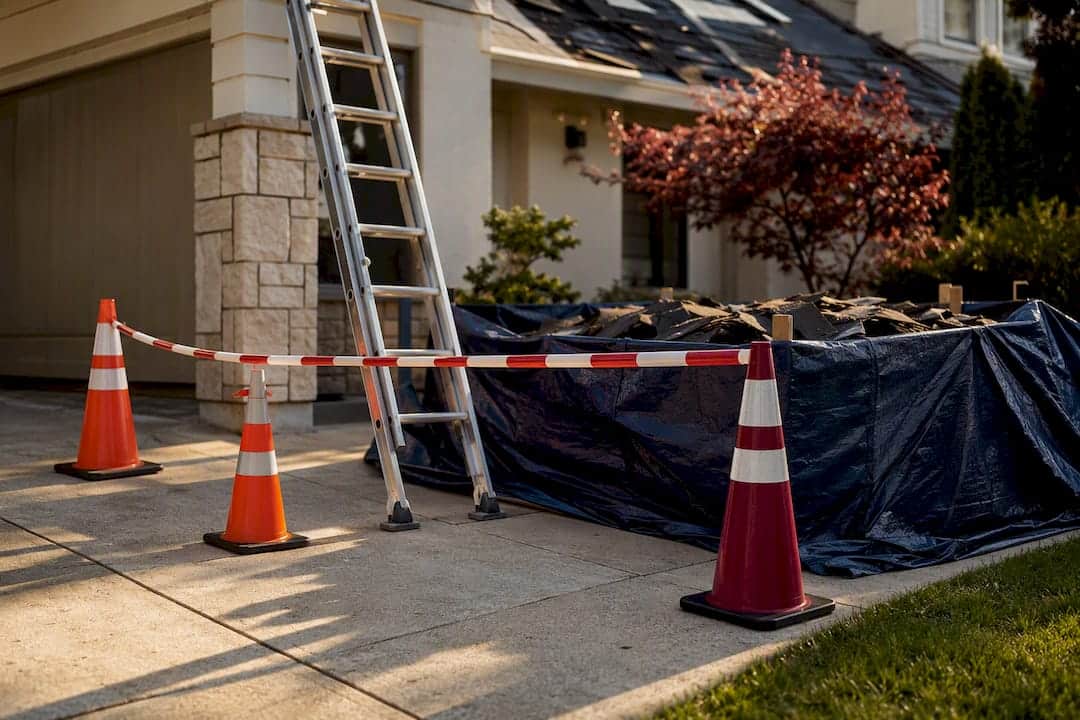
The real danger during replacement is the tear-off phase itself: workers are removing old materials while walking on a deck that hasn’t yet been reinforced with fresh underlayment, and any hidden rot discovered mid-job creates an unplanned hazard. Reputable crews rope off work zones, use fall-protection harnesses on steep pitches, and stage material delivery to avoid overloading one section of the roof.
As a homeowner, your main safety responsibility is staying clear of the work area, keeping kids and pets away from ladder and debris zones, and confirming your contractor carries liability and workers’ compensation insurance before the crew ever climbs up. Ask for proof of coverage in writing. It’s a five-minute request that protects you if something goes wrong on your property.
Why the 25-30% Rule Beats “Gut Feeling” Every Time
Most homeowners make this decision emotionally: they wait until a leak forces their hand, then panic-call the first contractor who answers. That’s backward. The 25 to 30% repair-cost rule isn’t a marketing gimmick, it’s a genuinely useful filter that removes guesswork from a decision people usually make under stress.
Where I think conventional advice falls short is the silence around insurance. Plenty of guides walk through cost comparisons and completely skip the fact that a roof pushing past 15 years can get your policy flagged for non-renewal, independent of whether it’s actually failing. That risk should factor into your math just as heavily as the repair bid itself.
My advice: run the percentage math first, check your roof’s age against your insurer’s renewal policy second, and only then start calling contractors. Homeowners who inspect and quote before an emergency almost always end up with more options and better pricing than the ones who wait for a leak to force the decision. That sequencing, more than any single repair-versus-replace formula, is what actually separates a good outcome from a costly scramble.
— Mario
Get a Free Roof Inspection and Estimate From Crowley Exteriors
Crowley Exteriors gives St. Charles County homeowners something most contractors don’t: a straight answer, backed by 25 years of local experience, before you spend a dollar. The inspection is free, the estimate carries no obligation, and every completed job comes with a 25-year guarantee that protects your investment long after the crew leaves.

Whether your roof needs a targeted repair, a full roof replacement, or help navigating an insurance claim after storm damage, the process starts the same way: a technician walks your roof, documents the deck and flashing condition with photos, and hands you a written scope you can actually compare against other bids. If replacement makes more sense for your situation, the replacement timeline guide walks through what to expect day by day. Ready to get real numbers instead of guesswork? Request your free inspection and get a written estimate before your next storm season decision gets made for you.
Sources
- Asphalt Roofing Manufacturers Association — Asphalt shingle reroofing: replacement vs recover (technical bulletin)
- GAF — Understanding residential roof repairs: how do I know if my roof needs to be replaced?
- The Roofing Brief — 2026 roofing cost report (national + regional data)
- NearbyHunt — Roofing repair costs guide: 2026 pricing & estimates