


Fascia board replacement means removing the rotted board along your roof edge, checking the wood behind it, and installing a sound new board, usually after taking off the gutters and drip edge. The board itself is the easy part. The real question is how far the moisture has traveled, because rotted fascia often hides damage in the rafter ends behind it. This guide shows how to confirm rot, what a proper replacement involves, what to ask in an estimate, and when to bring in a roofer.
TL;DR
- Soft spots, peeling paint, sagging gutters and dark streaks below the gutter line are the usual signs that a fascia board has failed.
- Visible rot can be the exposed part of a bigger problem in the rafter tails, soffits and roof decking, so the wood behind the board needs inspecting before new trim goes up.
- A lasting repair also fixes the cause: overflowing gutters, a missing drip edge or poor ventilation.
- Get itemized written estimates that state linear footage, material, and how hidden framing damage will be priced.
- Homes built before 1978 may have lead paint on exterior trim, which changes how the work must be done.
Table of Contents
- What fascia does and why it rots
- How to tell the board is rotted
- Replace one board or the whole run?
- How the replacement is done
- Materials: wood, PVC and aluminum
- Lead paint and safety before anyone touches the board
- DIY or professional?
- How to compare estimates
- Preventing a repeat
- Our perspective
- Get the roof edge looked at
- FAQ
- Sources
What fascia does and why it rots
Fascia is the board that runs along the lower edge of the roof, where the rafter ends meet the outside air. Your gutters usually hang from it. Because it sits at the low point of the roof plane, it takes whatever water the roof sends its way. InterNACHI’s roof inspection guidance notes that fascia can absorb misdirected moisture, and that rotting fascia may conceal rot in the rafter tails. It also names the adjacent rake boards and soffits as susceptible to rot and insect damage.
In practice, rot starts for a handful of reasons:
- Gutter overflow. Clogged or undersized gutters spill water over the back edge and onto the board. Our guide to gutter overflow causes walks through the common culprits.
- A missing or badly installed drip edge. Water runs under the shingles and wicks into the board. See our drip edge checklist for what a correct installation looks like.
- Ice dams. Meltwater backs up under roofing in cold weather and soaks the roof edge. Missouri winters make this a real concern, and poor attic airflow makes it worse, as we explain in our piece on roof ventilation and ice dams.
- Pests and age. Insects and animals favor damp wood, and paint that has failed lets moisture in.
How to tell the board is rotted
You can check most of this from the ground, then confirm up close.
From the ground
Look along the roof edge for these signs:
- Peeling or blistering paint.
- Visible rot or dark, crumbling wood at corners and joints.
- Gutters that sag or pull away from the house.
- Dark streaks on the board below the gutter line.
- A fascia line that is no longer straight and level. The Home Depot home inspection checklist lists decay or staining on soffits and fascia, and fascia that is not straight and level, among the conditions to look for.
If you want to cut down on time spent on ladders when you look over the roof edge, a ground-level approach to soffit and fascia checks helps you spot trouble before you climb.
Up close
Press a screwdriver tip into the board in several places, especially near corners, seams and under gutter ends. Sound wood resists. Rotted wood feels spongy or lets the tip sink in. Mark every soft area, because the extent of the soft wood decides how much of the board must come off.
Inside the house
Water that gets past the fascia rarely stays outside. GAF’s roof damage guide suggests checking beneath the eaves and at the fascia for rot or animal infestation. It also suggests checking the attic for leaks, dark spots, holes or sagging sheathing, and ceilings for stains, mold or mildew. Gutters, downspouts and shingles deserve a look too. The American Society of Home Inspectors, citing National Roofing Contractors Association guidance, adds interior warning signs such as cracked paint, discolored plasterboard and peeling wallpaper.
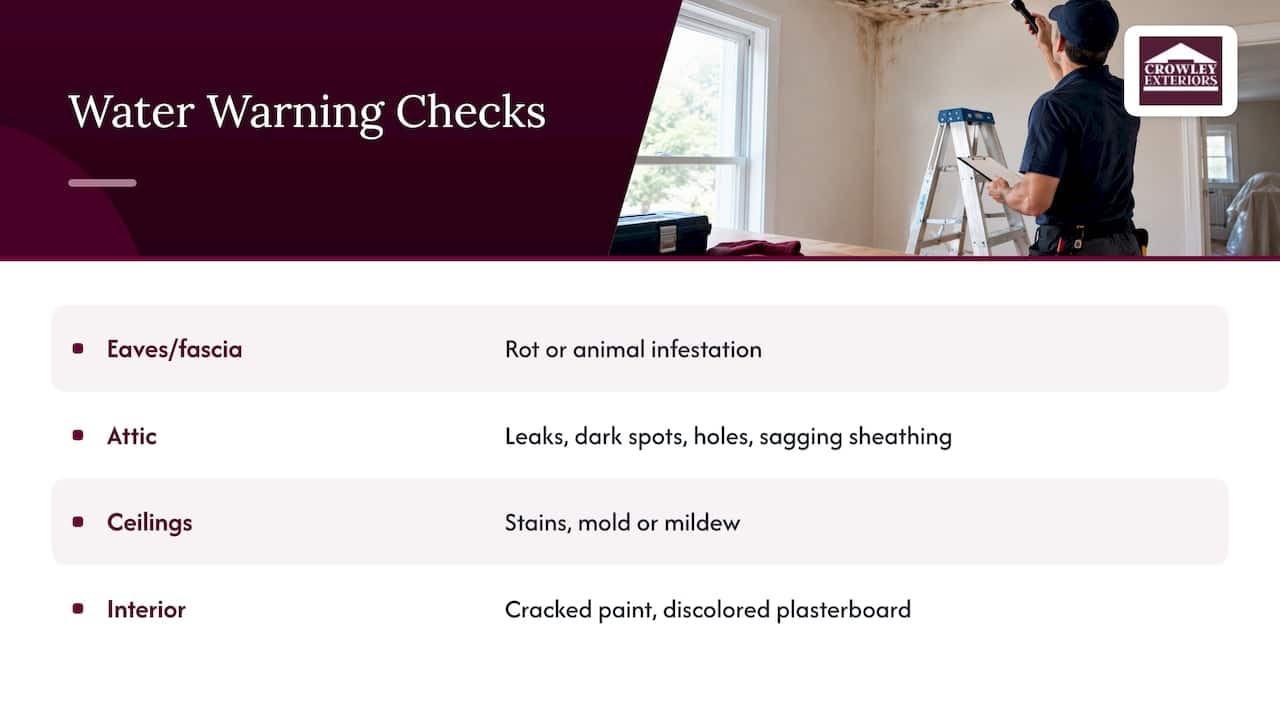
A stain on an upstairs ceiling near an exterior wall, paired with a soft fascia board outside, is a good reason to book a roof inspection rather than patch the trim alone. If water is actively coming in, read what to do in a roof leak emergency first.
Replace one board or the whole run?
Not every soft spot means a full-perimeter job. The decision depends on how much of the board is compromised and what is behind it.
| Situation | Typical approach |
|---|---|
| One short section is rotted, rafter ends are solid | Cut out and replace that section only |
| Rot is spread along one side of the house | Replace the full run on that side |
| Rot is paired with soft rafter tails or decking | Repair the framing first, then install new fascia |
| Board is sound but paint is failing | Scrape, prime and repaint, if no lead is present |
| Repeated rot on an older wood system | Consider a rot-resistant or prefinished material |
When a roofer replaces part of a run, sections generally have to be cut so each one spans at least two rafters, according to IKO’s fascia repair guide. A short patch nailed to a single rafter will not hold and will show.
How the replacement is done
The sequence below follows the standard approach described in the Lowe’s step-by-step guide and IKO’s guide. It is here so you can judge whether a contractor’s plan is complete, not to push you up a ladder.
- Check local building codes and prepare the site. Set up safe ladder access, protect landscaping and clear the work area.
- Remove the gutters. If the home has gutters, at least part of them must come off, along with the drip edge.
- Take off the damaged board. A pry bar works the nails loose. Cut long runs into sections if needed.
- Inspect what is behind it. Probe the rafter tails and look at the roof decking. This is the step that separates a cosmetic fix from a proper one.
- Repair hidden damage. Rotted rafter ends or decking get repaired before anything new is fastened.
- Install the new board. Use exterior-grade nails or screws. The board needs to land on solid wood so fasteners actually hold, and a wood replacement should match the width and thickness of the old one, as Family Handyman advises for pine replacements.
- Seal and finish. Caulk joints and paint or stain the board, unless the material is prefinished.
- Reinstall the drip edge, trim and gutters. Gutters should be rehung securely and pitched to drain.
Tools on a typical job include a ladder, safety gear, pry bar, hammer or nail gun, saw, and a tape measure and chalk line. Materials include the new boards, roofing nails, sealant and paint.
Materials: wood, PVC and aluminum
Wood is the traditional choice and the easiest to match on older homes, but it needs paint and ongoing upkeep. Cellular PVC and similar composites resist rot. Family Handyman notes that prefinished aluminum fascia and soffits will not peel or rot, and can spare you scraping, priming and painting the roof edges again.
A few ways to choose:
- Match the house. Historic or detailed trim often calls for wood or a PVC that mimics it.
- Think about upkeep. If you do not want to repaint every few years, a prefinished material has appeal.
- Consider the siding. Fascia, soffit and siding trim meet at the roofline, so it can make sense to coordinate the work. Our siding services page explains how we handle the transition.
Whichever material you pick, it will not last if the cause of the moisture remains. Overflowing gutters or a missing drip edge will rot the new board too.
Lead paint and safety before anyone touches the board
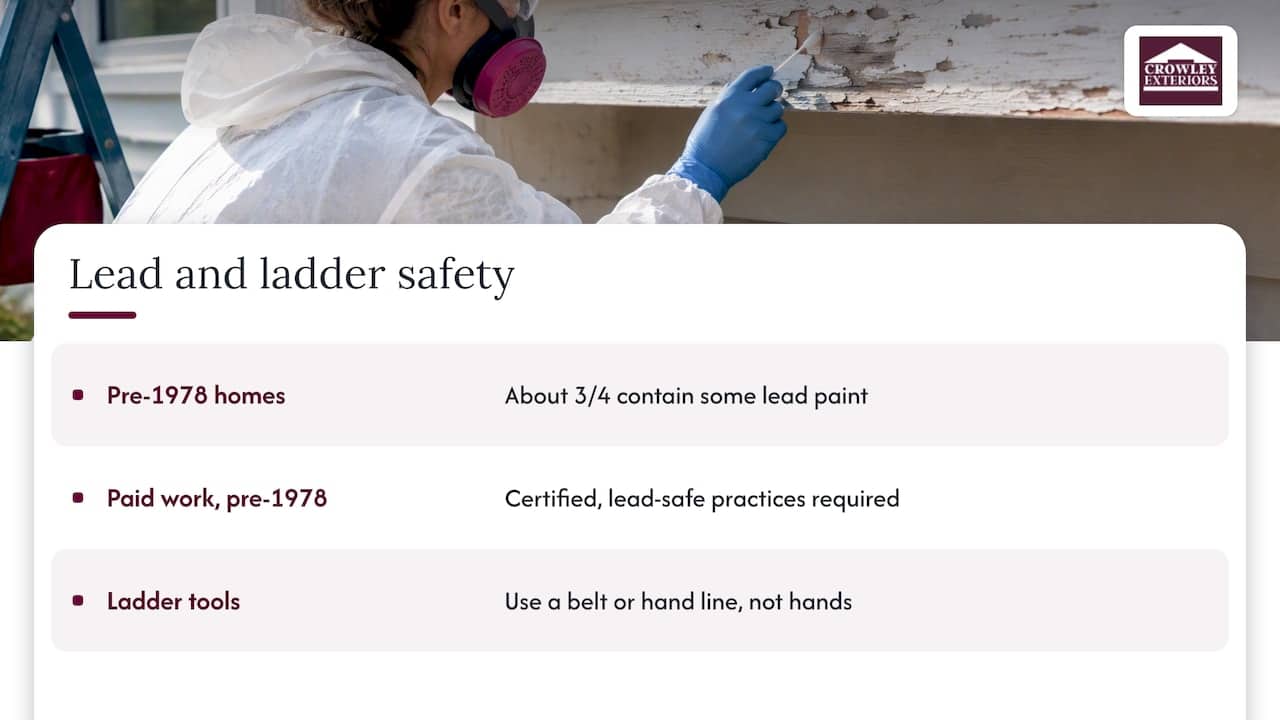
Older homes need one extra check. The EPA’s Renovation, Repair and Painting program requires that anyone paid to disturb painted surfaces in homes built before 1978 be certified and use lead-safe work practices. The agency says about three-quarters of U.S. homes built before 1978 still contain some lead-based paint. Exterior trim is a common place for it, so if your house is older, test before anyone scrapes, cuts or sands, and hire a certified firm if the test is positive. Ask any contractor for their certification before signing.
Ladders cause real injuries on roof-edge work. OSHA’s ladder safety guidance says to carry tools in a tool belt or raise them with a hand line rather than carrying them in your hands while climbing. Fascia sits at the eave, often two stories up, and a rotted board can fail under your weight or a ladder’s pressure.
DIY or professional?
An experienced DIYer can handle a short, single-story section where the rafters are sound. Bob Vila’s guidance says it is safest to hire a professional for roofing problems, and that roofers and contractors can repair or replace fascia and may find broader roof-structure issues during an inspection.
Call a roofer when:
- The house is two stories or the eaves are hard to reach safely.
- You find soft rafter tails, damp decking or interior stains.
- The home predates 1978 and the trim has not been tested for lead.
- The gutters are long, attached with hidden hangers, or need replacing anyway.
- The damage follows a hail or wind storm and may be part of an insurance claim.
The last point matters in St. Charles County, where storms are routine. If damage looks storm-related, document it before repairs begin and read our notes on storm damage and claim support on the services page.
How to compare estimates
Fascia work is usually priced per linear foot, with the final number moving based on material, access height, whether gutters must come off, and what is found once the old board is removed. Specific figures differ a lot from one source to the next, so rather than anchor on a national average, collect two or three written quotes for your own house.
A good estimate states:
- Total linear footage to be replaced, by side of the house.
- The material, thickness and finish.
- Whether gutters and drip edge are removed and reinstalled, and who handles that.
- How rafter tail or decking repairs will be priced if they turn up, ideally as a per-unit line item rather than an open-ended allowance.
- Lead-safe practices for pre-1978 homes.
- Cleanup, warranty terms and who is responsible for paint.
Clarifying how concealed framing repairs are billed is the single most useful thing you can do. Two quotes that look far apart are often just two different assumptions about what is behind the board. Our roof estimate checklist covers the same questions for larger jobs, and the eight contractor questions for soffit and fascia damage is a handy list to bring to any walk-through.
Preventing a repeat
Once the new board is up, protect it:
- Keep gutters clear and make sure downspouts discharge away from the foundation. Downspout extensions help.
- Confirm a drip edge is in place and lapped correctly.
- Fix leaking gutter seams and corners promptly. See leaking gutter corners.
- Keep soffit vents open and the attic ventilated.
- Inspect the roof edge each spring and fall. Our roof maintenance schedule lays out the checks.
If the roof is near the end of its life, it can be smarter to replace fascia as part of a roof project rather than twice. Our repair or replace guide helps you decide, and the roof replacement process shows what a project looks like from start to finish.
Our perspective
We have been working on St. Charles County roofs for more than 20 years, and the pattern is consistent: homeowners call about a soft fascia board, and the board is rarely the whole story.
Missouri weather is hard on the roof edge. Heavy rain, freeze and thaw cycles, and hail all find the weakest point, and that is usually where water first meets wood. A quick cosmetic swap that skips the inspection behind the board is the repair we see fail.
That is why we start with a free inspection and give an itemized, no-obligation estimate. You should see what is being replaced, what is being checked, and how any hidden framing repair will be handled before you agree to anything. We would rather you understand the job than be surprised halfway through it.
We also look at the cause. If gutters are overflowing or the drip edge is missing, we say so, because new trim in the same conditions is just the next repair. Fascia replacements carry a 5-year workmanship warranty, and we treat fascia as part of the roof system, not a separate afterthought.
Mario
Get the roof edge looked at
If your fascia is soft, peeling or pulling away from the gutters, we will inspect the board, the rafter ends and the roof edge at no charge and give you an itemized estimate with no obligation. We handle roof repair, gutters, siding and storm damage work across St. Charles County, so the fascia, drip edge and gutters can be handled together.
Start on our roofing and exterior services page or see our seamless gutter services if the gutters need attention too.
FAQ
Can I replace just one section of rotted fascia?
Yes, if the rest of the board is sound and the rafters behind it are solid. Sections should be cut so each spans at least two rafters. Have the wood on either side of the repair probed so you do not leave soft board in place.
How do I know if the rot has reached the rafters?
Once the board is off, probe the rafter tails with a screwdriver and check the roof decking for dark or soft areas. Inside, look for attic stains or sagging sheathing. InterNACHI notes that rotting fascia may conceal rot in the rafter tails, so this check is worth doing every time.
Do the gutters have to come off?
Usually, yes. If the home has gutters, at least part of them and the drip edge are removed so the old board can come off and the new one can be fastened. They are then reinstalled after the work.
Is fascia replacement safe to do myself?
It can be for an experienced DIYer on a low, accessible section, but the work happens at the roof edge on a ladder. Pre-1978 homes also require lead-safe practices, and paid contractors must be EPA-certified. If the house is tall, the damage is widespread or you are unsure, a roofer is the safer choice.
What should I do first if I see rot?
Probe the board to find the soft areas, check the attic and ceilings for moisture, and fix any overflowing gutter that may be the cause. Then have a roofer inspect the roof edge and give you an itemized estimate.
Sources
- How to Identify Roof Damage and What to Look For, GAF
- How to Perform Roof Inspections, InterNACHI
- Inspecting the Roof, American Society of Home Inspectors
- Home Inspection Checklist, The Home Depot
- How to Replace Fascia Boards, Lowe’s
- How to Repair Roof Fascia, IKO
- How to Install Aluminum Soffits, Family Handyman
- Lead Renovation, Repair and Painting Program, EPA
- Ladder Safety: Reducing Falls in Construction, OSHA
- Who Repairs Soffit and Fascia?, Bob Vila
Recommended
- Homeowners: 8 Contractor Questions For Soffit And Fascia Damage
- Yes, You Need House Wrap Under Siding: 6 Checks For Homeowners
This article was prepared with AI assistance for general information. For recommendations specific to your property, contact Crowley Exteriors. Call or text us at 314-839-3800.