


Curling shingles have edges or corners that lift away from the roof, and cupped shingles have a concave center. Both are usually signs of age, attic ventilation problems, moisture in the deck or poor installation. A few curled shingles on a fairly young roof can often be fixed. Widespread curling usually means the roof is near the end of its life, and a professional inspection is the fastest way to know which case you have.
TL;DR
- Healthy asphalt shingles lie flat and stay bonded to the course below. Curled, cupped, buckled or blistered tabs are signs of aging and weakness.
- Common causes are age, UV and heat cycles, poor attic ventilation, wrinkled underlayment, deck movement and defective or badly installed shingles.
- A few damaged shingles on a young roof may be replaceable. Broad curling, worn granules or exposed fiberglass point toward replacement.
- Wind damage may be covered by a homeowners policy, but deductibles and depreciation can change what you receive, so check your policy before you file.
- Melted vinyl siding, often from a grill, is fixed by replacing the damaged panels, not by patching.
Table of Contents
- What curled, cupped and wavy shingles look like
- What causes shingles to curl
- Repair or replace: how to decide
- A quick check you can do from the ground
- Will insurance cover shingles damaged by wind?
- Get the roof looked at before the next storm
- Melted vinyl siding: causes and repair
- Frequently asked questions
- Sources
What curled, cupped and wavy shingles look like
The two terms describe different shapes. Curled shingles have raised edges. Cupped shingles have a concave center, with the corners and sometimes the exposed tab edges bending down. InspectApedia describes cupping as a wear pattern that shows up as asphalt roofs age. Buckled shingles are a third pattern: ridges or waves that rise across the roof surface.
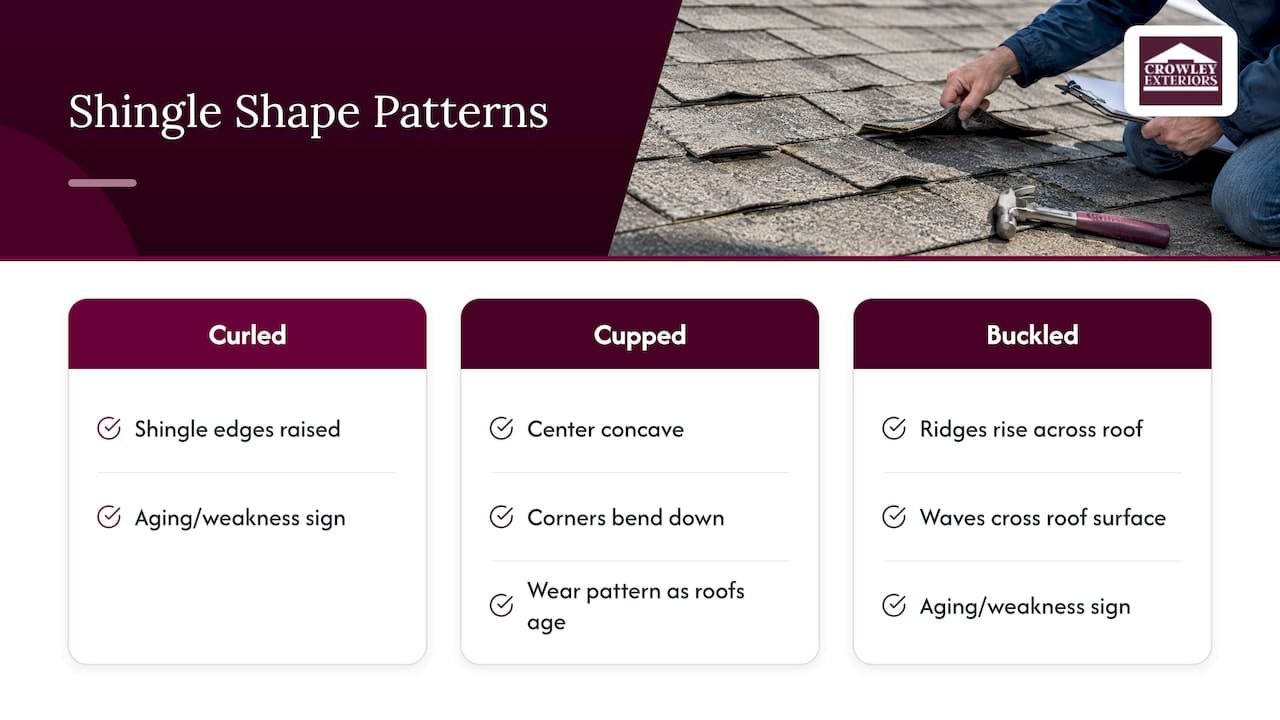
A healthy roof looks flat. Asphalt shingles should lie flat with their lower edges adhered to the shingle beneath, and curled, buckled or blistered tabs are signs of aging and weakness.
The shape matters because of what comes with it. As asphalt shrinks, the granules that protect the shingle can flake away, which exposes the asphalt-coated mat underneath to sun and weather, according to InspectApedia. If you are seeing bare patches or lots of granules in your gutters, our guide to roof granule loss explains what is normal and what is not.
Where to look
Curling often starts on the sunniest slopes, along the edges and at the rakes, where shingles face the most heat and wind. Look at the roof from the ground first, ideally in low-angle morning or evening light, which throws shadows under lifted edges. Binoculars help. You do not need to climb up, and on a steep or wet roof you should not.
What causes shingles to curl
No single cause explains every curled roof. The pages that rank for this topic keep returning to the same short list, and it matches what we see on Missouri roofs.
Age, sun and thermal cycling
Asphalt shingles shrink and stiffen as they lose oils over the years. Summer heat followed by cold nights repeats that stress thousands of times. Cupping along a south or west slope on a roof that is well into its second decade is typically plain aging. Missouri swings from humid heat to freezing winters, so our roofs get a full workout.
Poor attic ventilation
A hot, humid attic cooks the deck from below and pushes moisture into the wood. The Asphalt Roofing Manufacturers Association (ARMA) is quoted by InspectApedia as saying that proper attic ventilation limits moisture getting into deck materials and the resulting deck distortion. If your attic feels like an oven in July or shows frost and damp in winter, read about roof ventilation problems and how ventilation types and airflow ratios work.
Underlayment wrinkles and deck movement
Buckling is a slightly different problem. The ARMA technical bulletin on buckled shingles says it most often comes from wrinkles in the underlayment or movement of the wood decking. That is an installation and structure issue, not just a wear issue, and it is why a visible wave pattern in new work should be looked at by a roofer, not ignored.
Defective shingles, storage and extra layers
Shingles stored badly before installation, or a roof with more than one layer, can also curl early. A second layer traps heat, and a poorly prepared surface underneath shows through the top layer.
Repair or replace: how to decide
The honest answer depends on how much of the roof is affected and how old it is. GAF notes that a few loose or damaged shingles on a relatively young roof may be replaceable, while broader or more extensive damage may mean it is time for a new roof.
| What you see | What it usually means | Typical next step |
|---|---|---|
| A handful of curled shingles on one slope, roof under about 10 years old | Localized problem, possibly a defect, wind lift or installation issue | Inspection, then targeted shingle replacement and a ventilation check |
| Curling or cupping across a whole slope or several slopes | Age and heat wear, or an attic problem | Inspection, with replacement likely to be the better value |
| Cupped tabs plus worn granules or exposed fiberglass | Shingles at the end of their service life | Plan a replacement |
| Waves or ridges that appeared soon after installation | Possible underlayment or deck issue | Have the installer or a second roofer assess it |
The damage level is what drives this. Shingles with bowed or cupped tabs, cracked or broken tabs, exposed fiberglass or worn-off granules need replacement because they probably will not stay on the roof in high winds. Buckling or curling tabs are strong indicators that a roof may lose shingles in a hurricane, and it recommends having a roofer or home inspector evaluate the roof when you find them. Missouri does not get hurricanes, but we do get severe thunderstorm winds, and the logic holds: weak tabs let go first.
Fine Homebuilding says shingles that are cupped and dog-eared, especially with worn granular surfaces, indicate it is time for a new roof.
Why you cannot just roof over curled shingles
It is tempting to lay new shingles on top of a curled roof. GAF’s professional field guide says curled or buckled organic shingles should be nailed down or removed before reroofing, because their irregularities can telegraph through the new layer and prevent proper sealing. It also describes tear-off as the chance to correct deteriorated decking and ventilation. A full tear-off lets the crew fix the cause, which is why replacing a curled roof tends to last longer than covering it.
For a way to weigh the numbers, see our 25 to 30% rule for repair versus replacement and our guide to signs, timelines and costs of replacing a roof.
A quick check you can do from the ground
- Walk the whole perimeter and look at every slope, not just the one you can see from the street.
- Note whether the curling is on one slope or all of them. Sun-facing slopes curl first.
- Check the gutters and downspout outlets for shingle granules.
- Look for shingles missing from the edges, ridge or around vents.
- In the attic, check for damp decking, stained rafters, rusted nail tips or a stuffy, hot feel.
- Take dated photos of what you find. They help your roofer and, if needed, your insurer.
If you also see stains on your ceiling, treat that as urgent. Our roof leak emergency guide walks through what to do first.
Will insurance cover shingles damaged by wind?
It can, but curling from age is a different matter from storm damage. The standard HO-3 homeowners form covers windstorm damage, and the Triple-I advises checking your policy limits, any windstorm or hurricane deductibles and whether coverage is actual cash value. An actual cash value policy pays replacement cost minus depreciation, which can be significant on an old, worn roof. The same source notes the HO-3 excludes costs driven by building ordinances or laws, though an endorsement can cover them.
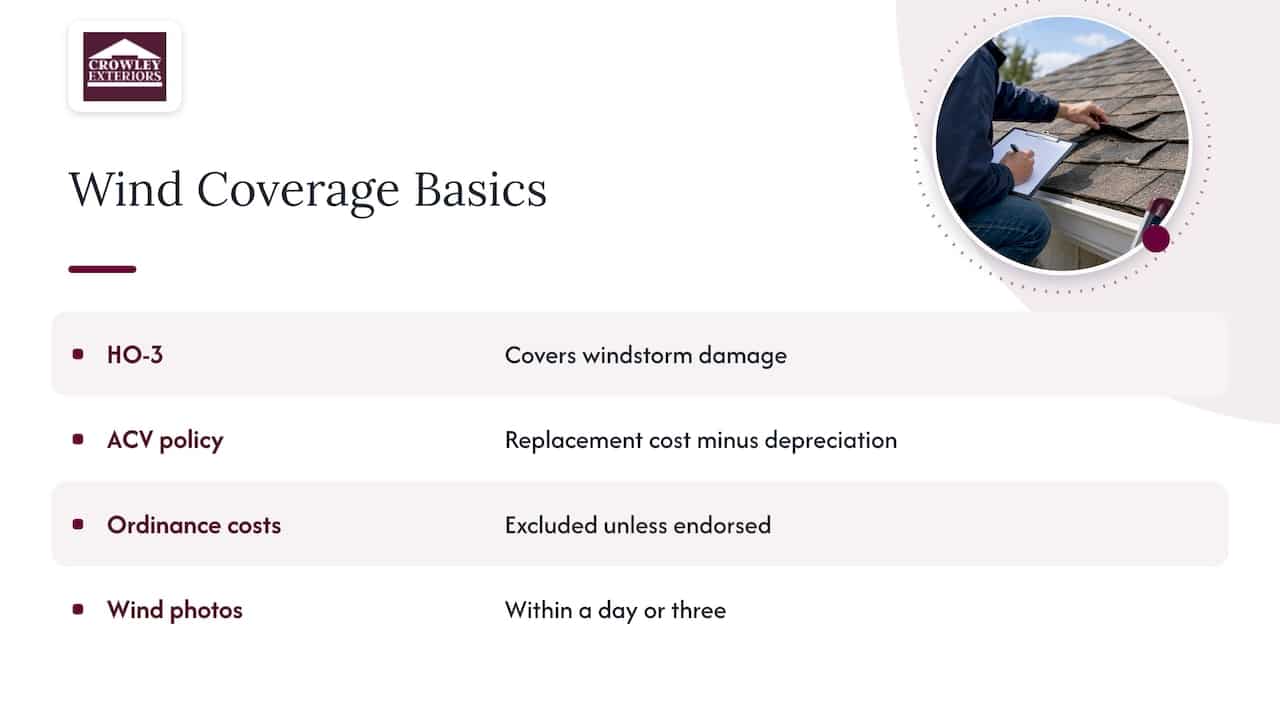
That is why timing matters. Photograph wind damage within a day or three, using our wind damage photo checklist and our guide to wind damage roof signs. Then understand what you will owe: our guides on calculating your roof deductible in Missouri and real deductible examples show how the numbers play out. After hail, start with what to do about hail damage.
If your roof is old and you are weighing a big expense, it can also help to think about the bigger picture, including roof replacement versus selling the house as is.
Our view on curling shingles
Most homeowners call us after they notice curling from the driveway, and the first question is always the same: is this a patch or a new roof? We do not guess from the street. We go up, check the shingles, the decking and the attic, and tell you what we find.
Our experience in St. Charles County is that curling is rarely just a surface problem. It is a symptom, and if the cause is ventilation or underlayment, a patch only hides it. That is why our estimates are free, itemized and written so you can see what each line pays for, and why roofing work comes with our workmanship warranty (10 years on full roof replacements, 1 year on most repairs).
We would rather you understand the roof before you sign anything. If we find a few repairable shingles, we say so. If the roof has reached the end of its life, we show you why.
Mario
Get the roof looked at before the next storm
We are a family-owned company with more than 20 years of experience on Missouri roofs. We offer free roof inspections and no-obligation estimates across St. Charles County, including repair, storm and hail damage work and help with insurance claims. If you want to see what a replacement involves or book an inspection, start on our services page.
Buying or selling? Our real estate roof inspection reports document the condition of a roof before closing.
Melted vinyl siding: causes and repair
Homeowners who search for curling shingles are often also dealing with another heat problem: warped or melted vinyl siding, usually near a grill.
Why vinyl melts
Vinyl siding is made of PVC, so it softens, distorts or melts under high heat sources such as barbecue grills, even though it does not support combustion, according to InterNACHI’s exterior inspection guide. Heat can also reflect from glass doors, windows and low-E glass, so a grill lid left closed near the wall is not the only risk.
How to fix it
Melted vinyl cannot be reshaped. The damaged panel has to come out. The U.S. Department of Energy’s homeowner repair guide explains that buckled, cracked or otherwise damaged vinyl sections are replaced using a zip tool slipped behind the panel above to unlock the damaged one. A replacement panel is then snapped into place. Matching color and weathering on older siding can be tricky, and if the damage covers several courses or the panels are discontinued, replacing a whole wall may look better. See our siding replacement options or how to compare siding bids.
How to prevent it
Keep grills a safe distance from the house. InterNACHI also advises keeping dry, combustible materials like mulch and trash away from siding. Move the grill to a patio or lawn, never under an eave, and let it cool before covering it.
Frequently asked questions
Are curled shingles an emergency?
Usually not, but they are a warning. Curled tabs lose their seal and can lift or tear off in strong wind, which opens the roof to leaks. Have a roofer inspect it soon, and treat ceiling stains or active drips as urgent.
Can I flatten curled shingles?
Some roofers nail down or re-adhere isolated tabs on a young roof. Brittle, cupped shingles on an aging roof tend to crack when handled, and walking on them can cause more damage. It is a job for a professional, especially on a pitched roof.
What is the difference between curling and cupping?
Curling means the edges lift. Cupping means the middle sinks while the corners turn down, giving a concave shape. Both signal shrinking asphalt and loss of protective granules, and both are judged the same way: by how widespread they are and how old the roof is.
Will insurance cover curling shingles?
Wear and age curling is generally a maintenance issue, while wind damage may be covered under an HO-3 policy, subject to your deductible and whether the policy pays actual cash value. Check your policy and photograph damage promptly. We can help you through the claim process.
Sources
- Shingle Cupping Defects, InspectApedia
- Plain Facts About Buckled Shingles, ARMA technical bulletin
- How to Identify Roof Damage and What to Look For, GAF
- Pro Field Guide for Steep Slope Roofs, GAF
- Evaluating the State of the Roof, Fine Homebuilding
- Am I Covered?, Triple-I
- How to Inspect the Exterior, InterNACHI
- Repairing Walls & Floors, U.S. Department of Energy
Recommended
- 25 To 30% Rule: When Homeowners Should Repair Or Replace A Roof
- Homeowners: Don’t Hammer Shingle Nail Pops, Pro Repair Steps
- What To Do About A Roof Valley Leak Before It Wrecks Your Ceiling
- Roof Granule Loss: What’s Normal, What’s Not, And What To Do
This article was prepared with AI assistance for general information. For recommendations specific to your property, contact Crowley Exteriors. Call or text us at 314-839-3800.