


Cloudiness trapped between the glass panes means the insulated glass unit has a failed seal, and no amount of cleaning will fix it. Your realistic options are temporary defogging, replacing just the IGU, or a full window swap. A professional inspection tells you which fix actually fits your frame and budget, and whether a warranty still covers the repair.
TL;DR:
- Repair options differ significantly in cost, durability, and disruption, with IGU replacement offering a balance of restoring clarity and energy efficiency.
- Fog between panes indicates seal failure, often caused by thermal cycling, UV exposure, age, poor installation, or impact damage.
- A thorough inspection of the window frame is essential before choosing a fix, as frame rot or damage limits repair options.
- Defogging provides only a temporary, cosmetic fix and often voids warranties, making it less suitable for long-term solutions.
- Proper maintenance, including checking edges and controlling indoor humidity, can extend the life of sealed windows and delay seal failure.
Table of Contents
- How to Tell if Foggy Double Pane Windows Are Failing Between the Panes
- What Causes Fog Between Double Panes in the First Place
- Real Repair Choices for Foggy Windows: Defog, Replace, or Add Glazing
- Foggy Window Repair Costs and How Long Each Fix Takes
- How to Choose the Right Fix: A Homeowner’s Checklist
- Simple Maintenance That Extends the Life of Your Windows
- How a Pro Actually Assesses a Foggy Window
- Why the “Just Defog It” Advice Keeps Homeowners Stuck
- Ready to Get Your Foggy Windows Assessed?
- Sources
How to Tell if Foggy Double Pane Windows Are Failing Between the Panes
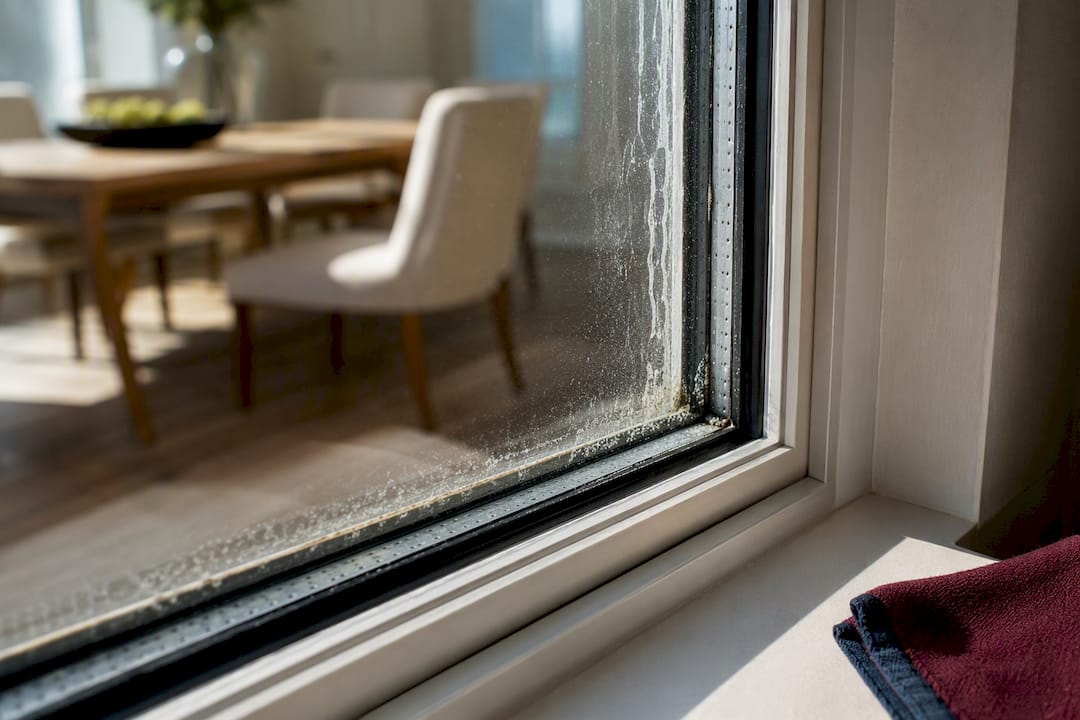
Start with the wipe test. Clean both the inside and outside of the glass. If the haze stays put, it’s living in the sealed cavity between the panes, not on the surface, which means the hermetic seal has failed.
Next, look at the edges of the glass. A few visual clues tell you a lot:
- White, chalky streaks near the spacer bar (mineral deposits left behind as moisture evaporates and re-condenses)
- Dark spots or fuzzy patches close to the frame, which can signal mold growth inside the cavity
- A discolored or warped spacer, often the first part to give out
- Water droplets that never fully disappear, even on dry, sunny days
- A slightly bowed or sagging look to the glass, which hints the insulating gas has leaked out
Photograph what you find, both the fogged area and the edge detail. If you end up filing a warranty claim or getting quotes from a few contractors, those photos save everyone time.
Pro Tip: Take your photos in direct sunlight from an angle. Mineral staining and spacer discoloration show up far more clearly in raking light than in a flat, straight-on shot.
What Causes Fog Between Double Panes in the First Place
Every insulated glass unit relies on three things working together: a hermetic seal around the edge, a spacer bar packed with desiccant, and a layer of insulating gas, usually argon, sealed inside the cavity. When all three hold, the unit stays clear and energy-efficient for years.
The seal’s real enemy is something most homeowners never think about: thermal pumping. Glass and metal expand in the heat and contract in the cold, day after day, year after year. That constant flexing gradually creates micro-fractures in the perimeter sealant, and windows facing full sun often fail first because they cycle through bigger temperature swings.
Several factors speed up seal failure:
- UV exposure, especially on south and west-facing windows
- Age. Most units are expected to last roughly 15 to 25 years, though quality and installation shift that range considerably
- Poor original installation or a frame that’s shifted over time
- Direct impact, like a stray baseball or hail
Once moisture gets past the seal, the desiccant packed into the spacer absorbs it temporarily. However, desiccant can only absorb a limited amount. Surface condensation on the glass surface wipes away quickly, but fog between the panes persists because the desiccant becomes saturated and cannot absorb more moisture.
Real Repair Choices for Foggy Windows: Defog, Replace, or Add Glazing
You have four real paths forward, and they land in very different places on cost, durability, and how much disruption they cause.
- Defogging (drill-and-dry). A technician drills small holes into the unit, dries out the cavity, and seals the holes. It clears the visible fog for a while, but it doesn’t restore the insulating gas or rebuild the factory seal. Expect the haze to creep back within a year or two, and know that this process typically voids whatever warranty remained on the unit.
- IGU replacement (glass only). A glazier pulls the failed sealed unit and drops in a new one, factory-sealed with fresh desiccant and insulating gas. When the frame is still solid, this restores clarity and thermal performance without touching the rest of the window. It’s generally the most cost-effective long-term fix available.
- Full window replacement. If the frame is rotted, warped, or the sash itself is damaged, replacing the glass alone won’t solve the underlying problem. This is also the point where it makes sense to upgrade to better glass packages or improved framing materials.
- Secondary glazing or an interior storm panel. Adding a second layer of glass or acrylic over the existing window on the interior side. It won’t fix the fog in the original unit, but it can improve comfort and cut down on drafts without any demolition, which makes it a reasonable stopgap while you plan a bigger repair.
Here’s the tradeoff in plain terms: defogging buys you a better view for a little while. IGU replacement and full window replacement actually restore insulating performance. Only two of these four options fix the problem instead of hiding it.
Foggy Window Repair Costs and How Long Each Fix Takes
Costs vary by pane size, glass shape, and the glass specs you choose, but here’s the general shape of it:
- IGU replacement costs vary depending on opening shape, glass type, and coatings
- Full window replacement usually costs more upfront but includes additional hardware and improved framing
- Defogging is generally the least expensive option but may only provide a temporary fix
Timelines matter too. IGU replacement usually means a short wait for the glass to be custom-cut, then an install that takes an hour or less per window. Full replacement often involves a longer order lead time, especially for non-standard sizes, followed by a install day that depends on how many windows you’re swapping. A window still under its original manufacturer warranty can shrink the cost significantly, which is one more reason frame condition and warranty status belong in the first conversation you have with a contractor.
How to Choose the Right Fix: A Homeowner’s Checklist
Before you call anyone, get a few facts straight: how old the windows are, whether the frames show any rot or warping, what energy performance you actually want, how long a warranty you’d like on the new work, and what you’re comfortable spending.
When you talk to a contractor, ask directly:
- Do you replace just the IGU, or does this require swapping the whole window?
- What warranty comes with the new glass unit, and does it cover the labor too?
- What are the specs on the replacement IGU (gas fill, coatings, spacer type)?
- What’s the realistic timeline from order to install?
Watch for red flags. A contractor who pushes drill-and-fill as a permanent solution isn’t being straight with you. Anyone unwilling to inspect the frame before quoting a price is skipping a step that actually determines the right repair. And no written warranty means no accountability if the new unit fails early.
Pro Tip: Get every quote in writing with the exact IGU specs listed, not just “new glass.” Vague quotes are how homeowners end up with a mismatched insulating value they didn’t ask for.
Simple Maintenance That Extends the Life of Your Windows
Walk your windows once or twice a year and check the edges for early staining or discoloration. Catching a small patch early, before frame deterioration sets in, often means a cheaper glass-only fix instead of a bigger job later.
A few habits go a long way:
- Avoid leaning objects against glazing or applying pressure near the edges
- Use blinds or UV-blocking film on south and west-facing windows to slow sealant breakdown
- Run bathroom and kitchen exhaust fans to cut indoor humidity, which reduces stress on seals
- When you do replace a unit, ask about low-E coatings, argon fill, and warm-edge spacers, all of which extend service life compared to older basic assemblies
How a Pro Actually Assesses a Foggy Window
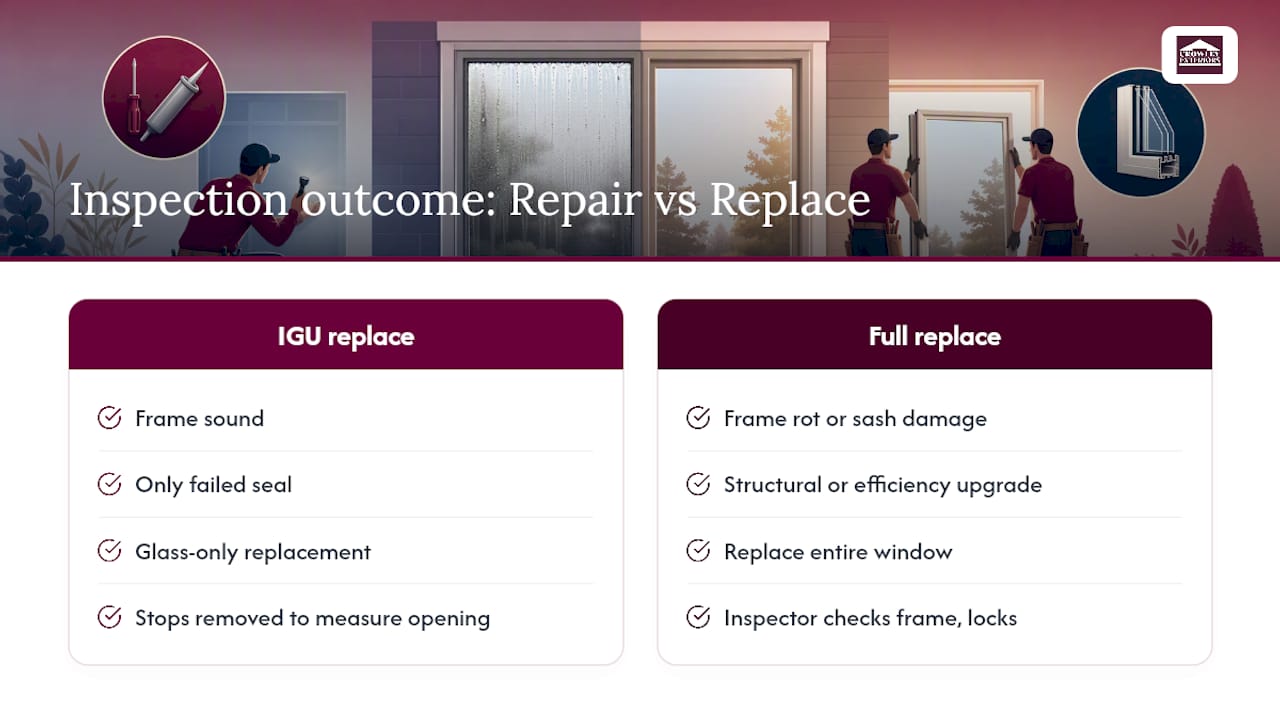
A real inspection starts at the frame, not the glass. A contractor checks for rot, moisture damage, and whether the sash still closes and locks properly, because that determines whether IGU replacement is even an option. If the stops need removing, they’ll pull them carefully to measure the exact opening for a replacement unit.
IGU replacement makes sense when the frame is sound and the only problem is the failed seal. Full window replacement becomes the right call when there’s frame rot, sash damage, or when the homeowner wants an efficiency upgrade anyway. [author_bio]
[brand_signal] Crowley Exteriors approaches every foggy window call the same way: a free, no-obligation inspection first, followed by a straight answer on whether glass-only replacement or a full window replacement makes more sense for that specific frame.
Why the “Just Defog It” Advice Keeps Homeowners Stuck
Most articles on foggy windows treat defogging as a legitimate middle option, somewhere between doing nothing and replacing glass. It isn’t. It’s a cosmetic patch that trades a clear view now for a bigger decision later, usually within a year or two, and often after the original warranty is gone.
The bigger blind spot in most advice is frame condition. Homeowners fixate on the glass because that’s what’s visibly foggy, but the frame is what actually decides your options. A sound frame keeps IGU replacement on the table as the cheaper, faster fix. A compromised one takes that option away entirely, no matter how good the new glass would be.
If you take one thing from this guide, make it this: get the frame checked before you get a glass quote. Ask about desiccant and gas fill specs, not just “new glass,” and get warranty terms in writing before anyone drills or pulls a sash. The window’s age matters less than how it was built and installed in the first place.
— Mario
Ready to Get Your Foggy Windows Assessed?
You can find contractors who offer free inspections and no-obligation estimates, providing a clear answer on IGU replacement versus full window replacement before you spend a dollar. Some local crews have extensive experience in their service areas, and many provide a clear warranty conversation upfront, not fine print you find out about later.

When you schedule a visit, have your photos of the fogged edges ready and note roughly how old the windows are if you know it. That gives our team a head start on diagnosing frame condition versus glass condition before we even walk the property. If energy-efficiency upgrades are part of your plan, ask about current window tax credit options while you’re at it, and if you’re weighing other exterior projects at the same time, our full services list covers siding and gutters too. Ready to get a real answer on your windows? Schedule your free inspection and find out exactly what’s going on between those panes.
Sources
This guide draws on inspection standards from InterNACHI, glazing failure analysis from Inspectapedia, manufacturer guidance from Pella, and repair specifics from Speedy Glass and Clearview. For warranty questions or anything involving mold, get a professional inspection before deciding on a fix.
- Condensation in Double-Paned Windows — InterNACHI
- Window Condensation Due to Lost Seal in Insulated Glass Windows or Doors — Inspectapedia
- Foggy windows: a guide to window seal and double-pane repair — Speedy Glass
- What causes windows to fog? — Pella pressroom
- Condensation inside double-glazed windows: causes and solutions — Clearview
Recommended
This article was prepared with AI assistance for general information. For recommendations specific to your property, contact Crowley Exteriors. Call or text us at 314-839-3800.