
Four directions define exterior color right now: nature-inspired greens, warm earth neutrals, deep saturated darks, and single-tone “color drenching” across siding and trim. The right pick has less to do with what’s trending and more with matching a palette to your climate, your roof color, and your home’s architectural bones. The rest of this guide breaks down each direction, shows real pairing combinations, and walks through how to test a color before you commit to it.
TL;DR:
- Choose dark siding colors only if they are formulated with infrared-reflective pigments to reduce heat absorption in hot climates.
- Fiber cement and engineered wood generally maintain saturated pigments longer than vinyl, which tends to chalk or fade faster under UV exposure.
- Testing colors with multiple physical samples at different times of day and lighting conditions can prevent costly mistakes before full installation.
- Prioritize color selection based on climate and material durability rather than trend, as pigment quality and substrate influence fade resistance over time.
- Incorporate opposing elements like white trim with dark siding for sharp contrast or tonal layering for a softer, more cohesive exterior appearance.
Table of Contents
- Siding Colors 2026: The Four Directions Worth Knowing
- Pairing Siding, Trim, and Roof Colors That Actually Work
- What Color Choice Does to Siding Performance
- How to Test and Finalize Your Siding Color
- What Installers See Behind the Trend Reports
- The Real Question Isn’t What’s Trending, It’s What Fades Well
- Ready to See Your Home in One of These Colors?
- Sources
Siding Colors 2026: The Four Directions Worth Knowing
Manufacturer trend reports and installer feedback point to the same handful of directions this year, and each one solves a different design problem.
- Nature-inspired greens (sage, forest, olive) are showing up on everything from modern farmhouses to craftsman remodels. Sage reads soft and blends into landscaping, while deeper forest and olive tones give a home more weight without going as stark as black or charcoal. These greens tend to hide dust and pollen better than lighter neutrals, though very light sage can show green algae streaking in humid climates faster than a mid-tone would.
- Warm earth tones and natural neutrals (terracotta, warm greige, sand) are the safer, longer-term play. Gentek’s 2026 trend report lists warm earth tones alongside greens and deep darks as the year’s leading directions, and there’s a practical reason greige and sand keep showing up on resale-focused remodels: they read as fresh without looking like a fad, which matters if you’re not planning to repaint or reside again in ten years.
- Deep saturated darks (iron gray, charcoal, navy, and the charred-wood look popularized by shou sugi ban) deliver the most visual drama per square foot of siding. James Hardie’s naming of Iron Gray as its 2026 color of the year is a good signal of how far this trend has moved into mainstream taste, not just modern architecture. The trade-off is thermal: dark siding absorbs far more solar energy than a light neutral, which matters more in some climates than others (more on that below).
- Color drenching and tonal layering means running one color, or one tight tonal family, across siding, trim, and sometimes even the front door. Installers report this approach gaining ground fast because it simplifies the design decision and gives a home a cleaner, more monolithic look than the traditional light-body-dark-trim formula. Tonal layering is the softer version: same hue family, different values, so the trim reads a shade or two lighter or darker than the field color instead of contrasting hard against it.
None of these trends are mutually exclusive. A lot of the best-looking 2026 exteriors mix a warm neutral body with a deep charcoal or forest green accent on a bump-out, garage, or lower level, which is really color drenching and tonal layering working together.
Pairing Siding, Trim, and Roof Colors That Actually Work
Two rules cover most successful exteriors: high contrast for definition, tonal for calm. A charcoal body with crisp white trim and a black roof reads sharp and architectural. A sage body with slightly darker olive trim and warm wood accents reads soft and cohesive, because you’re staying inside one color family instead of jumping to a contrasting one.
Homeowner guides consistently point back to the same anchor: choose your siding color relative to what’s fixed, meaning your roof, stone, brick, and hardscaping, since those are the elements you’re not replacing. If you have a brick foundation or chimney, a warm greige or terracotta body plays nicer with red or orange brick tones than a cool gray does. Six combinations that consistently work:
- Sage green siding, white trim, black windows, and a weathered gray roof for a modern farmhouse look.
- Warm greige siding, cream trim, and a wood-tone front door for classic ranch and colonial homes.
- Charcoal siding, natural wood accents on gables, and a black metal roof for a contemporary build.
- Terracotta siding paired with dark bronze trim and brick foundation for craftsman-style homes.
- Iron gray siding, drenched trim, and a single red or navy front door for a bold, low-fuss modern exterior.
- Sand-toned siding with stone veneer accents and dark brown trim for traditional two-story homes.
Manufacturers are also leaning into mixed materials, adding stone or woodgrain accents specifically to soften the visual weight of darker siding, which is worth asking your installer about if you’re drawn to charcoal or navy but worried it’ll feel heavy.
What Color Choice Does to Siding Performance
Color isn’t just aesthetic. It changes how your siding behaves in the sun. Dark siding can run significantly hotter on the surface than light-colored siding in direct sun, according to trend and technical reporting on 2026 siding colors, and that heat load can push cooling costs up in already hot climates.
The fix isn’t necessarily avoiding dark colors, it’s asking about the formulation. Infrared-reflective pigments in dark finishes can cut that surface temperature noticeably compared to conventional dark siding, narrowing the gap significantly without giving up the look. The Cool Roof Rating Council tracks solar reflectance data for exactly this reason, and it’s a legitimate metric to ask a contractor for, not just a marketing term.
A few things worth confirming before you commit to a saturated color:
- Fiber cement and engineered wood generally hold deep, saturated pigments longer than standard vinyl, which can chalk or fade faster under UV exposure.
- Ask what reflectance rating a dark color carries, and whether it’s part of a manufacturer’s IR-reflective or “eco” palette line.
- In coastal or salt-air climates, ask how the finish holds up against salt exposure; in freeze-thaw regions, ask about expansion and contraction behavior at seams.
How to Test and Finalize Your Siding Color
Digital visualization tools are fine for narrowing down a shortlist, but they’re not where the decision should end. Colors shift dramatically under morning light versus afternoon shade, and a screen rendering never quite captures that.
- Order at least two or three physical samples in your top choices, not just one.
- Tape or prop samples against your actual house at different times of day, morning, midday, and evening, and in both sun and shade.
- Check the samples again after a cloudy day, since overcast light can wash out warm tones or make cool tones look flat.
- Ask your installer for a small in-situ mockup board before ordering full material, and photograph it against your roof and trim for reference.
Pro Tip: Snap a photo of each sample against your roofline and email it to yourself. Colors you love in person often look completely different once you see them next to your actual roof color in a photo, which is a cheap way to catch a mismatch before you order material.
What Installers See Behind the Trend Reports
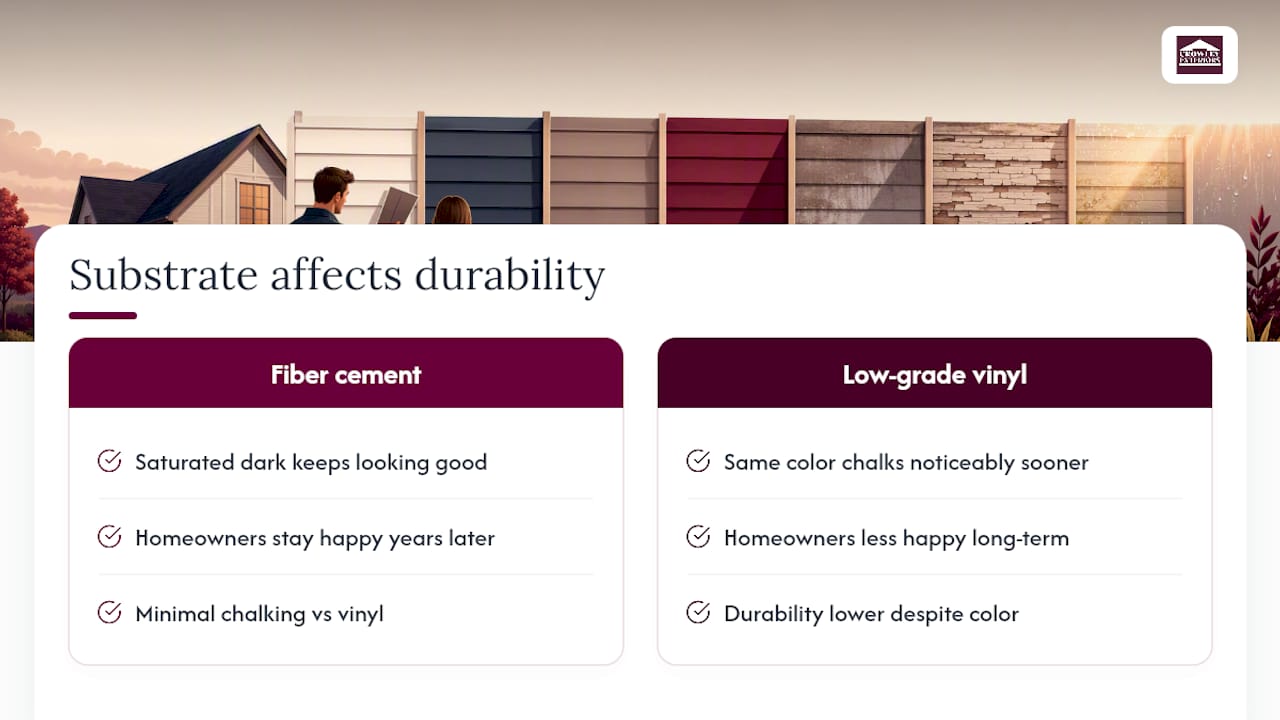
After many years installing siding, some teams see the gap between a trend photo and a real installation up close. Homeowners gravitate toward warm neutrals and greens more than any other category right now, which lines up with what BBB-listed siding contractors report seeing across the industry. The durability outcomes vary more by substrate and finish than by color alone. Homeowners who go saturated dark on fiber cement tend to stay happy with the choice years later; the same color on a lower-grade vinyl can chalk noticeably sooner. That single detail, more than the trend itself, tends to decide whether a bold color still looks good in year five.
The Real Question Isn’t What’s Trending, It’s What Fades Well
Most siding color content treats 2026 like a fashion cycle. It isn’t. Paint and pigment technology move slower than design taste, so the “trend” this year is really just the industry finally offering better versions of colors homeowners have wanted for a decade: deeper darks that don’t chalk in two summers, greens that don’t look muddy by year three.
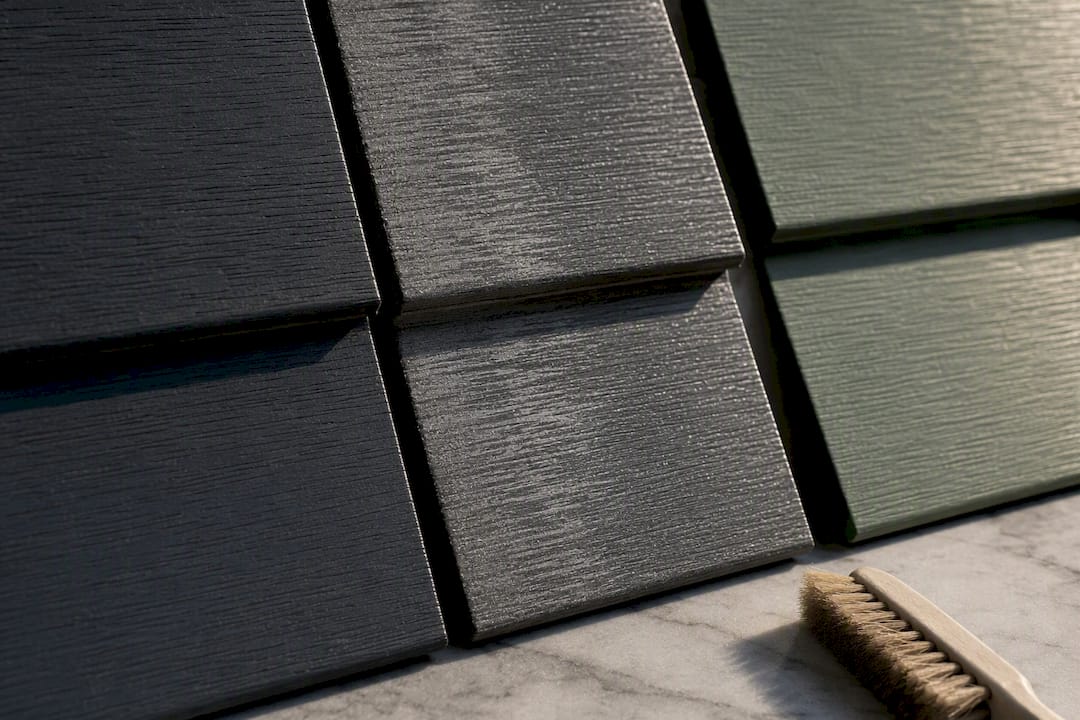
The conventional advice, “pick what you love and match your roof,” skips the part that actually determines regret. Two houses can pick the identical iron gray and end up in completely different places five years later, purely based on substrate and pigment quality. If you’re set on a saturated color, the substrate and finish decision deserves as much attention as the color swatch itself.
Prioritize in this order: climate first, substrate second, color third. A stunning charcoal on the wrong material in a high-UV climate will disappoint you faster than a safe greige on quality fiber cement ever will.
— Mario
Ready to See Your Home in One of These Colors?
Trend reports and sample chips only tell you so much. Some exterior contractors offer free inspections and no-obligation estimates, which may include walking through color options and material upgrades that hold saturated colors better over time.
Some contractors can bring sample boards to your home and show you how each option looks against your actual roof, trim, and stonework, not just a screen rendering. We’ll also walk you through fade resistance and reflective pigment options if you’re set on a darker palette. If you’re ready to move past sample chips and see real material against your house, start with a siding consultation and get a straightforward, no-pressure estimate.
Sources
- Siding Color Trends for 2026 – Thermal King Windows Doors Siding
- Coolroofs
- 2026 Exterior Colour Trends in Siding, Trim, and Design – Gentek
- Introducing the 2026 Color of the Year: Iron Gray – James Hardie
Recommended
This article was prepared with AI assistance for general information. For recommendations specific to your property, contact Crowley Exteriors. Call or text us at 314-839-3800.