


If hail broke or cracked your windows, do three things in this order: stay safe and cover the opening, photograph everything before you clean up, and call your insurer. Then get the whole exterior checked, because hail that breaks glass has usually hit the roof, siding and gutters too. Most hail-damaged windows can be handled under a standard homeowners policy, but the deductible and the paperwork decide what you actually pay.
This guide walks through the first 72 hours, how to tell cosmetic marks from real damage, what insurance does and does not pay for, and when repair makes sense over replacement. We are a family-owned exterior contractor in St. Charles County, so we have seen how Missouri hail plays out on real homes.
TL;DR
- Cover broken glass with plywood or heavy plastic, keep your receipts, and do not start permanent repairs until your insurer has inspected.
- Photograph and video every window, screen, frame, the siding and the roof before any cleanup.
- Hail damage is usually covered by homeowners insurance, but many Midwest policies carry a separate wind/hail deductible of 1% to 5% of the policy limit. Check your declarations page.
- Insurers pay for damage from the storm, not for making undamaged windows match new ones.
- Verify any contractor who knocks on your door after a storm, and never sign over your claim or pay in full upfront.
Table of Contents
- Does hail really break house windows?
- What to do in the first 72 hours
- Cosmetic or functional: the line your claim depends on
- What insurance pays for
- Repair or replace: what makes sense for a hail-damaged window
- Why our view is different: a note from the crew
- Avoiding storm-chasing contractors
- Hail damaged windows in St. Charles County: how we can help
- FAQ
- Sources
Does hail really break house windows?
Yes. The National Weather Service notes that hail can shatter windows, leave pockmarks in siding and damage roof coverings. Hail of at least 1 inch across, about the size of a quarter, is classified as severe, and stones falling fast enough can break residential glass.
What decides whether a window fails is a mix of stone size, wind direction and the window itself. Wind-driven hail hits the sides of a house, so windows that face the storm take the worst of it. Older single-pane glass, windows with failing seals and thin storm panes crack more easily than newer double-pane units. Window screens often take the first hit and may be the only visible sign.
You may not see a clean hole. Hail can leave:
- A shattered pane or a spiderweb crack that spreads over days
- A broken seal on a double-pane unit, which shows up later as fog or moisture between the panes
- Dented or cracked vinyl, aluminum or wood frames and trim
- Torn screens and bent or cracked exterior casing
- Dented aluminum cladding on the outside of the frame
If you find any of these, assume the roof and siding were hit too.
What to do in the first 72 hours

Step 1: Stay safe and keep away from the glass
Wait until the storm has passed. The National Weather Service advises sheltering in a small interior room on the lowest floor and avoiding windows while severe thunderstorms threaten. Once it is over, keep children and pets out of any room with broken glass. Wear gloves and closed shoes when you go near it.
Step 2: Stop the weather from getting in
The NAIC post-disaster claims guide says to secure your home after a disaster, and gives boarding up broken windows as an example. Missouri’s Department of Commerce and Insurance gives the same advice in its guidance after severe weather: make the temporary repairs needed to prevent further damage, and keep receipts for materials so you can be reimbursed.
Plywood, a heavy plastic sheet and strong tape are enough. Wind-driven rain gets behind a broken pane quickly and soaks the frame, drywall and flooring. Temporary is the key word. Do not remove the frame, cut out the sash or install new glass yet.
Step 3: Document before you clean
Take wide shots of each elevation of the house, then close-ups of each damaged window, the frame, the screen and any debris on the ground. Add video that walks around the whole house. Photograph the hailstones next to a coin or ruler if any are left. Inside, photograph glass on floors, water on sills and stained drywall.
The NAIC guide explains that the homeowner provides the proof of loss, including photos and inventories, while the adjuster assesses it. Photos taken in the first day or two are the strongest because the damage is fresh and weather has not yet added new problems. We cover the same habit for roofs in our guide on what to do in the first 72 hours after storm damage and our photo checklist for wind damage.
If you are thinking of selling the house in the near future, good records matter even more. Buyers and agents will ask about water intrusion, and this overview of how to disclose water damage before a sale explains why documenting what happened and what was fixed protects you.
Step 4: Call your insurer
Missouri’s insurance department tells residents to contact their agent or the insurer’s claims line as soon as possible. It adds that, depending on the loss, you may want to get damage estimates first to help decide whether a claim is worth filing. The claims number is on your policy and usually on your insurer’s website.
Keep a log of every call: date, name, what was said. Ask what your deductible is and whether your policy pays replacement cost or actual cash value.
Step 5: Get the whole exterior inspected
Broken windows are the visible symptom. Hail that breaks glass can also bruise shingles, dent gutters and leave marks on siding that only show up under the right light. A free inspection costs you nothing and gives you a fuller picture before the adjuster visits. Our own guides cover the roof and the siding side of that check.
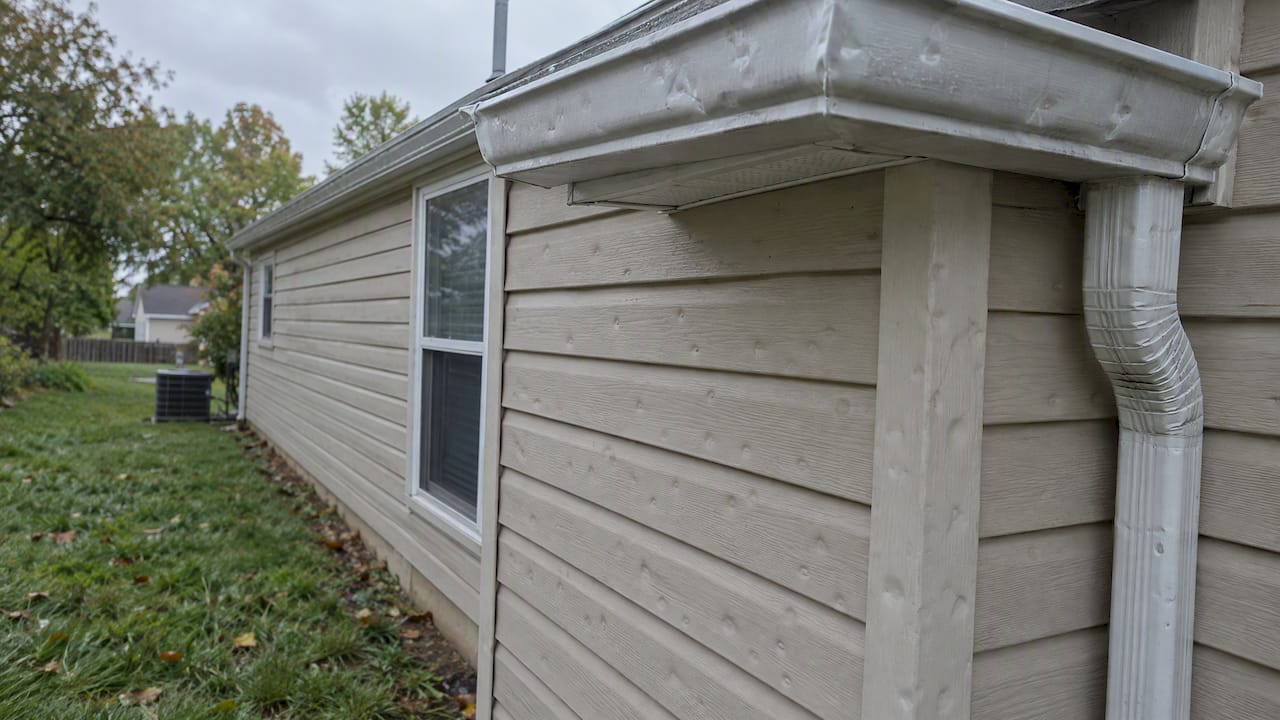
Cosmetic or functional: the line your claim depends on
Not every mark on a window is a claim. The Insurance Institute for Business & Home Safety (IBHS) stresses the distinction between cosmetic and functional damage in its hailstorm research. Consumer advisories point the same way: insurers generally pay to repair or replace damage that compromises how a component works, and not minor scuffs that leave it intact.
For windows, that line looks roughly like this:
| What you see | Likely category | What it usually means |
|---|---|---|
| Broken or cracked glass | Functional | Replace the glass or the unit |
| Fogging or moisture between panes | Functional | The seal has failed; the unit usually needs replacing |
| Window will not open, close or lock | Functional | Frame or sash is bent or cracked |
| Torn or bent screen | Usually minor | Often cheap to replace; check your deductible |
| Light dimples in aluminum cladding or trim | Often cosmetic | Depends on whether finish or seal is broken |
| Cracked caulk or exterior trim | Functional if water can get in | Repair, and check for hidden moisture |
This is a general guide, not a verdict. An adjuster or a qualified window contractor has to see the unit in person. IBHS also advises watching materials after a storm so that seemingly minor marks do not lead to faster degradation later. Check again after the next heavy rain, and tell your insurer promptly if something new appears.
What insurance pays for
Coverage and deductibles
Standard homeowners insurance covers wind and hail damage, though flood and earthquake need separate policies. Some policies exclude hail in certain areas, so read yours. The NAIC notes that some policies exclude windstorm and hail coverage, which is more common in coastal areas.
The deductible is where Midwest homeowners get surprised. In hail-prone regions, insurers often apply a separate wind/hail deductible, commonly 1% to 5% of the policy limit rather than a flat amount. The Insurance Information Institute says these are most common in Midwestern states and Tornado Alley.
Here is a simple example. On a home insured for $300,000, a 1% deductible is $3,000 and a 2% deductible is $6,000. A single broken window that costs a few hundred dollars to replace will not clear that bar. But if hail also damaged the roof, siding and several windows, one claim can cover all of it. That is why we recommend looking at the entire exterior before you decide. Our guides on how roof deductibles work and on calculating a deductible in Missouri show the arithmetic in detail.
Matching is not guaranteed
Homeowners often expect the insurer to replace every window so they all look alike. Consumer advisories say insurers are obligated to fix the damage the covered event caused, not to guarantee the rest of the property matches. Matching rules differ by state and by policy, so ask your insurer and, if you disagree, contact the Missouri Department of Commerce and Insurance consumer hotline listed on its severe weather guidance page.
The first offer is not always the last
The NAIC describes the claims process as a partnership, and notes that policyholders can ask questions or appeal if the evaluation does not line up with actual repair costs. Bring a written itemized estimate from a contractor you trust and ask the adjuster to explain any line they dropped.
For the filing steps, see our homeowner’s guide to filing a roof insurance claim. The Insurance Information Institute also has a general page on how to file a homeowners claim.
Repair or replace: what makes sense for a hail-damaged window
The answer depends on what failed.
Glass-only repair can work when one pane in a single-pane or removable-sash window is broken and the frame is straight. A glazier can often fit a new pane. It is the cheapest route, but the glass must match the unit’s thickness and coatings, and older windows can be hard to match.
Full-unit replacement is usually the answer when:
- The seal between double panes has failed (fog, condensation, droplets)
- The frame is cracked, bent or will not operate smoothly
- Hail broke the glass and also damaged the surrounding trim or flashing
- The window was already old, drafty or poorly sealed
- Several windows on the same side of the house were hit
Insert versus full-frame replacement matters too. An insert goes inside the existing frame and keeps your trim. A full-frame replacement takes everything down to the rough opening, so the installer can check for rot and water damage behind the old unit. After a storm that drove rain into a wall, full-frame often reveals problems an insert would hide.
If you are replacing windows anyway, ask about energy performance and impact resistance. Be careful with claims here. IBHS notes that no standardized hail-impact test exists for windows, so be wary of any seller promising hail-proof glass. Ask for the manufacturer’s actual performance ratings in writing.
Once the work is finished, installers leave dust and debris around the openings. A thorough clean of glass and sills is part of the job, and this post-construction window cleaning guide explains the steps if you want to do it properly yourself.
Why our view is different: a note from the crew
We see the same pattern after every Missouri hail event. The homeowner calls about one broken window. When we get on a ladder and then on the roof, the story is bigger: bruised shingles, dented gutters, marked siding. The window is just the part that got noticed first.
That is why we do the free inspection first and the estimate second. We want you to know the full scope before you talk to your insurer, so you can decide with real information whether to file. Our estimates are free, itemized and no-obligation, so you can compare them line by line against the adjuster’s.
We also push back on speed. Right after a storm, someone will tell you to sign today. Secure the house, document it, get the insurer’s inspection, then get your estimates. Cover the opening, save the receipts and take a breath. Waiting a few days for the adjuster costs far less than a denied claim.
One more thing we say to every customer: ask for the work to be written down. Scope, materials, product names, who handles cleanup and what is warrantied. Our roofing work carries a 25-year guarantee, and we tell customers plainly what each service covers before they sign.
— Mario
Avoiding storm-chasing contractors
After a hail event, out-of-town crews often go door to door. Missouri’s insurance department warns that after severe weather, people may offer repairs or claim help, and says to check what they are offering before signing. It also says to be suspicious of solicitors who offer to do repairs for you and not to pay the whole bill in advance. Most contractors ask for some money upfront, but not all of it.
A short checklist:
- Ask for a business address, a local phone number and proof of insurance.
- Verify the license or registration that applies in your city or county.
- Never sign a blank form, and never sign over your insurance benefits before the insurer has inspected and approved the claim, as the NAIC guide cautions.
- Do not pay in full until the work is complete and you have checked it.
- Get at least two written, itemized estimates.
For more, see our six-step checklist for spotting storm chasers and our piece on storm roofing scams in the first 72 hours.
Hail damaged windows in St. Charles County: how we can help
If hail has hit your home in St. Charles County, we can inspect your windows, roof, siding and gutters in one visit, give you an itemized estimate at no cost and help with the insurance claim process. We handle window replacement as well as storm and hail repair, and you can see everything we do on our services page. Call us before the adjuster visits if you want a second set of eyes on what the damage covers.
FAQ
Does hail break house windows?
Yes, it can. Large, fast-falling hail, especially driven by wind, can crack or shatter glass, break seals and bend frames. Smaller hail more often tears screens and dents trim, so check these too.
Will homeowners insurance pay for hail damaged windows?
Usually, if your policy covers wind and hail, which most standard policies do. The question is whether the cost clears your deductible. Many Midwest policies use a percentage-based wind/hail deductible, so read your declarations page before filing.
Should I replace the windows before the adjuster comes?
No. Make temporary repairs such as boarding up, save the receipts and wait until the insurer has inspected. Missouri’s insurance department warns that making permanent repairs first could lead to a denied claim.
Can hail damage to a window show up later?
Yes. A damaged seal can fog weeks later, and a small crack can spread. Watch your windows after storms and report new damage to your insurer promptly.
Will my insurer replace all my windows so they match?
Not necessarily. Insurers are generally obligated to fix the storm damage, not to match undamaged parts of the house. Rules vary by policy and state, so ask your insurer and your state insurance department.
Sources
- Hail Safety Rules, National Weather Service
- Hailstorm flash card, National Weather Service
- Post-Disaster Claims Guide, NAIC
- Consumer advisory tip of the month, Office of Superintendent of Insurance via NAIC
- Rebuilding after a storm: replacement cost and actual cash value, NAIC
- Hailstorm Demonstration Results, IBHS
- Understanding your insurance deductibles, Triple-I
- Guidance for Missourians impacted by severe weather, Missouri Department of Commerce & Insurance
Recommended
- What To Do About Hail Damage To Your Roof Right Now
- How To File A Roof Insurance Claim: A Homeowner’s Guide
- Inspect Siding Hail Damage Within 72 Hours To Protect Your Claim
This article was prepared with AI assistance for general information. For recommendations specific to your property, contact Crowley Exteriors. Call or text us at 314-839-3800.