
Scammers often show up within 24 to 72 hours of a storm, and the fastest way to protect yourself is to document the damage, call your insurer before you call anyone else, and refuse to sign anything on the spot. Federal agencies including the FTC, DOJ and CFPB warn that this window is when fraud is most common, and local, licensed crews like ours exist precisely to give homeowners a verifiable alternative.
TL;DR:
- Photograph and timestamp interior and exterior damage, back up the files, then call your insurer the same day and record whom you spoke with.
- Use tarping or other temporary protection only if your insurer advises it, and keep receipts plus a written description of the work.
- Verify the contractor’s license through your state portal, confirm insurance with the carrier, and obtain at least two written estimates before approving work.
- An Assignment of Benefits is not required for roof repairs and can transfer control of your insurance claim to the contractor, so read it carefully.
- Avoid cash, gift cards, and wire transfers; use checks or credit cards with payments tied to completed work, and check state limits before paying upfront.
Table of Contents
- Red flags: how scammers typically operate after a storm
- First 24 to 72 hours: a prioritized checklist to protect your claim
- Verify contractors and contracts: practical vetting steps
- Insurance, AOBs, and safe payment rules
- Reporting scams and next steps if you suspect fraud
- Crowley Exteriors’ practical approach: inspections, itemized estimates, and insurer coordination
- Why local, verifiable experience matters after a storm
- Crowley Exteriors: request a free inspection and claims-ready estimate
- FAQ
- Sources
Red flags: how scammers typically operate after a storm
Storm chasers move fast because speed works in their favor. A pitch that arrives at your door within a day or two of a hailstorm or high wind event, paired with urgency to “sign today before the crew leaves town,” is one of the clearest warning signs. The FTC, DOJ and CFPB specifically flag unsolicited door-to-door offers, pressure to sign immediately, large upfront cash demands, and promises to waive or absorb your insurance deductible as recurring disaster-fraud tactics.
Watch for these patterns:
- A stranger knocks within 24 to 72 hours of the storm and claims to be “already working in your neighborhood.”
- You’re pushed to sign a contract on the spot, and the contractor won’t leave a copy or provide license information.
- The bid is unusually low, or the crew asks for payment in cash, gift cards, wire transfer, or a payment app.
- Someone offers to “waive your deductible” or pushes you to sign an Assignment of Benefits form before an inspection is even complete.
Federal regulators have identified door-to-door pressure tactics and deductible-waiver offers as recurring patterns in post-disaster fraud, not isolated incidents. See the FTC, DOJ and CFPB warning. You can also walk through a 6-step checklist to spot storm chaser roofers before you let anyone on your roof.
First 24 to 72 hours: a prioritized checklist to protect your claim
What you do in the first few days shapes how smoothly your insurance claim moves and whether you end up dealing with a legitimate contractor or a fly-by-night crew. Work through these steps in order:
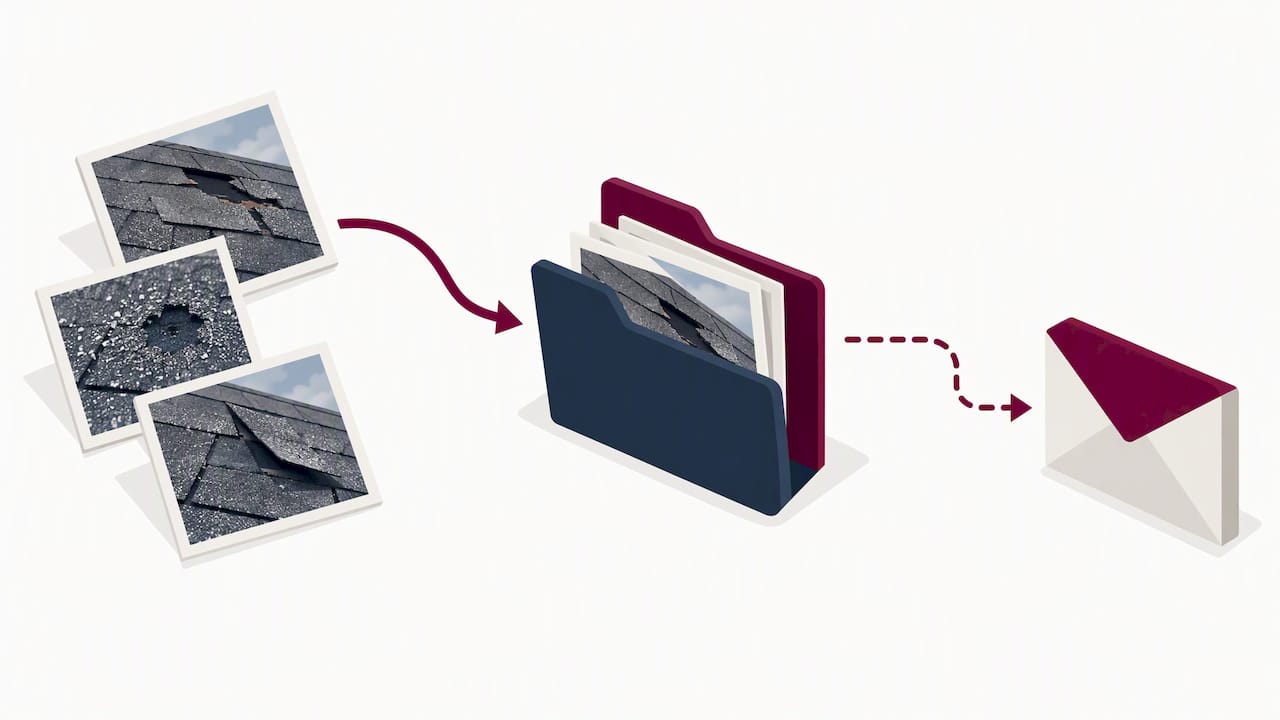
- Photograph and timestamp every area of visible damage, inside and outside, and back up the images to cloud storage or a second device.
- Call your insurer the same day you discover damage, and write down the date, time, and name of whoever you spoke with.
- Arrange temporary protection like tarping only if your insurer advises it, and keep receipts along with a written scope of that work; see our guide on post-storm property cleaning for safe cleanup tips.
- Get at least two written estimates before agreeing to anything, and never accept an offer made on your doorstep.
For a deeper walkthrough, our guide on what to do in the first 72 hours after storm damage covers documentation in more detail, and our wind damage photo checklist is useful if hail or wind is involved.
Pro Tip: Store your damage photos in a dated folder and email yourself a copy the same day; a clear timestamp trail helps if your insurer or a contractor later disputes when the damage occurred.
Verify contractors and contracts: practical vetting steps
Before anyone touches your roof, confirm who they actually are. Ask for a license number and a certificate of insurance, then verify both independently rather than taking a business card at face value. Check complaint histories with the Better Business Bureau and your state attorney general’s office, and ask for references tied to recent local jobs you can actually drive by.
A few checks matter more than the rest:
- Confirm the license number through your state’s licensing portal, not through a number printed on the contractor’s own paperwork.
- Ask for a certificate of insurance and call the insurer listed to confirm it’s active.
- Request photos of recent local jobs and at least two references you can call.
- Confirm a local phone number and physical business address, not just a cell number and a truck.
Before signing, review the contract for materials and quantities, start and end dates, a payment schedule, a change-order process, a lien waiver, and warranty terms in writing. Our piece on three checks you can do in 10 minutes walks through this in a format you can use on your porch.
| Check | What to look for | If it fails |
|---|---|---|
| License | Active status on state portal | Walk away, don’t hire |
| Insurance | Certificate of insurance confirmed by carrier | Request proof again or decline |
| Reviews | BBB and attorney general complaint history | Treat as a red flag, keep looking |
| References | Local jobs you can verify in person | Ask for more, or move on |
| Contract | Materials, dates, payment schedule, warranty in writing | Don’t sign until it’s added |
Insurance, AOBs, and safe payment rules
An Assignment of Benefits, or AOB, lets a contractor negotiate and collect directly from your insurer on your claim. The National Association of Insurance Commissioners warns that signing one can shift control of your claim to a third party, and you are never required to sign an AOB to get your roof repaired.
A few rules keep your claim and your money safe:
- Never sign an insurance check over to a contractor; coordinate payment directly with your insurer and mortgage lender instead, as the FTC advises.
- Avoid wire transfers, gift cards, cryptocurrency, or cash-only demands, and prefer a credit card or check with payments staged to completed work.
- Read any AOB carefully before signing, and understand exactly what rights you’re transferring.
- If a contractor offers in-house financing or refers you to a specific lender, get an independent loan quote before agreeing.
Some states cap how large a down payment a contractor can legally request, so check your state consumer protection agency before you pay anything upfront. See FTC guidance on contractor payments. Our guide to filing a roof insurance claim covers how documentation and payment timing fit together.
Reporting scams and next steps if you suspect fraud
If you think you’ve been targeted or already paid a fraudulent contractor, act quickly and keep a paper trail. The CFPB recommends getting multiple bids and staying cautious of contractors who steer you toward a specific lender or ask for sensitive financial details before any work begins.
Report fraud through these channels:
- File a report at ReportFraud.ftc.gov, with your state attorney general’s office, and with your state insurance department.
- Contact local police if money changed hands or a contract was signed under pressure.
- File a complaint with the Better Business Bureau to flag the business for other homeowners.
- Notify your insurer right away and keep copies of every email, text, and receipt tied to the incident.
After reporting, agencies may pursue civil or criminal action, and you may have standing to file a complaint in small claims court depending on the amount involved and your state’s rules.
Crowley Exteriors’ practical approach: inspections, itemized estimates, and insurer coordination
We built our process around the opposite of a storm-chaser pitch. Every inspection we provide is free and comes with a no-obligation estimate, backed by a 25-year workmanship guarantee and over 25 years working on Missouri roofs.
A professional inspection and estimate should include:
- An itemized materials list with quantities, not a single lump-sum number.
- Line-item labor costs separate from materials and staging.
- A written project timeline from start to completion.
- Documentation formatted for insurer review, including photos tied to specific damage claims.
When we coordinate with insurers, that means supporting your documentation, aligning payments with completed project stages, and providing records your lender may need for final disbursement.
Pro Tip: Ask any contractor to walk you through their estimate line by line before you sign anything; a legitimate crew will welcome the questions, not rush past them.
Why local, verifiable experience matters after a storm
The homeowners who get burned aren’t careless, they’re just dealing with a roof leak, a toddler, and a stranger at the door all at once. Verifying a license or calling a reference feels like one more task on a bad day, but it’s the single step that separates a repair from a regret. Document everything, verify before you sign, and report anything that feels off.
— Mario
Crowley Exteriors: request a free inspection and claims-ready estimate
We offer free inspections and no-obligation estimates for homeowners dealing with storm damage, and we build every estimate to hold up under insurer review.
If a storm has left you with roof, siding, or gutter damage, here’s where to start:
- Request a free inspection and storm damage assessment before any contractor pressures you into a decision.
- Ask about storm and hail damage repair with a workmanship guarantee.
- Get insurance claim support to help your documentation hold up from day one.
Reach out through our contact page to schedule your inspection and get an itemized, no-obligation estimate in writing.
This article is general information, not a substitute for advice from a qualified financial advisor. Consult a qualified financial professional about your own circumstances before acting on anything here.
FAQ
Do roof warranties cover storm damage?
A manufacturer’s roof warranty typically covers material defects, not storm damage, which is usually handled through your homeowner’s insurance policy instead. Separately, a contractor’s workmanship guarantee covers installation quality rather than weather events.
What are 5 of the most current scams?
Common tactics include door-to-door pitches that appear within 24 to 72 hours of a storm, pressure to sign a contract immediately, requests for cash, gift cards, or wire payments, promises to waive your insurance deductible, and pushing you to sign an Assignment of Benefits before any real inspection happens. The FTC, DOJ and CFPB have flagged each of these as recurring patterns after disasters.
What are some signs a roofer is reputable?
A reputable roofer provides a verifiable license number, proof of insurance you can confirm independently, a local address and phone number, and references tied to recent jobs nearby. They also give you a written, itemized estimate and never pressure you to sign on the spot, consistent with FTC guidance on hiring contractors.
What is the 25% rule in roofing?
Definitions vary by jurisdiction and insurer, but it generally refers to a threshold some building codes or insurance policies use to decide whether a roof needs a full replacement instead of a partial repair once a certain percentage of the roof is damaged. Check your specific state and local building code, or ask your contractor and insurer how the rule applies to your policy and location.
Sources
- FTC, DOJ and CFPB warn consumers about potential scams and price gouging in the wake of hurricanes and other natural disasters
- How to avoid scams after weather emergencies and natural disasters | FTC consumer advice
- How can I find and work with contractors to rebuild after a disaster? | CFPB
- After the storm, read the fine print to avoid signing away your insurance benefits | NAIC
Recommended
- Homeowners: 6 Step Checklist To Spot Storm Chaser Roofers
- Storm Damage Roof: What To Do In The First 72 Hours
- Roof Leak Emergency: What Homeowners Must Do Now
- Homeowners: 24–72 Hour Wind Damage Roof Photo Checklist For Claims
This article was prepared with AI assistance for general information. For recommendations specific to your property, contact Crowley Exteriors. Call or text us at 314-839-3800.