


A ceiling water stain means moisture reached your drywall or ceiling tiles from somewhere it should not have. The source is usually the roof, a plumbing line, the HVAC system or indoor condensation, and the stain alone does not tell you which one. It also does not tell you whether the leak is still active. The fastest way to find out is to read the stain’s color, shape and timing, check whether the ceiling is still wet, and trace the water upward.
This guide walks through that process in order: what to do in the first hour, how to tell a roof leak from a pipe leak, what a stain that shows up after rain points to, how to clean a minor stain, and when the ceiling needs to be replaced instead.
TL;DR
- A stain does not prove an active leak. Ceiling stains can be old marks left after a past problem was fixed, so confirm whether the area is still damp before you do anything else.
- If a stain appears or grows after rain, start at the roof: shingles, flashing, vent boots and gutters are the usual suspects.
- A sagging or bulging ceiling is a safety issue. Keep people out from under it and shut off power to any wet circuits.
- Clean or paint only after the source is fixed, and never paint over mold.
- If the stain traces to the roof, a free inspection is cheaper than repeated ceiling repairs.
Table of Contents
- What a ceiling water stain is telling you
- First hour: what to do if the ceiling is wet or dripping
- Reading the stain: color, shape and timing
- A ceiling stain after rain: start at the roof
- Stain but no leak: other possible causes
- Is a ceiling water stain serious?
- How to remove a brown water stain
- When to replace the ceiling instead of cleaning it
- Perspective: why we start on the roof
- When the stain traces back to your roof
- FAQ
- Sources
What a ceiling water stain is telling you
Water travels. A roof leak rarely drips straight down onto the stain. It runs along rafters, insulation and the top of the drywall, then soaks through wherever the ceiling is weakest. That is why a stain in the living room can come from a roof penetration several feet away.
According to Bob Vila’s guide to ceiling stains, these stains typically mean moisture got past roofing, plumbing or HVAC systems and reached the drywall or tiles. The same source stresses that the stain does not confirm an ongoing leak. It may be a leftover from a problem that was already repaired.
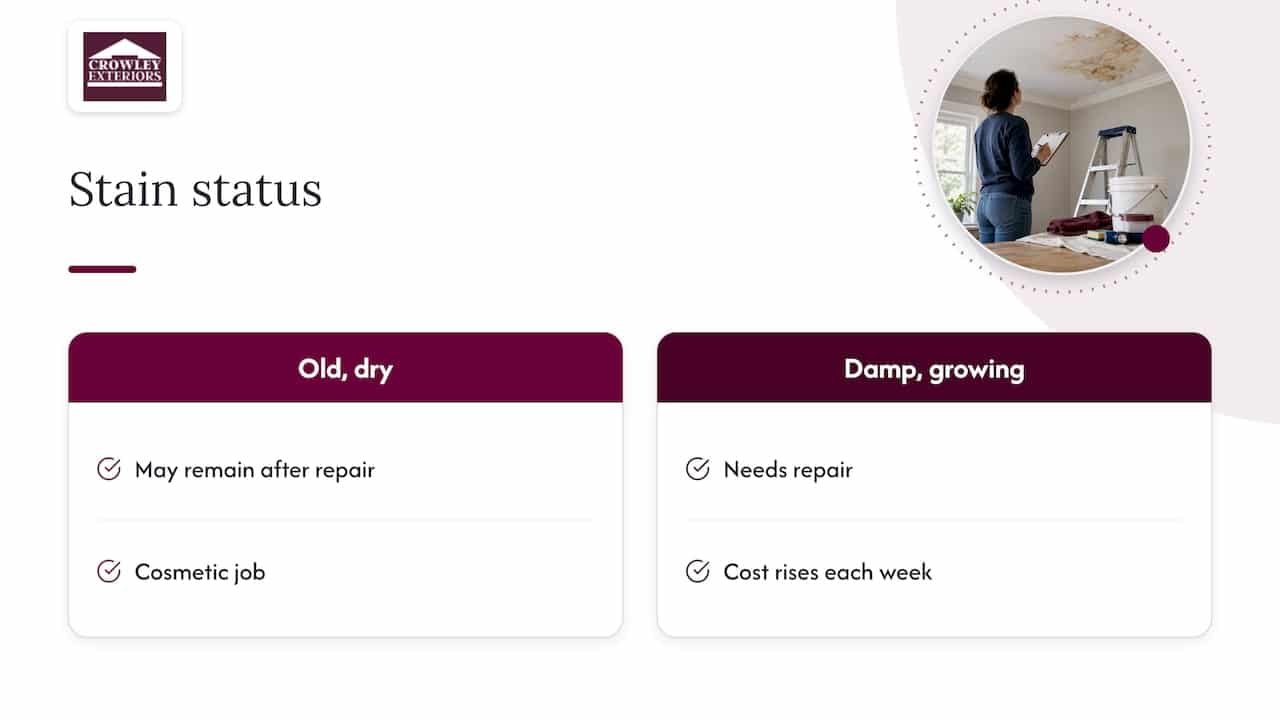
That distinction drives everything that follows. An old, dry stain is a cosmetic job. A damp, growing stain is a repair that gets more expensive each week.
First hour: what to do if the ceiling is wet or dripping
If water is actively coming through, treat it as an emergency until proven otherwise.
- Keep clear of a sagging ceiling. FEMA advises checking ceilings and floors for sagging, because trapped water can make them unsafe. If the drywall bulges, do not stand under it.
- Think about electricity. If water has reached light fixtures or wiring, the state guidance on flood recovery says to turn off power at the main breaker and leave it off until a licensed electrician has inspected and repaired the wiring. Do not touch a wet fixture to find out.
- Catch and relieve the water. Put a bucket under the drip and move furniture and rugs out of the way. If the ceiling is bulging with water, a small hole at the lowest point of the bulge lets it drain into a bucket instead of letting the whole section fail. Wear eye protection when you do it.
- Photograph everything. Take wide and close shots of the stain with a date. If a storm caused it, these photos matter for an insurance claim.
- Start drying. The EPA advises drying the home and its contents within 24 to 48 hours if you can to reduce mold risk. Fans and open windows (when the weather allows) help.
If the water is coming from the roof, our page on what to do during a roof leak emergency covers temporary protection and what to document.
Reading the stain: color, shape and timing
No stain pattern is a diagnosis on its own, but the details narrow the field.
| What you see | What it often suggests |
|---|---|
| Stain appears or grows during or after rain, dry otherwise | Roof, flashing, vent boot or gutter problem |
| Stain near a bathroom, kitchen or laundry, regardless of weather | Plumbing supply or drain leak, or a failed seal around a tub or shower |
| Stain near a supply or return vent, worse in humid weather | HVAC condensation or a blocked condensate line |
| Faint ring with a darker outer edge, dry to the touch | An older leak that has since stopped |
| Several rings in the same spot | Repeated wetting over time |
| Stain along an exterior wall at the ceiling line | Gutter overflow, flashing or ice dam trouble |
The rings are worth a closer look. Each time a leak wets and dries, it can leave another edge, so a stain with layered rings has likely been wetted more than once. That is a sign the problem was never fully fixed.
Touch and smell tests
Press a gloved hand on the stain. Cool, soft or spongy drywall means moisture is still present. A musty smell points to damp material even if the surface looks dry. If you have a moisture meter, readings above the surrounding ceiling confirm it. If the stain is dry, firm and odorless, mark its edge lightly in pencil and check it after the next rain. If the line moves, the leak is active.
A ceiling stain after rain: start at the roof
If your stain shows up or spreads after a storm, the roof is the first place to look. Bob Vila’s guide lists the usual culprits after a downpour: crumbling shingles, compromised flashing, damaged vents or weakened seals, plumbing vent boot problems and gutter leaks. Here is how each one works.
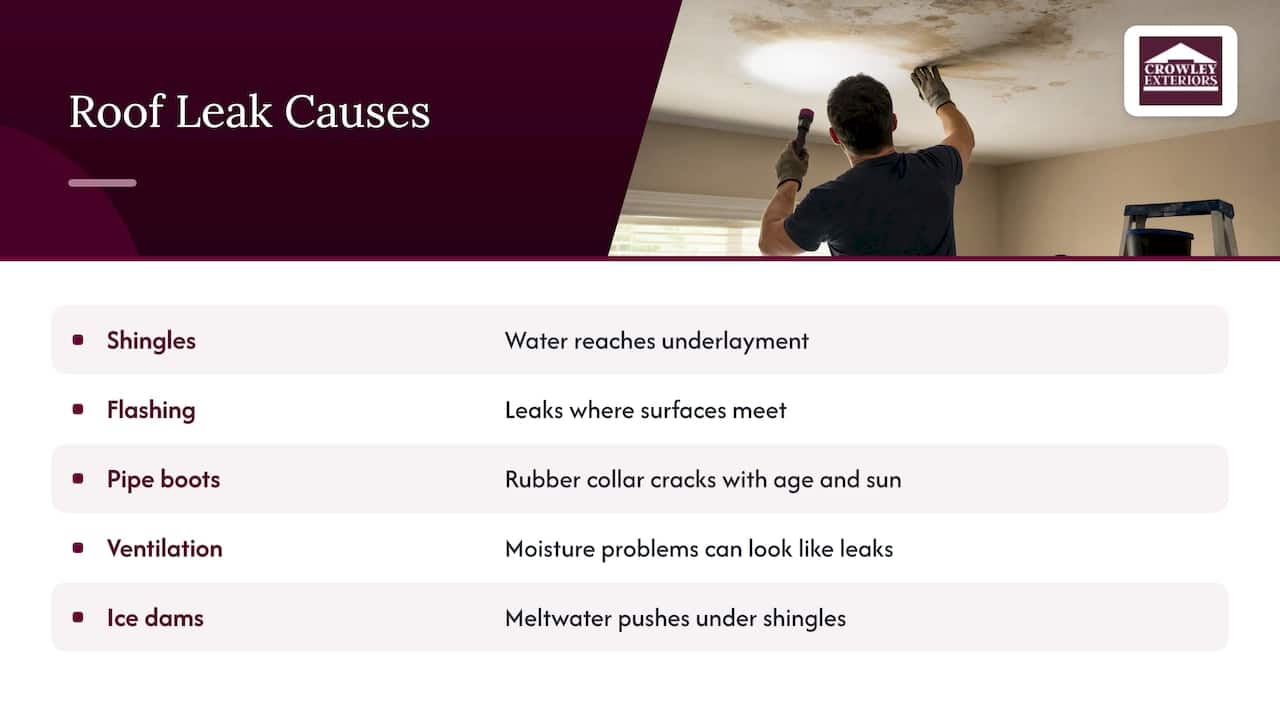
Shingles. Missing, cracked or lifted shingles let water reach the underlayment. In Missouri, hail and high winds are common causes. Our guide to photographing wind damage signs within 24 to 72 hours shows what to capture from the ground.
Flashing. The metal at chimneys, walls, skylights and valleys is where many leaks start, because that is where two surfaces meet. If you want to know what you are looking at, see our rundown of roof flashing types. Valleys deserve special attention, since they carry the most water. We wrote about it in what to do about a roof valley leak before it wrecks your ceiling.
Pipe boots and vents. The rubber collar around a plumbing vent pipe cracks with age and sun exposure. It is a small part that can cause a stain right below it, and it is a fast, inexpensive fix when caught early.
Ventilation. A poorly ventilated attic can cause moisture problems that look like leaks. Our page on roof ventilation problems explains the signs.
Ice dams. In winter, melting snow that refreezes at the eaves can push water under shingles. If your stain appears during a thaw, read about ice dam roof damage.
Don’t forget the gutters
Overflowing gutters send water down the fascia and into the soffit and wall, and in some cases back under the first row of shingles. A stain along an exterior wall after rain often traces to this. Check for clogs, sagging runs and downspouts that dump water against the foundation. Our guide to gutter overflow causes walks through the diagnosis. Homes with heavy tree cover need cleaning more often, and this explanation of how often to clean gutters suggests twice a year as a baseline. If the gutters are beyond cleaning, a free inspection can decide between repair and replacement.
Stain but no leak: other possible causes
Sometimes you climb into the attic, find dry insulation and still have a brown ring below. A few things can explain it.
- An old leak. The roof or pipe was fixed, but nobody repainted. Bob Vila’s guide notes that a stain can simply be an old mark left after a prior problem was fixed.
- Condensation. Warm, humid indoor air meets a cold surface, such as an uninsulated duct, a cold attic floor or a poorly sealed bathroom exhaust. The moisture collects and stains the ceiling without any hole in the roof.
- An intermittent leak. Some leaks only occur with wind-driven rain from one direction, or only when snow melts. The attic can look dry on the day you check.
- A slow pipe or fixture leak. A weeping joint or a bathtub seal can wet a ceiling below in small amounts that dry between uses.
If you cannot explain the stain, monitor it for a few weeks and check it after each rain and after each use of the bathroom above. If it grows, call a professional. A roofer can check the roof and attic. A plumber can pressure-test supply lines and check drains.
Is a ceiling water stain serious?
Sometimes, and the signs are easy to spot. Treat a stain as serious if you see any of these:
- The ceiling sags, bulges or feels soft.
- The stain is growing or the rings are spreading.
- You smell mustiness or see fuzzy spots, which can mean mold.
- The paint is bubbling or peeling around the stain.
- The stain is near light fixtures or the electrical panel.
- It returns after you repaint.
Mold is the quiet cost. The EPA’s cleanup guidance says the way to limit it is to dry wet materials fast, and it advises that wet items that cannot be cleaned and dried within 24 to 48 hours should be thrown away. That guidance was written for flooding, but the drying logic applies to a wet ceiling too. For more on first steps to limit moisture damage after a leak, this article on reducing mold risk after a leak is a helpful companion.
How to remove a brown water stain
You should only clean once the source is fixed and the ceiling is fully dry. Cleaning a stain that is still being fed just buys you a new stain.
- Confirm it is dry. Give it several days after the last rain or repair. Press on it. It should feel firm.
- Protect yourself. Mold spores and debris fall when you work overhead. State flood guidance lists N-95 respirators, gloves and eye protection as appropriate protection for cleanup.
- Clean a minor stain. Bob Vila suggests 1 cup of bleach to 3 cups of warm water for a minor stain. Never mix bleach with ammonia or other cleaners, and ventilate the room.
- Let it dry fully. Use a fan.
- Prime with a stain-blocking primer. Regular paint lets brown tannins bleed through. A stain-blocking primer seals them in.
- Repaint the whole ceiling plane if you can. Patch painting often leaves a visible spot because of sheen and age differences.
Do not paint over mold
The EPA is clear on this: clean up mold and dry the surface before painting or caulking. Painting over a damp or moldy ceiling only hides the problem until it comes back through the paint.
When to replace the ceiling instead of cleaning it
Some ceilings are past saving. Replace the affected section if:
- It is sagging or soft. Saturated drywall loses strength and should come down.
- Mold is on porous material. The EPA says moldy porous materials such as ceiling tiles may have to be thrown away, because mold can be difficult or impossible to remove from them.
- The mold patch is large. The EPA’s homeowner guide says that if mold covers more than 10 square feet, you should consult its guidance on mold remediation in schools and commercial buildings. In practice, that is the point to call a remediation professional.
- The stain keeps coming back. That means moisture is still getting in.
Cutting out and replacing a water-damaged drywall section is a manageable job for a handy homeowner or a handyman. Do it only after the structure above it is dry and the leak is solved.
Perspective: why we start on the roof
We have worked on roofs in St. Charles County for over 25 years, and we see the same story often. A homeowner repaints a stain two or three times, and it keeps coming back, because the repaint was the only thing that changed. The ceiling is the messenger. The fix is almost always above it.
Our advice is simple. Check the stain after the next rain before you spend money on paint. If it moves, get someone on the roof and in the attic. Missouri weather is hard on roofs: hail, wind-driven storms and freeze-thaw cycles all work on flashing, sealant and vent boots long before a whole roof fails. A small repair at the source costs far less than drywall, insulation and mold work later.
We also want you to have the facts before you decide on a repair or a replacement. That is why our estimates are free, itemized and made without obligation. If a repair makes sense, we will say so. If the roof is at the point where patching is throwing money away, we will show you why. Our guide on repair versus replacement lays out how we think about it.
— Mario
When the stain traces back to your roof
If the water is coming from the roof, a quick patch from the inside will not hold. You need the entry point found and fixed. At Crowley Exteriors we offer roof inspections and leak detection, roof repair, storm and hail damage repair and insurance claim assistance for homeowners in St. Charles County. Inspections and estimates are free. We also back our roofing work with a 25-year guarantee.
See all of our roofing and exterior services, or read how a roof replacement goes, step by step if you suspect your roof is near the end of its life. After a storm, our guide on the first 72 hours after storm damage can help you protect your claim and your home.
FAQ
How do I fix a water stain on the ceiling?
Find and fix the source first, then let the area dry completely. Clean a minor stain with a bleach and water mix, apply a stain-blocking primer, and repaint. If the drywall is soft, sagging or moldy, cut out and replace that section instead of painting over it.
Is a water stain on a ceiling serious?
It can be. A dry, old stain is mostly cosmetic. A growing stain, a soft or sagging ceiling, a musty smell or a stain that returns after repainting all point to an ongoing leak and possible mold. Those deserve prompt attention from a roofer or plumber.
Why did a stain appear on my ceiling after rain?
Rain-triggered stains usually trace to the roof or gutters: damaged shingles, failed flashing, cracked pipe boots or clogged gutters. Check the ceiling again after the next rain to see if the stain grows, then have the roof and attic inspected to find the entry point.
Can I have a ceiling water mark with no leak?
Yes. The mark may be left over from a leak that was already fixed. Condensation from humid indoor air, a cold duct or a poorly vented bathroom fan can also leave stains. If it does not change after rain or after using the plumbing above, it is likely old.
Sources
- Water Stains on the Ceiling: Common Causes and Solutions, Bob Vila
- Tips for returning home safely after a disaster, FEMA
- After the Flood: Getting Back Into Your Home Safely, NC DHHS
- Homeowner’s and Renter’s Guide to Mold Cleanup After Disasters, EPA
- Mold Cleanup in Your Home, EPA
Recommended
- What To Do About A Roof Valley Leak Before It Wrecks Your Ceiling
- Storm Damage Roof: What To Do In The First 72 Hours
- Ice Dam Roof Damage: What To Do And How To Stop It
This article was prepared with AI assistance for general information. For recommendations specific to your property, contact Crowley Exteriors. Call or text us at 314-839-3800.